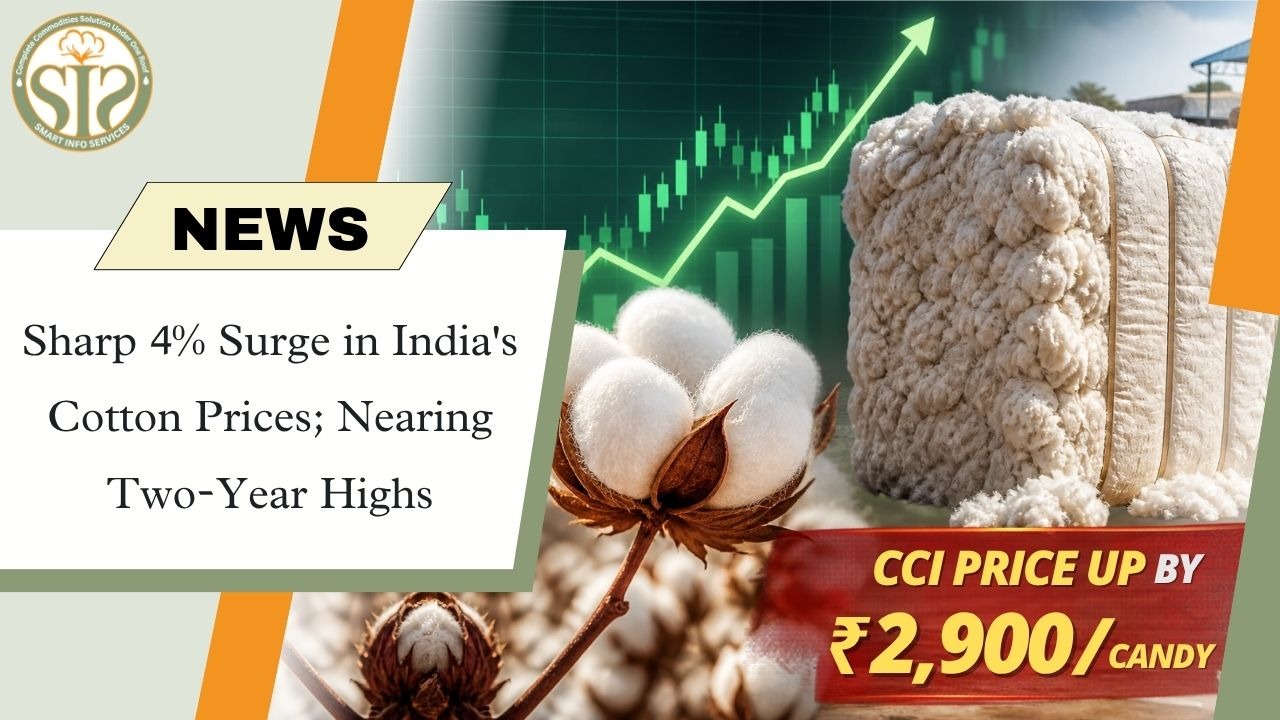
Sharp 4% Surge in India's Cotton Prices; Nearing Two-Year Highs
Cotton prices in India have recorded a sharp increase of over 4% in a single day—marking what is considered the largest daily surge of the current season. Strength in the global market and disruptions in supply chains are cited as the primary reasons for this rise.
On Monday, the Cotton Corporation of India (CCI) hiked cotton prices by ₹2,900 per candy (356 kilograms). With this adjustment, prices have edged closer to a two-year high. In the international market, cotton futures for July delivery on ICE Futures U.S. rose above 84.5 cents per pound.
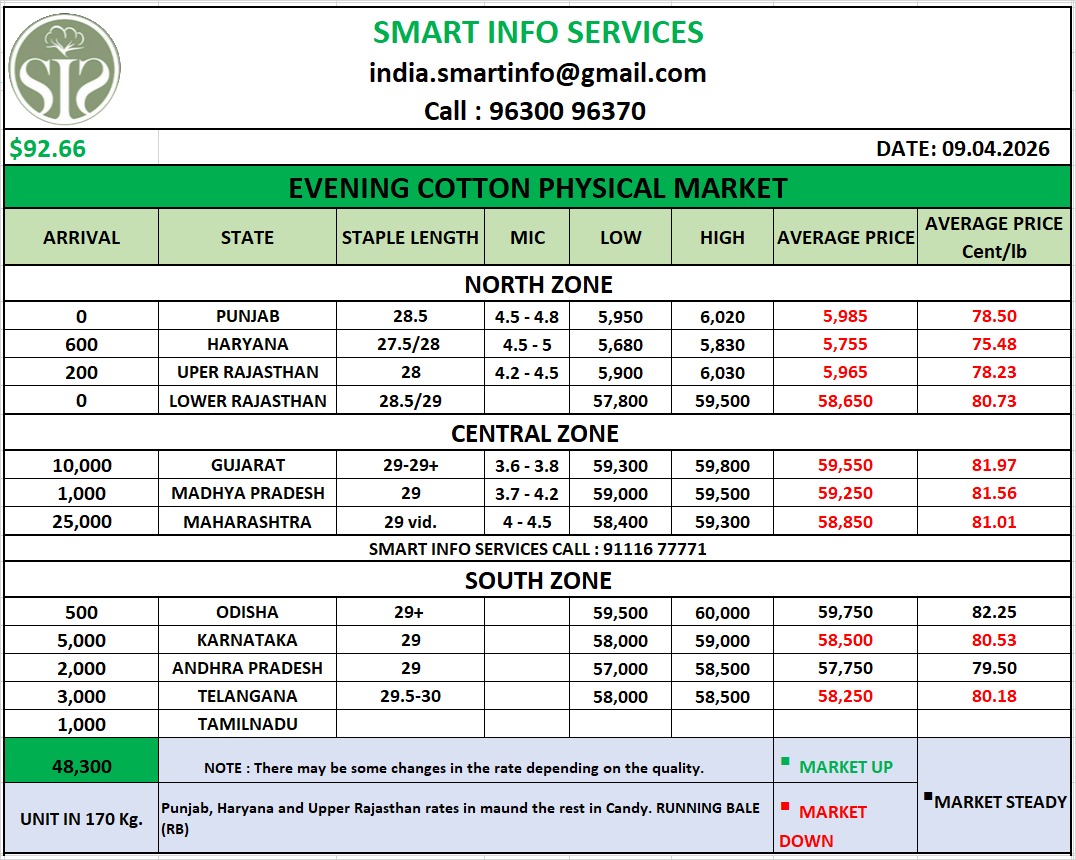
Since the beginning of March, international cotton futures have witnessed a surge of over 28%. Domestically, too, prices have risen from a low of ₹54,600 per candy to reach approximately ₹65,600.
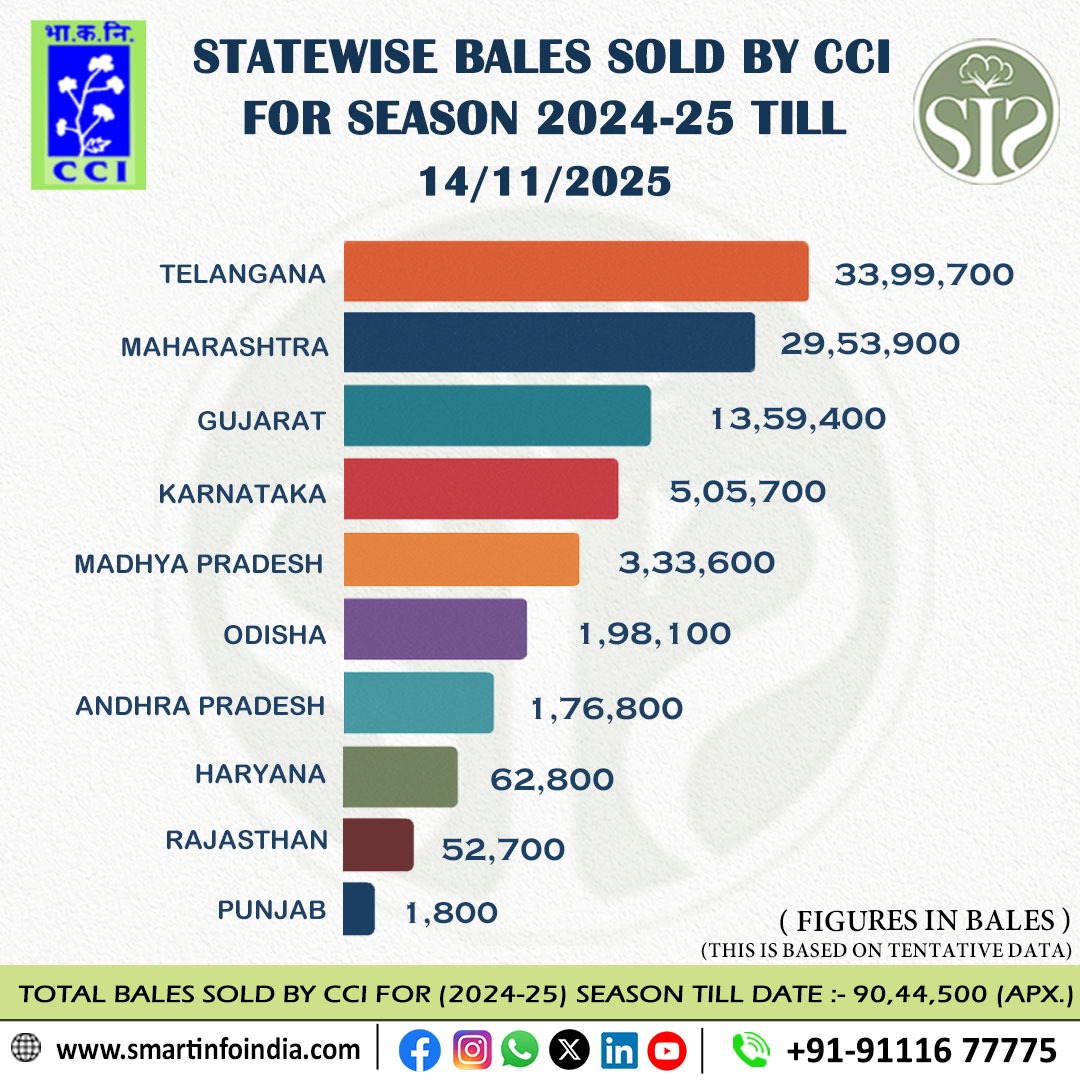
According to trade sources, the price hike implemented by the CCI was unexpected; nevertheless, the corporation has successfully sold over 200,000 bales. Industry insiders note that the escalating prices have heightened concerns among textile manufacturers. Both production and delivery schedules are being adversely affected by rising yarn costs and a shortage of labor.
International demand is also providing support to prices. In recent weeks, demand for Indian cotton yarn has surged in countries such as China, Bangladesh, and Vietnam—a trend attributed to ongoing disruptions within global supply chains.
According to experts, the CCI currently holds a residual stock of approximately 4 million bales, and given the continued strength of international prices, sales are expected to persist. At present, the CCI's pricing remains globally competitive, a factor that could potentially boost interest among multinational corporations.
Meanwhile, daily arrivals of raw cotton across the country remain steady at between 35,000 and 45,000 bales, bringing the total cumulative arrivals to approximately 30.5 million bales. It is estimated that supply may remain stable in the coming months, which will impact the direction of the market.