Government Rejects ‘Dumping Ground’ Tag, Defends India’s Textile Recycling Ecosystem
By yash chouhan 2026-05-21 16:53:46
Labeling India a 'Dumping Ground' for Textile Waste is Misleading: Central Government
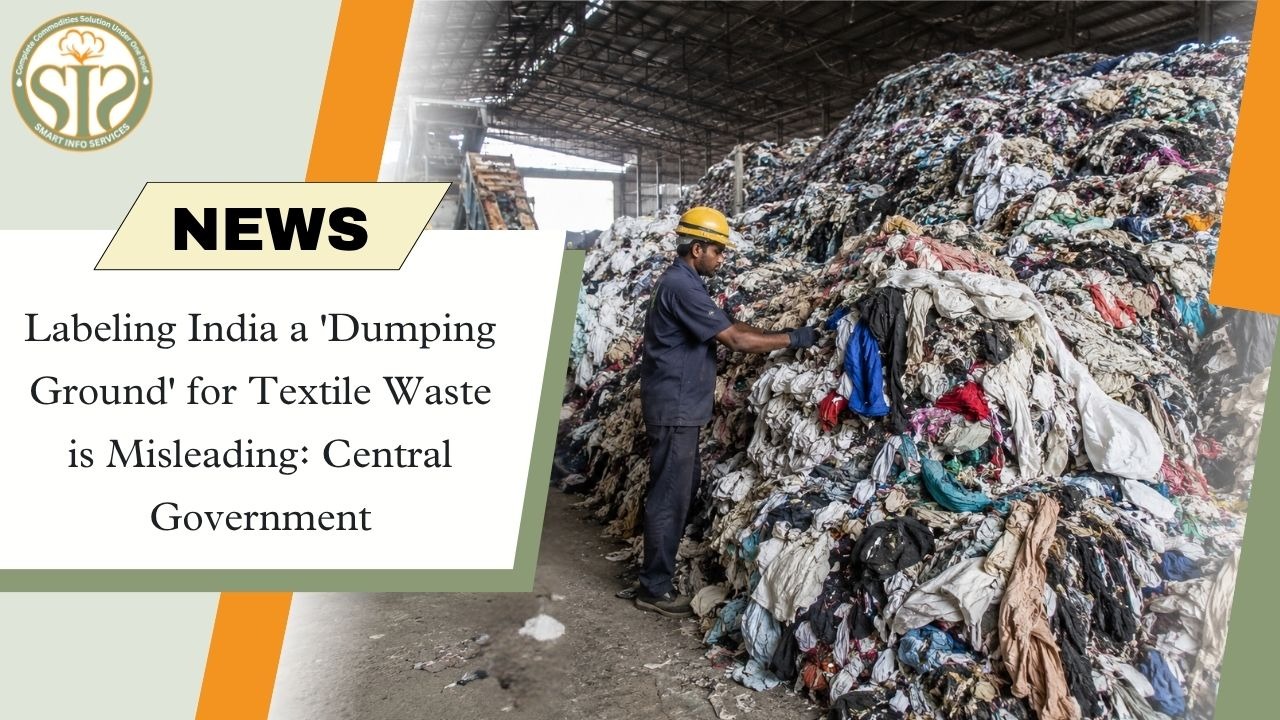
New Delhi: Defending India's textile recycling ecosystem, the Central Government has stated that characterizing the country as a "dumping ground" for textile waste is misleading and contrary to facts. In a statement issued on Thursday, the Ministry of Textiles asserted that India possesses one of the world's largest textile recovery and recycling networks, underpinned by long-standing mechanisms for reuse and recycling.
The Ministry noted that recent international media reports—which focused on textile clusters such as Panipat—exaggerated concerns regarding environmental impact and labor safety, while overlooking the progress achieved within the sector toward sustainability, regulatory reforms, and the adoption of new technologies.
The government unequivocally stated that portraying the Indian textile industry as environmentally negligent or structurally exploitative is erroneous; such characterizations fail to acknowledge the ongoing corrective efforts and sustainability-driven initiatives within the sector.
According to the Ministry, approximately 7,073 kilotons of textile waste are generated in India annually. Citing the study "Mapping of Textile Waste Value Chain in India 2026," the government highlighted that nearly 97 percent of pre-consumer textile waste—generated during the manufacturing process—is recycled.
The government also refuted claims suggesting that India is becoming a primary destination for fast-fashion waste from Western nations. According to the Ministry, out of the approximately 7.8 million tons of textile waste managed within the country, over 90 percent is generated domestically, whereas imported waste accounts for a share of only about 7 percent. Citing a report by the Federation of Indian Chambers of Commerce and Industry (FICCI), the Ministry stated that the textile waste ecosystem generates economic activity worth approximately ₹22,000 crore annually within the country.
The government also referred to a study conducted by researchers at IIT Delhi, which, based on data from the Panipat cluster, found that textile recycling leads to a reduction of approximately 40 percent in environmental impacts—such as greenhouse gas emissions and fossil fuel consumption—compared to the production of virgin fibers.
While the government acknowledged that challenges related to post-consumer waste management, unorganized sector units, and worker safety still persist, it noted that the industry is continuously moving towards more formalized systems, cleaner technologies, and improved environmental compliance.
The Ministry further stated that textile recycling units operate under existing environmental and labor laws, and various regulatory agencies—including the National Green Tribunal (NGT)—are taking action against units found to be in violation of these regulations.