CITI demands immediate restoration of RoDTEP rates for textile exports
By yash chouhan 2026-02-25 13:04:39
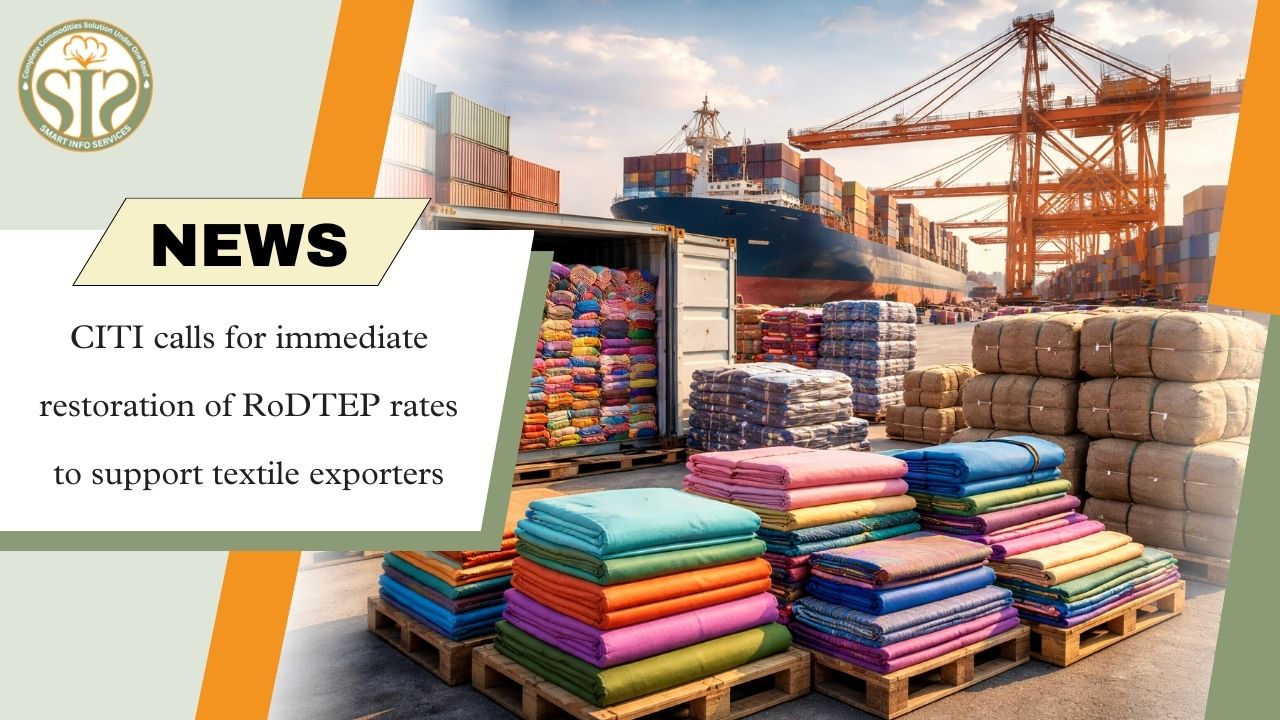
CITI calls for immediate restoration of RoDTEP rates to support textile exporters
The Confederation of Indian Textile Industries (CITI) has expressed deep concern over the reduction in rates by up to 50% under the Remission of Duties and Taxes on Exported Products (RoDTEP) scheme. The organization has appealed to the government to immediately reconsider this decision and restore the previous rates and price ceiling (cap) with immediate effect, so that textile exporters do not have to face inconvenience.
CITI Chairman Ashwin Chandran said the decision is an unexpected blow to the export community, especially at a time when global uncertainties are already weighing on trade. He said exporters had booked their orders keeping in mind the existing structure of the RoDTEP scheme, so the sudden cut in rates would affect their financial calculations.
RoDTEP rates currently range from 0.5% to 3.6%. The rate reduction will have a direct impact on the margins of textile exporters, while the industry is already grappling with several challenges:
* *Decline in exports:* During April 2025 to January 2026, exports have declined by 2.35% as compared to the same period last year.
* *Slow global demand:* Demand has been impacted due to geopolitical tensions and weak consumption in key markets.
* *High Tariff:* Higher import duties than competing countries in major markets like the US and EU.
* *Low Profitability:* The average ROCE is around 12%, which is significantly lower than sectors like IT.
Export orders in the textile sector are generally booked 2–3 months in advance and pricing is done keeping in mind the policy framework and export incentives in force at that time. In such a situation, a sudden cut in RoDTEP benefits may make the ongoing contracts financially unviable, which will put additional burden on exporters and affect India's credibility in the global markets.
Referring to the ‘5F’ vision proposed by the Prime Minister—Farm → Fiber → Factory → Fashion → Foreign— Chandran said a stable and predictable policy environment is essential to achieve this goal, especially in such an employment-intensive sector.
He warned that sudden policy changes without adequate consultation or transition period could disrupt the export ecosystem, impact cost structure and weaken the global competitiveness of Indian exports.
India has set a target of doubling textile and apparel exports to $100 billion by 2030. The textile and apparel sector is the second largest source of employment generation in the country, hence the industry believes that policy stability is extremely important to achieve this ambitious target.