Boost to textile sector in Budget 2026, focus on cotton mission
By yash chouhan 2026-02-03 18:38:25
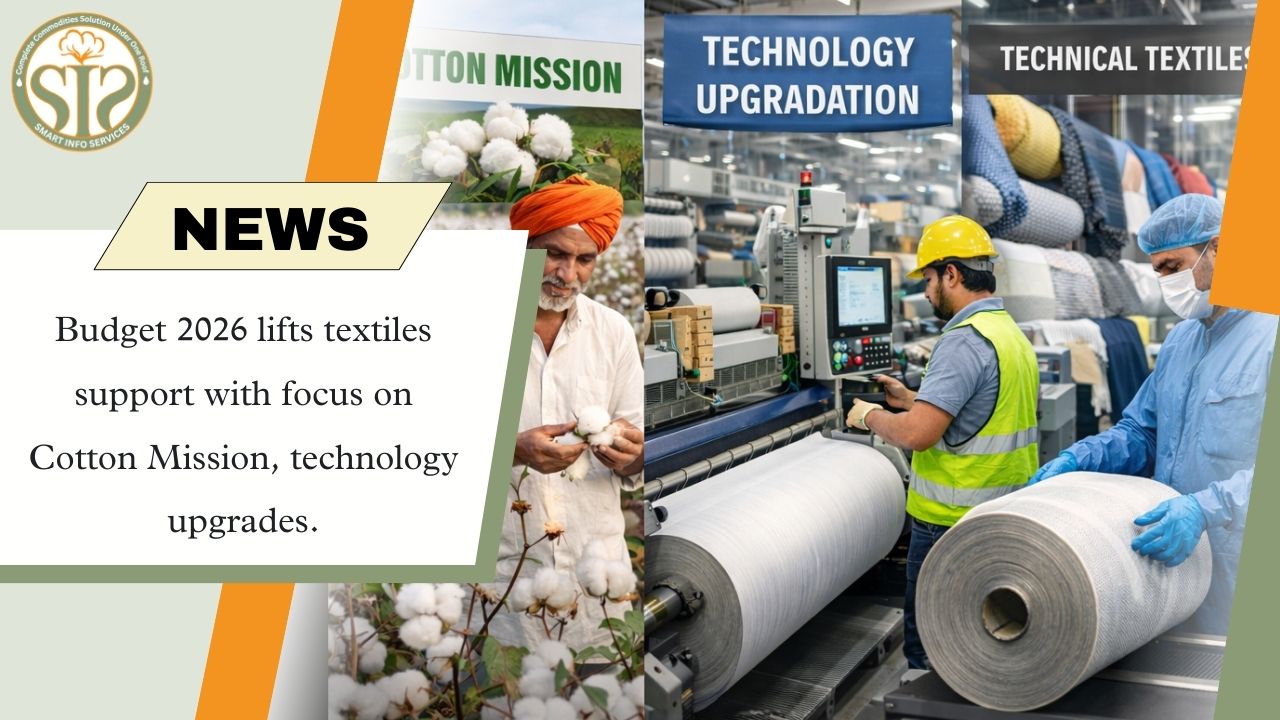
Budget 2026 lifts textiles support with focus on Cotton Mission, technology upgrades.
Budget 2026 has raised support for the textile sector, with higher allocation for the Ministry of Textiles and a renewed focus on the Cotton Mission and technology upgrades. The government aims to improve productivity, stabilise raw material supply and support exporters facing tariff pressure through schemes such as ATUFS, technical textile incentives and new textile parks.
Textiles get higher Budget support in 2026 as Cotton Mission, technology upgrades take focus.
As exporters suffer with new tariff constraints and global uncertainty, the Union Budget 2026 puts textiles back on the table. Higher spending, a renewed Cotton Mission and more support for technology upgrades suggest the government is finally trying to fix long-standing issues in the sector. After months of lobbying by industry bodies and concerns over the impact of US tariff actions under President Donald Trump, the government has chosen to lean on domestic strengths. The focus is clear: raise productivity, improve value addition and help textile manufacturers stay competitive across cotton, man-made fibre apparel and technical textiles. The nearly seven per cent rise in the Textiles Ministry’s allocation underscores that intent.
As anticipated, the Budget has increased funding for the Ministry of Textiles by close to seven per cent. For the industry, this matters as much for what it signals as for the absolute number. At a time when global demand remains uneven and cost pressures persist, the higher outlay suggests policy continuity rather than short-term firefighting.
Executives say the move offers some reassurance after a tough year marked by volatile cotton prices, weak export orders and thinning margins, particularly in apparel. The expectation now is that this additional spending will translate into smoother implementation of existing schemes rather than new headline announcements.
Cotton Mission moves to the centre of policy.
The Cotton Mission has emerged as a central pillar of the government’s textile strategy in Budget 2026. The renewed focus makes it clear the government knows raw materials remain one of the textile sector’s biggest problems. For exporters, support that helps them become more efficient may work better in the long run than short-term incentives.
ATUFS funding likely to increase
A key positive for manufacturers is the expected rise in funding under ATUFS, the Amended Technology Upgradation Fund Scheme. The scheme has played a major role in helping spinning, weaving, processing and garment units modernise.
Another push for technical textiles
The Budget also reinforces the long-term bet on technical textiles as a growth driver. Expanded duty exemptions on specialised machinery are expected to lower entry barriers and attract fresh investment. This push is part of India’s bigger plan to cut import dependence and build strength in exports where global demand is growing.
For states and local economies, especially tier-2 and tier-3 cities where textiles are already strong, this could bring fresh investment and more jobs.
Why this Budget matters for textiles?
Budget 2026 positions textiles as a long-term manufacturing priority, not a sector getting temporary support. The focus is on stronger raw material access, better technology and solid infrastructure - the basics needed to compete globally.