Atul Ganatra: Impact of US-Bangladesh trade on India's textile
By yash chouhan 2026-02-10 23:43:38
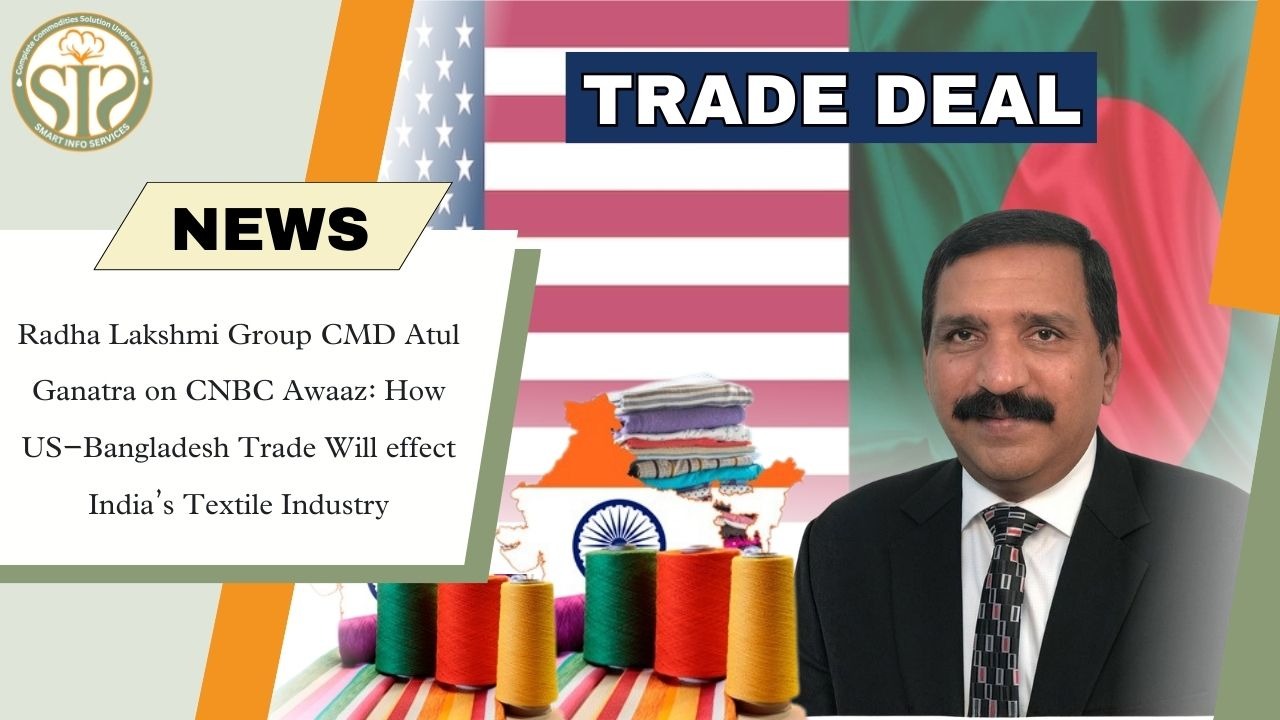
Radha Lakshmi Group CMD Atul Ganatra on CNBC Awaaz: How US–Bangladesh Trade Will effect India’s Textile Industry
During an exclusive interview with CNBC Awaaz, Mr. Atul Ganatra, CMD of Radha Lakshmi Group, shared key insights on the recently announced trade developments between Bangladesh and the USA, and their potential effects on the Indian cotton and textile industry.(SMARTINFO)
Atul Ganatra highlighted that under the new trade arrangement, Bangladesh can import U.S. cotton and export finished garments to the U.S. at zero duty.
This policy won’t significantly impact India’s garment and apparel exports,” he stated, “but it could affect India’s cotton and yarn trade — as Bangladesh is one of our largest buyers.(SMARTINFO)
India’s Cotton & Yarn Trade Impact
India exports 16–18 lakh bales of cotton to Bangladesh annually.
Bangladesh also imports 45–50% of India’s total cotton yarn exports, as local spinning in Bangladesh remains less viable.
* If Bangladesh shifts to U.S. cotton for its production, India’s cotton and yarn exports may see a dip.
However, Atul Ganatra emphasized that the Indian garment and apparel sector remains strong, thanks to:
A robust FTA with the European Union, effective from July onwards.(SMARTINFO)
New trade agreements with six Gulf countries, soon to be implemented. These will provide a major boost to India’s textile exports and strengthen its global position.
India’s Competitive Edge: Power & Production
Atul Ganatra dismissed the old notion that Bangladesh enjoys lower power costs.
“That’s no longer true. Today, India’s power cost is more competitive due to progressive state policies allowing captive solar and wind power for spinning and weaving mills,” he said. This has significantly reduced energy costs and improved India’s overall textile production competitiveness.(SMARTINFO)
The U.S. Cotton Factor
It will take 3–4 months for U.S. cotton shipments to reach Bangladesh — including logistics and manufacturing time — meaning no immediate disruption for Indian exporters. Moreover, the clarity on the percentage of cotton that the U.S. will allow Bangladesh to import is still pending.
Atul Ganatra also pointed out that the U.S. is actively seeking new cotton buyers after China reduced its imports due to a 34% tariff imposed last year.(SMARTINFO)
“In the near future, India too may explore similar trade arrangements with the U.S.,” he said. “If Indian spinning and garment units source cotton from the U.S., zero-duty access could open up significant export advantages.”
Despite short-term challenges in cotton and yarn exports, India’s textile and garment sector stands resilient and future-ready. With supportive trade deals, competitive power policies, and increasing global demand, the Indian textile industry is well-positioned for sustained growth.(SMARTINFO)