Filter

Recent News

Farmers worried about fluctuations in cotton prices

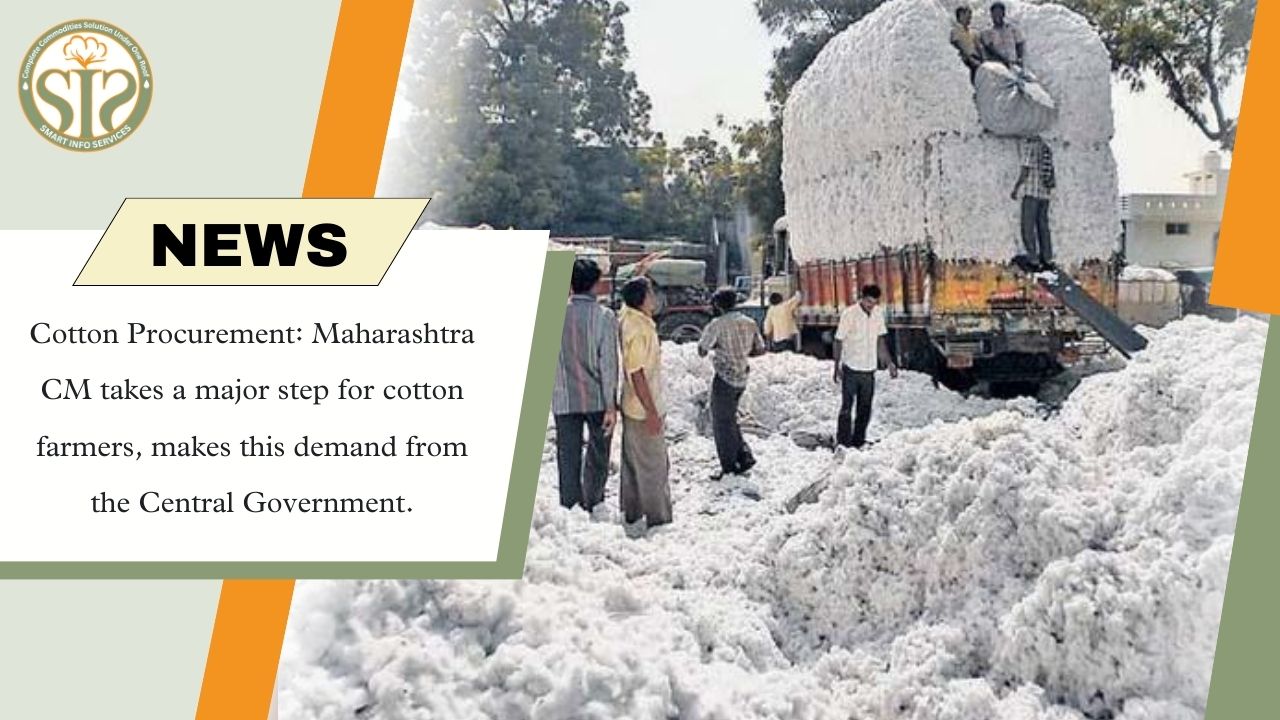
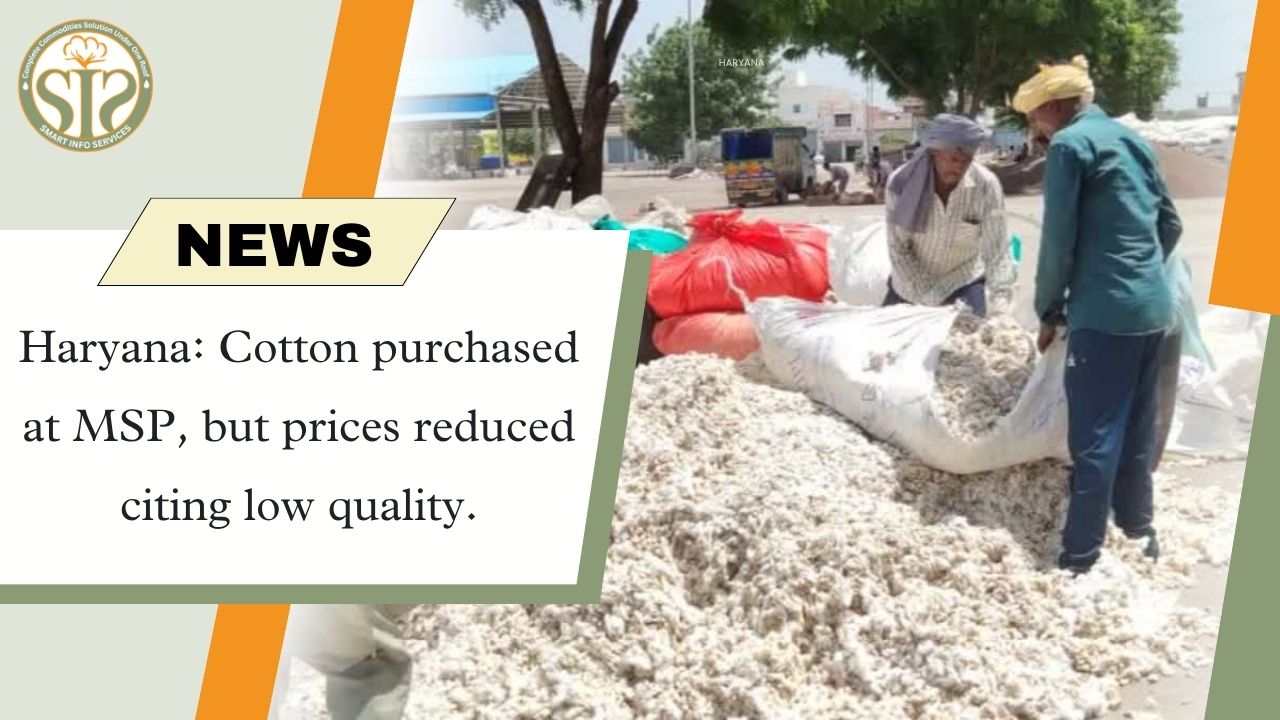
Guaranteed Rates Fall; Farmers Upset by Lower Grading: Cotton Prices Surge in Open Market, Reaching Eight Thousand; a Rs. 600 Increase RecordedWhile the price of cotton has decreased at the guaranteed purchase centers, it has surged in the open market of the district. The implementation of a second grade by the Cotton Corporation of India (CCI) has lowered the guaranteed price, but the open market has seen an increase of Rs. 500 per quintal.The Cotton Corporation of India (CCI) has introduced a second grade for cotton at its guaranteed purchase centers. This has reduced the guaranteed price by Rs. 100 per quintal. As a result, the price of cotton at the procurement center has fallen from Rs. 8110 to Rs. 8010 per quintal. On the other hand, the price of cotton in the open market of Yavatmal district has increased significantly. Cotton, which was previously priced between Rs. 7,200 and Rs. 7,500 per quintal, has now increased by Rs. 500 to Rs. 600, with prices reaching as high as Rs. 8,100 per quintal. This has created a sense of enthusiasm among farmers, and there is a rush to sell in the open market.However, farmers are complaining that despite having good quality cotton, they are being given a lower grade at the guaranteed centers. Farmers are demanding that the previous grading system be reinstated. However, since no new notification has been issued by the central government in this regard, procurement at the guaranteed centers is currently being done according to the second grade.Discussion on Import Duty: The central government had given an 11 percent exemption on import duty on cotton. There are discussions that these charges have now been reversed. However, an official notification in this regard has not yet been issued. Agricultural experts believe that even if the import duty is reversed, it will not have much impact on market prices.read more :-  Cotton imports increase in December quarter due to duty-free incentives

Cotton imports increase in December quarter due to duty-free incentives

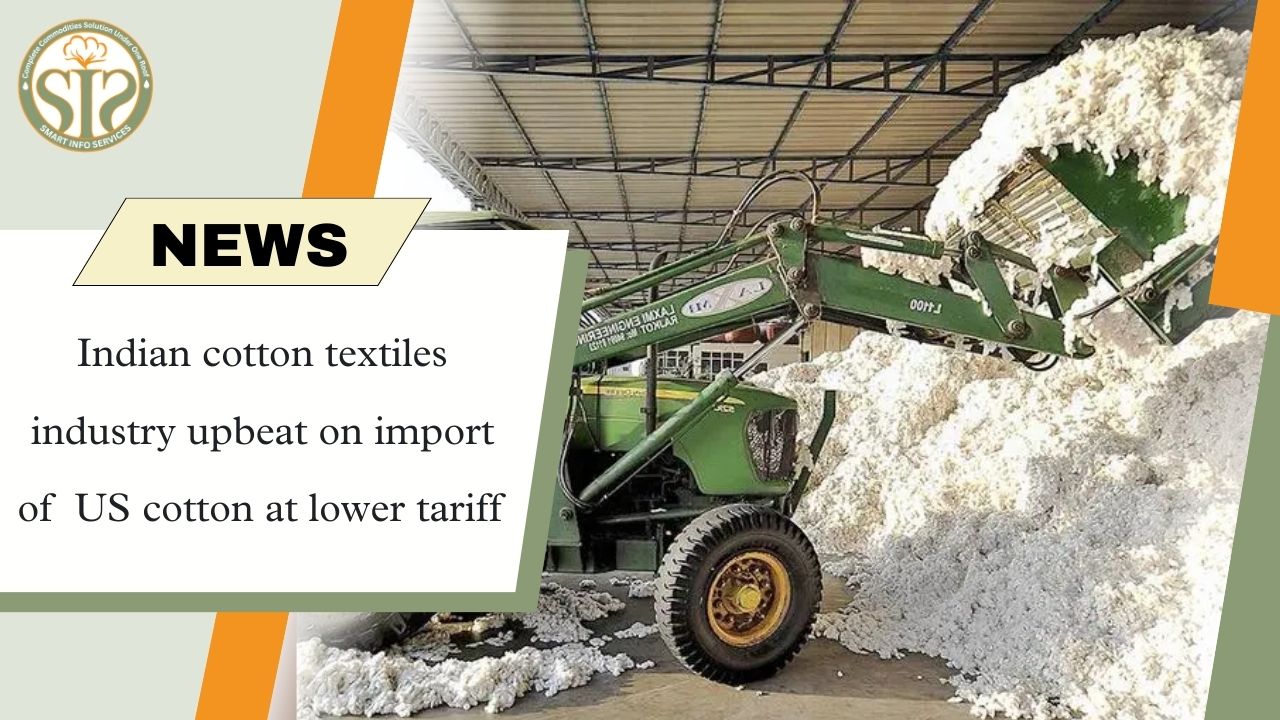
India's Dec quarter cotton imports soar amid duty-free import pushMUMBAI, Jan 14  - India's cotton imports rose 158% year on year to a record 3.1 million bales in the December quarter after New Delhi allowed duty-free ‌imports, boosting overseas purchases, a leading industry body said on Wednesday.Higher imports by the world's second-largest cotton producer are expected to support global prices , but they could weigh on local prices, ‌which had been rising due to crop damage.New Delhi exempted cotton imports from the 11% duty during the December quarter.India's cotton imports in the 2025/26 marketing year, which began ‍on Oct. 1, are likely to jump 22% from a year earlier to a record 5 million bales, the Mumbai-based Cotton Association of India (CAI) ⁠estimated.India's imports reached a record 4.1 million bales last ‍year from the U.S., Brazil, Australia and Africa.The industry body raised its ‌estimate ‌for the current season's cotton crop to 31.7 million bales, up from the previous forecast of 30.95 million bales, mainly due to higher output in the western state of Maharashtra ⁠and the ⁠southern state of Telangana.The textile industry is one of the largest employers in India, directly employing over 45 million people.The CAI forecasts cotton consumption will ‍decline 2.9% to 30.5 million bales in 2025/26, amid weak overseas demand for Indian fabric and apparel.The U.S., which takes nearly 29% of India's $38 billion annual textile exports, doubled ‍tariffs on imports from India to as high as 50%, effective August.read more :- INR Drops 05 Paise, Closes at 90.30 per Dollar

FY 2026: World Bank estimates India's growth rate at 7.2%

World Bank raises India's growth forecast to 7.2% for FY2026, sees limited impact from US tariffsThe upgraded outlook is also driven by robust domestic consumption, recent tax cuts, and higher real rural incomes.The World Bank has revised India's FY2026 growth forecast to 7.2 percent, citing resilient domestic demand despite higher US tariffs. This marks a significant increase from the 6.3 percent estimate made in June 2025.However, according to the World Bank's latest Global Economic Prospects report, assuming the 50 percent tariffs imposed by the Trump administration remain in place throughout the forecast period, growth is expected to moderate to 6.5 percent in FY27.The agency said that stronger-than-expected domestic demand and improved consumption patterns would mitigate the impact of higher US tariffs on India. The upgraded outlook is also driven by robust domestic consumption, recent tax cuts, and higher real rural incomes.The World Bank report stated: "In SAR, the projected slowdown in 2026 primarily reflects the impact of increased US tariffs on India’s goods exports. Growth in the South Asia region (SAR) is poised to rebound in 2027, as exports recover and domestic demand firms, supported by strong services activity as the effects of political uncertainty in several economies dissipate."However, it cautioned that despite the strong performance of services exports, the US tariffs could dampen India's goods exports and impact overall growth. Expressing concerns over large fiscal deficits and spending pressures, the World Bank said it expects India's fiscal deficit to gradually decline through consolidation measures.The agency added that the continued rapid growth, led by India, is expected to support further economic convergence along with a significant reduction in poverty rates. In 2026, growth in South Asia is projected to slow to 6.2 percent, primarily due to the impact of increased US tariffs on India."This year's forecast has been revised down by 0.2 percentage points compared to the June estimates. The revision reflects higher US import tariffs than previously anticipated and updated assumptions about the timing of tariff effects—from 2025 to early-to-mid 2026—and the subsequent recovery."The report further notes that, excluding India, growth in the region is expected to strengthen to 5 percent in 2026 and 5.6 percent in 2027.read more :- The rupee opened 07 paisa lower against the dollar at 90.25

Gujarat's textile industry: engine of employment and sustainable development

Gujarat's textile industry has emerged as a key driver of development through job creation and sustainable growth.The second day of the Vibrant Gujarat Regional Conference (VGRC) in Rajkot focused specifically on the textile industry. The state's textile sector is a crucial source of development as it generates new employment opportunities and is a sustainable industry.Experts discussed this topic in detail and shared their views during a seminar, the Chief Minister's Office said in a press release.The textile industry is not just a sector producing textile products, but a driving force behind Gujarat's economic transformation. Through new technologies, job creation, and sustainable development, this industry is making a significant contribution to the development of the state and the country.At the VGRC, experts shared their insights on new aspects of this industry, technologies, and how to increase textile exports globally.Prominent figures present at the seminar included Updeep Singh, Resident Director of Welspun Group; Prashant Agarwal, Joint Managing Director of Wazir Group; D.S. Patel, Scientist at the Cotton Research Center, Navsari University; Ashwin Chandra, Chairman of CITI; and Vinay Kotak, President of the Cotton Association of India.Speaking at the event, these prominent individuals stated that the textile industry in Gujarat has witnessed remarkable development.The release stated, "This industry has carved a niche for itself in the global market. To remain globally competitive in the textile industry, it has become crucial to develop capabilities in innovative technologies and new designs. Today, fashion plays a very important role in the textile industry, but to keep pace with the ever-changing fashion trends, the use of innovative technologies is essential."Globally, the textile industry is estimated to be worth approximately USD 900 billion. To meet the growing demand for textiles over time, it will be necessary to adopt innovative technologies, while also prioritizing design and quality. Cotton is produced in 11 states of India, with Gujarat, Maharashtra, Rajasthan, Punjab, and Haryana leading in production. Gujarat, in particular, produces a significant amount of cotton.The release further states that today, farmers in Gujarat have been able to significantly increase their production through the use of BT cotton. This high-quality cotton also fetches them better prices. The development of the textile sector cannot be achieved by the government alone; farmers, companies, and the government must work together for the development of this sector. Only then will cotton production increase, and we will succeed in doubling farmers' incomes.The industry is moving forward today through innovative technology, innovation-driven production methods, and eco-friendly manufacturing. The textile industry makes a significant contribution to the state's GDP and export sector. It also promotes small and medium enterprises, thereby increasing employment. The industry has strengthened the employment structure in both the handicraft and machinery sectors. Training and skill development programs have also been implemented for workers and artisans.Sustainable development and innovative technology have encouraged the sector to adopt environmentally friendly practices. New technologies such as recycling, water conservation, and energy saving are being used. Global competition, raw material prices, and changing market demands are challenges for the industry; however, new production methods, digitalization, and new marketing strategies will further strengthen the industry, the release added.read more :-Budget 2026: Demand to remove cotton import duty

Budget 2026: Demand to remove cotton import duty

Budget 2026: Textile industry body seeks permanent removal of cotton import duty; flags cost pressure, ex.The Confederation of Indian Textile Industry (CITI) has urged the government to permanently remove the 11 per cent import duty on cotton in the Union Budget 2026, warning that the levy is aggravating cost pressures and hurting the global competitiveness of domestic textile and apparel manufacturers, PTI reported.A CITI delegation met Union Agriculture Minister Shivraj Singh Chouhan last week, seeking his intervention for the permanent removal of the import duty on cotton of all varieties, the industry body said on Monday.India’s textile industry — the country’s second-largest employment generator — depends on stable access to high-quality cotton. Against a persistent demand–supply gap, the government had extended the import duty exemption on cotton until December 31, 2025, a move that was welcomed by textile associations.However, with no further notification issued, the 11 per cent duty was reinstated from January 1, 2026. CITI said the move would adversely impact the competitiveness of India’s textile and apparel sector.The minister assured the delegation that the concerns raised would be carefully examined during the review process, CITI said.The industry body also flagged a steady decline in domestic cotton production, which it said is projected to fall to its lowest level in nearly two decades this year, intensifying concerns over supply shortages.CITI argued that reimposing the import duty would further aggravate cost pressures for manufacturers. It pointed out that over the past decade, India’s average cotton imports stood at around 20 lakh bales, accounting for about 6.8 per cent of average domestic production.Imports, the industry body said, are largely quality- and specification-driven, catering to specialised requirements and back-to-back export orders, and do not displace domestic cotton.CITI also highlighted that competing textile-exporting countries such as Bangladesh and Vietnam allow duty-free cotton imports, giving them a structural cost advantage in global markets.The demand comes at a time when the textile and apparel sector — one of India’s largest sources of employment and livelihoods — is facing fresh headwinds from a 50 per cent US tariff effective August 27, 2025. Cotton-based products dominate India’s textile exports.The US is India’s single-largest textile and apparel export destination, accounting for nearly 28 per cent of total export revenues. Exports to the US were valued at close to $11 billion in FY2024-25, according to industry data.read more :- The rupee opened 09 paise lower at 90.25/USD.

Related News

Youtube Videos

आज देशभर में रुई के ताज़ा भाव 😱 | Cotton market rate today #cotton #kapas
आज देशभर में रुई के ताज़ा भाव 😱 | Cotton market rate today...
ऐसा रहा आज कपास बाज़ार😱🔥Cotton market rate today #youtube
जानिए आज का कपास बाज़ार? 😱 Cotton Market Rate Today #kapas
Application Download
Whatsapp Contact