Filter

Recent News

Cotton import increased due to trade deal, farmers in trouble, slight relief in textile sector

Trade deal will increase cotton imports! Farmers in crisis and signs of recovery in textile industryNagpur: Due to India-America 'trade deal', efforts have started to eliminate 11 percent import duty on cotton. Already, cotton imports are continuously increasing, while exports are decreasing. With this deal, import of cotton from America will increase and the price of cotton in the domestic market will come under pressure and farmers will have to suffer financial losses. The Indian textile industry, which exports very little, will benefit from the deal as it will get cotton at cheaper prices.The Indian textile industry requires 315 to 320 lakh bales of cotton every year to meet the export and domestic demand of textiles. Every year 330 to 340 lakh bales of cotton are produced in India. India requires 12 to 15 lakh bales of extra long yarn cotton to produce premium quality textiles.The production of this cotton is 3 to 4 lakh bales and every year 10 to 12 lakh bales have to be imported. India has the largest production of long and medium yarn cotton. Since cotton prices in the global market are lower than in India, Indian textile industries import long yarn cotton in the name of extra long yarn and reduce the price. If the cotton price falls below the MSP, the government purchases 22-27 per cent of the total cotton production at the MSP rate. Farmers will be hit the hardest by duty-free cotton imports due to the 'trade agreement'.India's textile exportsChina ranks first in textile exports in the world market, while India ranks sixth. India's textile export share is only four percent. 25 to 30 percent of this cloth is exported to America. The European Union, Vietnam, Bangladesh and Türkiye are India's major competitors.How does the textile industry benefit?The rate of rupee in the year 2021-22 was Rs 1 lakh 5 thousand. Therefore, the prices of clothes increased in the year 2022-23. Rupee prices declined by 40 per cent in 2022-23 to reach a surplus of Rs 62,000. However, the industries did not reduce the rates of clothes by 40 percent. At present the rates of cotton are between 55 to 57 thousand rupees and the rates of clothes are between 1 lakh rupees.A missed opportunity for India in VietnamThere is huge demand for Bangladeshi clothes in the world. Bangladesh's textile industry is dependent on Indian cotton.Due to political instability, Bangladesh's position in the global textile market faltered and India got an opportunity to gain its customers. Vietnam seized this opportunity as the Indian government ignored it.read more :- New opportunity for textile industry from India-US deal

New opportunity for textile industry from India-US deal

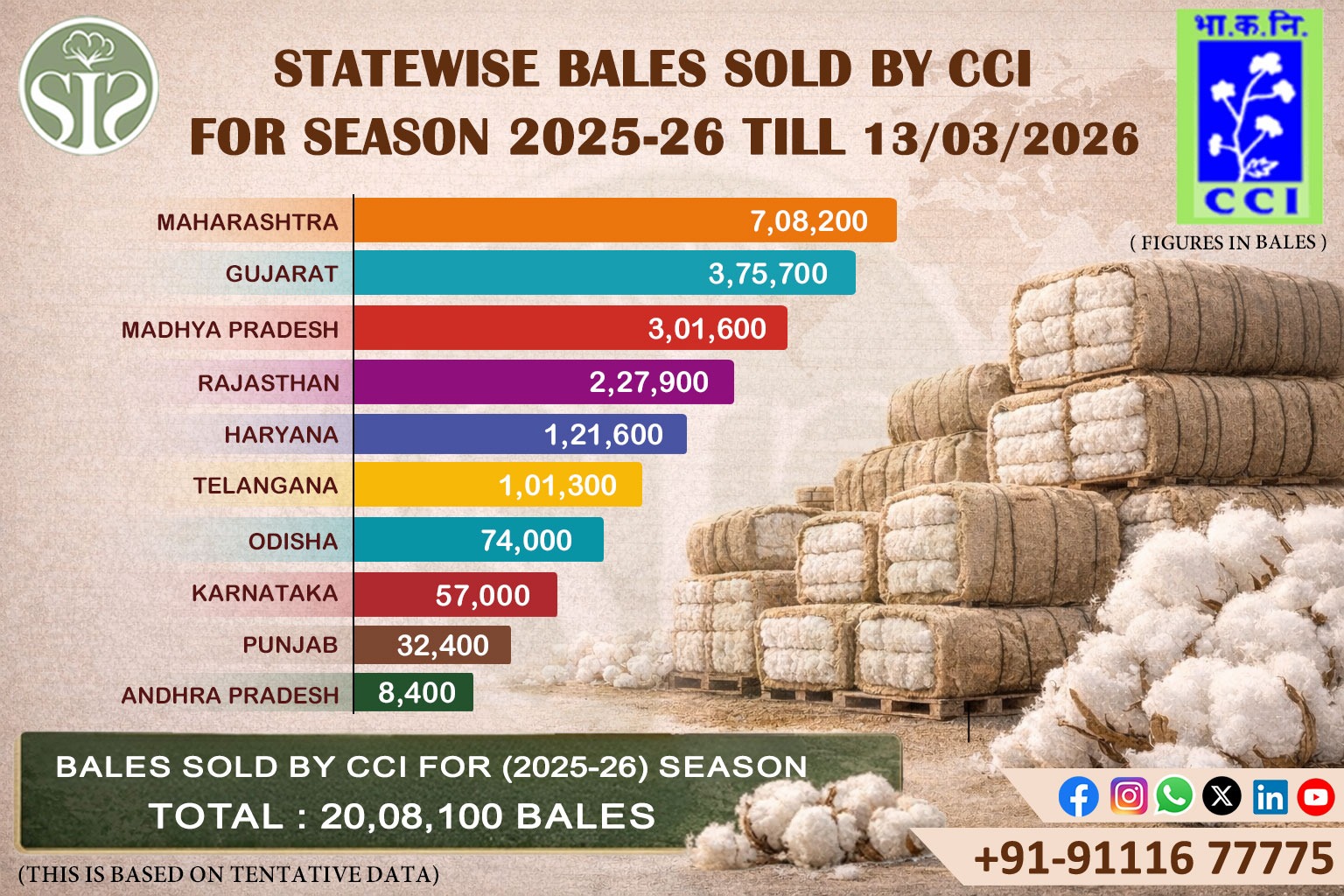
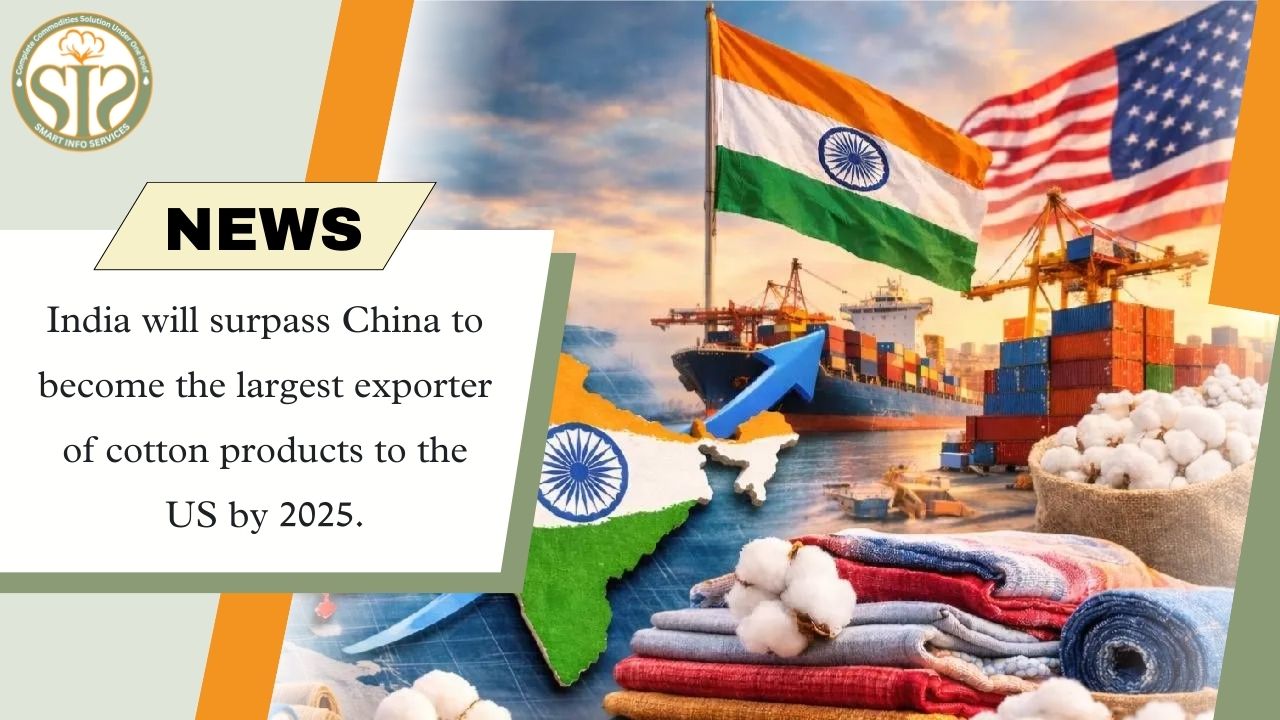
India-US trade deal unlocks $118 billion American textile marketAs India and the US announce that they have reached an interim trade framework, it opens up a $118 billion US global imports market of textiles, apparels and made-ups, a “major opportunity” for the country’s textile industry, as per the government.With the US being India’s largest export destination of around $ 10.5 billion exports, comprising around 70 per cent apparel and 15 per cent made-ups, the Textiles Ministry has welcomed the landmark agreement between both the nations as a major catalyst enhancing textile trade relations.The textile industry said the deal was a major economic game changer for the sector and was expected to play a pivotal role in India achieving its intended target of $100 billion exports in 2030. It is also expected to provide the requisite momentum, with US to contribute to more than 1/5th of this target.A key advantage of the deal lies in the 18 per cent reciprocal tariffs on all the textile products including apparel and made-up. This will not only remove the disadvantage that Indian exporters had, but would place them in a better position than most competitors who face higher reciprocal tariffs like Bangladesh (20 per cent), China (30 per cent), Pakistan (19 per cent) and Vietnam (20 per cent).This shift would significantly alter sourcing methods and drive customers to re-evaluate supply chains in favour of India.Meanwhile, the Confederation of Indian Textiles Industry (CII) estimated that India exported almost $11 billion worth of textiles and apparel to the United States in FY25. India’s biggest export destination for clothing and textiles is the US, which also contributes significantly to industry earnings. About 28–33 per cent of India’s total exports of textiles and clothing go to the US.Yet, with about 9.4 per cent of the US import market, it ranks as the fourth-largest supplier of clothing and textiles to the US. In fact, 33 per cent of India’s exports of ready-made clothing, 48 per cent of its home textile exports, and 59 per cent of its carpet exports are shipped to the US. India’s competitive position was thus undermined by the US’s 50 per cent tariff on its goods.“The India–US Interim Trade framework is a timely and positive step towards the $500 billion trade ambition. By addressing tariffs, non-tariff barriers and supply chain resilience, it creates a more predictable and enabling environment for businesses and two-way investments across manufacturing, technology, energy and services,” Chandrajit Banerjee, Director General, CII, said.The agreement would also enable the industry to be cost-competitive and diversify their risks by sourcing intermediates for the textiles sector from the US. This would facilitate manufacturing of value-added textiles in the country and diversify our production and exports. The deal would generate additional employment and encourage investments by US entities.read more :- 2025-26: State wise CCI cotton sales

Fadnavis on Indo-US trade deal: Interests of soybean-cotton farmers protected

“Soybean and cotton farmers interests are protected”- Maharashtra CM Devendra Fadnavis on Indo-US trade deal.Maharashtra Chief Minister Devendra Fadnavis Saturday said that the state’s farmers interest will be protected and they will not face any negative impact by the Indo-US trade deal.On the sidelines of Advantage Vidarbha 2026, Fadnavis, when asked whether soybean and cotton farmers could face problems or lose market share due to the Indo-US trade deal, told The Indian Express:  “That is not going to happen. Farmers are well protected. The government is buying a large share of soybean produce at the Minimum Support Price (MSP), and the market price has also stabilised.” Advantage Vidarbha is a three-day business conclave aimed at attracting investment to the mineral-rich, drought-hit region.The India-US joint statement released on Friday morning says that India will eliminate or reduce tariffs on all US industrial goods and a “wide range” of US food and agricultural products, including dried distillers’ grains (DDGs), red sorghum for animal feed, tree nuts, fresh and processed fruit, soybean oil, wine and spirits, and additional products.“India will eliminate or reduce tariffs on all U.S. industrial goods and a wide range of U.S. food and agricultural products, including dried distillers’ grains (DDGs), red sorghum for animal feed, tree nuts, fresh and processed fruit, soybean oil, wine and spirits, and additional products. Recognising the importance of working together to resolve long-standing concerns, India also agrees to address long-standing non-tariff barriers to the trade in U.S. food and agricultural products,” the statement said.The US Agriculture Secretary Brooke Rollins also earlier had claimed that the India-US trade deal will result in “export [of] more American farm products into India’s massive market”.Soyabean and Cotton are the main cash crops in Vidarbha and Marathwada region for the majority of farmers. Farmer organisations in Maharashtra have raised concern that if the government will allow unrestricted import of the agriculture produce under Indo-US trade deal, it will be distressing for the Indian farmers as they will not be able to withstand the competition from the advanced agriculture sector in the US.In a letter to the Prime Minister’s Office (PMO), Swabhimani Shetkari Sanghatana president Raju Shetti wrote, “We have been informed that India and US have signed a 500-billon dollar trade deal which allows import of agricultural products at zero interest. If taken forward, the deal will be a betrayal of Indian farmers as the country will be flooded with imports such as soybean, corn, milk products and others from the US.”Shetti earlier told the  that US farmers produce crops like Soyabean and Cotton at much larger scale, their markets are stabilised and Indian farmers will find it extremely difficult to compete with them in the absence of any level-playing field.Currently most of the US’ Agriculture export to India is Tree Nuts- like almonds and pistachios, followed by Cotton and Soyabean Oil. Whereas India’s Agriculture export to the US is seafood, spices, rice, vegetable oils, processed fruits & vegetables.The US runs a trade deficit with India in agricultural products, meaning it imports more than it exports. Agricultural and dairy products have been a key point of contention, with the US pushing for greater market access in India. However, the deficit was already narrowing even without a trade deal, declining from $3.5 billion to $3.1 billion in 2025.read more :- US-India announce historic interim trade agreement

US-India announce historic interim trade agreement

United States and India Announce Framework for Historic Interim Trade AgreementThe United States and India are proud to announce a framework for an Interim Trade Agreement, marking a major milestone in strengthening their economic partnership. This framework advances ongoing negotiations toward a comprehensive U.S.-India Bilateral Trade Agreement (BTA) launched by President Donald J. Trump and Prime Minister Narendra Modi on February 13, 2025.The Interim Agreement reflects both nations’ commitment to reciprocal, balanced, and mutually beneficial trade, deeper market access, and resilient supply chains.Key Highlights:Tariff Reductions: India will cut or eliminate tariffs on U.S. industrial, food, and agricultural products.Reciprocal U.S. Tariffs: The U.S. will adjust tariffs on select Indian goods and remove duties on pharmaceuticals, gems, and aircraft parts under the agreement.Market Access: Both nations commit to sustained preferential access across key sectors.Non-Tariff Barriers: India will ease restrictions on U.S. medical devices, ICT goods, and agricultural products.Technology & Energy: India plans to purchase $500 billion in U.S. energy, aircraft, technology, and metals over five years, boosting trade in high-tech goods.Digital & Economic Security: The two countries will collaborate on digital trade rules, supply-chain security, and innovation.This framework underscores a shared vision for a modern, fair, and forward-looking trade partnership—paving the way for a landmark U.S.-India Bilateral Trade Agreement.read more :- India-EU FTA will increase competitiveness of Indian textiles: ICRA

India-EU FTA will increase competitiveness of Indian textiles: ICRA

India–EU FTA to put Indian textiles on par with competitors: ICRA Indian textile and apparel exports are expected to gain a significant competitive boost in the European market following the signing of the India–EU Free Trade Agreement (FTA). The agreement eliminates duties on Indian shipments, placing them on a level playing field with key competitors such as Bangladesh and Vietnam, according to an Investment Information and Credit Rating Agency (ICRA) report.EU import duties on Indian textiles are expected to fall to zero, addressing a longstanding tariff disadvantage that had limited India’s competitiveness.  Historically, the EU’s import dependence on India has remained below 5 per cent, with China, Bangladesh, Turkey and Vietnam leading supplies dur to preferential trade access and lower tariffs.India’s apparel exports are estimated at over $16 billion in calendar year 2025 (CY2025), with nearly one-third going to the US and around 23 per cent to the EU, making Europe one of the largest export destinations for the sector. However, exports to the EU have remained largely flat in recent years due to sluggish retail demand, inflationary pressures and vendor diversification by global buyers, the report said.The FTA is expected to be particularly beneficial for apparel and home textile segments, which stand to gain from tariff-free access.Beyond sector-specific gains, the broader trade pact offers preferential zero-tariff access on 97 per cent of EU tariff lines covering 99.5 per cent of India’s export value, with a large portion of duties expected to be eliminated immediately upon enforcement.Over the medium term, the level playing field could also support MSME exporters and reinforce India’s role as a reliable sourcing destination for the EU market.read more :- CCI keeps cotton prices stable, weekly online auction continues

CCI keeps cotton prices stable, weekly online auction continues

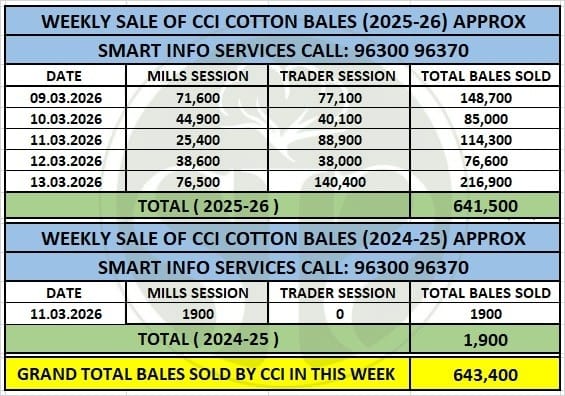
CCI Keeps Cotton Prices Unchanged; Weekly Sales Continue Through Online AuctionsThe Cotton Corporation of India (CCI) kept its cotton prices unchanged. During the week from 02 february 2026 to 06 february 2026, CCI conducted regular online auctions for mills and traders across various centers. These auctions resulted in total weekly sales of approximately 2,600 bales for 2025-26 and 900 bales for 2024-25 season, reflecting steady demand from both segments.Daily sales performance02 February 2026:CCI began the week with sales of 100 bales, all of which were purchased by mills. The entire quantity belonged to the 2024–25 season.03 February 2026:Total sales rose to 1,600 bales, including 1,500 bales bought by mills and 100 bales purchased by traders. All sales on this day were from the 2025–26 season.04 February 2026:Sales stood at 1,300 bales, comprising 1,000 bales from the 2025–26 season and 300 bales from the 2024–25 season. Mills accounted for 900 bales, entirely from the current season, while traders bought 400 bales, including the full quantity from the previous season.05 February 2026:A total of 500 bales were sold, all purchased by mills from the 2024–25 season, indicating continued mill demand for older-season cotton.06 February 2026:No bales were sold in the CCI online auction today for both the 2025–26 and 2024–25 seasons.Cumulative salesWith these transactions, CCI’s cumulative sales reached 3,61,900 bales for the 2025–26 season and 98,82,400 bales for the 2024–25 season, as the agency continues to offload stocks through its e-auction platform while maintaining stable prices.


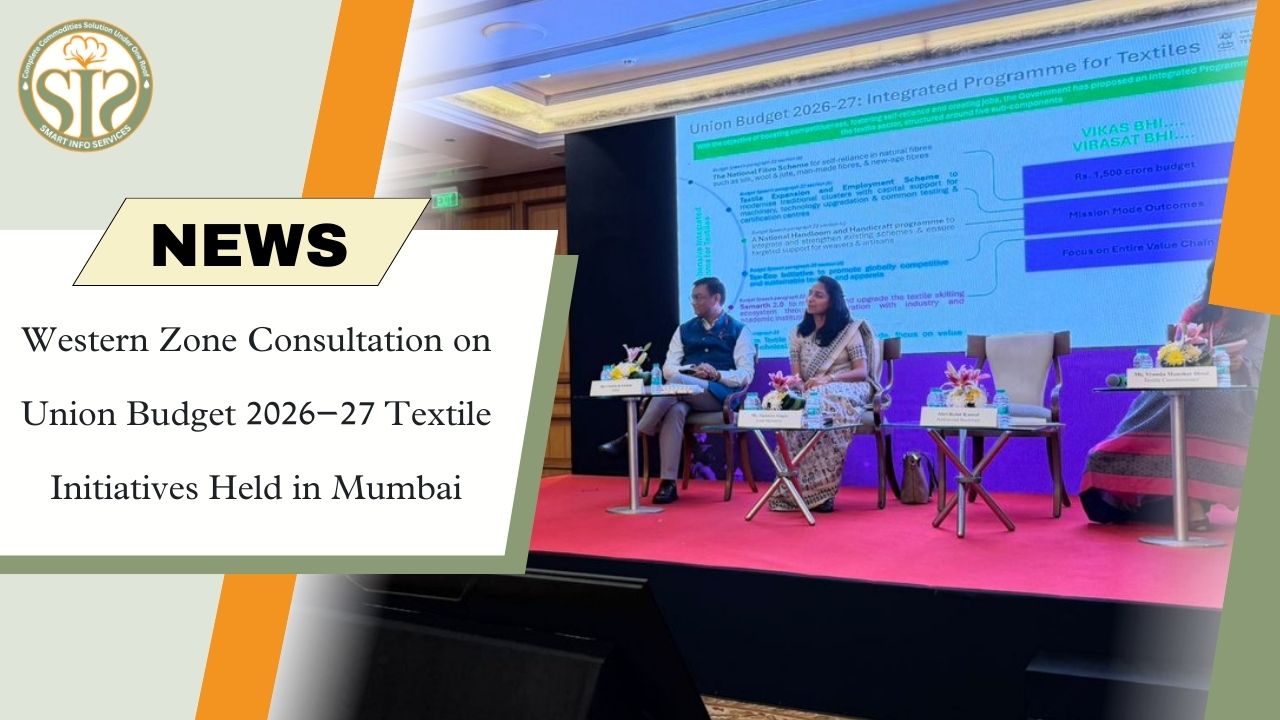
Budget 2026–27: Employment and growth in the textile sector

Emphasis on making textile sector a major engine of growth and employment in Budget 2026–27The Union Budget 2026–27 reflects India's strong economic position and the government's confidence in long-term reforms amid global economic uncertainties. India remains the world's fourth largest and fastest growing major economy, driven by infrastructure and manufacturing led growth with an estimated growth rate of 7.2 per cent and capital expenditure of ₹12.21 lakh crore.The budget has made the textile sector the main pillar of inclusive growth and large-scale employment generation through labour-intensive manufacturing. The sector, hitherto viewed from a welfare perspective, has been placed at the center of the national industrial strategy, linking it to competitiveness, scale and export potential. Presently this sector contributes about 2.3 percent to the GDP and provides employment to more than 5.2 crore people.The 18 free trade agreements (FTAs) signed by the government have given India preferential access to global textile markets worth approximately $466 billion. Better access to key markets, including the US, is expected to lead to significant growth in textile exports, further strengthening India's position in global value chains.Domestically, Budget 2026 focuses on enhancing the competitiveness of the industry through relaxation of quality control mandates, GST reforms and resolution of inverted duty structure. Under the National Fiber Scheme, the availability of cotton, man-made and new-age fibers will be strengthened, which will stabilize raw material costs and increase certainty in export pricing.To modernize the industry, it has been announced to upgrade 200 textile industrial clusters across the country. The textile industry generates more employment per investment and is estimated to create 2 to 3 crore new livelihoods in the next five years through cluster-based expansion. Along with this, 15 lakh skilled workers will be trained under the Samarth 2.0 scheme.The budget also provides for an SME Development Fund of ₹10,000 crore, an improved TReDS platform and a faster payment mechanism to address the liquidity problems of MSMEs. By including the handloom and handicraft sectors in the reform process, sustainability, skill development and global market access are promoted, which is expected to strengthen India's textile ecosystem in the long term.read more :- New export opportunities for Odisha textiles from India-US trade agreement

New export opportunities for Odisha textiles from India-US trade agreement

India-US trade agreement opens new export avenues for Odisha's textilesThe India-US trade agreement will boost the Odisha textile industry, easing US tariffs to help handloom and apparel exports go global, creating jobs for weavers and pushing Sambalpuri and traditional textiles to international markets.The recent India-United States trade agreement has opened up new opportunities for Odisha, especially in the textile and apparel sector. From traditional handloom products to modern readymade garments, Odisha-made clothes are now set to reach wider international markets more easily, official sources said on Thursday.With the relaxation of import duties by the United States, exports from Odisha are expected to become more competitive. The move is likely to open new avenues of income for weavers and handloom artisans across the state. Chief Minister Mohan Charan Majhi said in a social media post that the traditional attire of Odisha is all set to emerge as a new trend in the global scenario.CM Majhi took to his personal 'X' handle and said, "Be it the handlooms of Odisha or the modern readymade garments; as a result of the India-US trade agreement, the craftsmanship of Odisha will now reach everywhere. Due to the relaxation in duties, exports will become easier, thereby opening new avenues of employment for our weavers and handloom artisans. The traditional attire of Odisha will now create a new trend in the global market."The reduction in tariff is expected to significantly increase exports of Odisha manufactured textiles and garments. Iconic handloom varieties like Sambalpuri along with other traditional textiles will get easier access to the US market, strengthening Odisha's presence in global fashion and trade."From 'field to fashion', Odisha's textile and apparel sector is going global. Low US tariffs open up high-value markets for local producers, empowering textile hubs across the state and transforming traditional craftsmanship into international success," the CM said in another post on 'X'.read more :- Cotton-soybean production in Devla decreased by 35%

Cotton-soybean production in Devla decreased by 35%

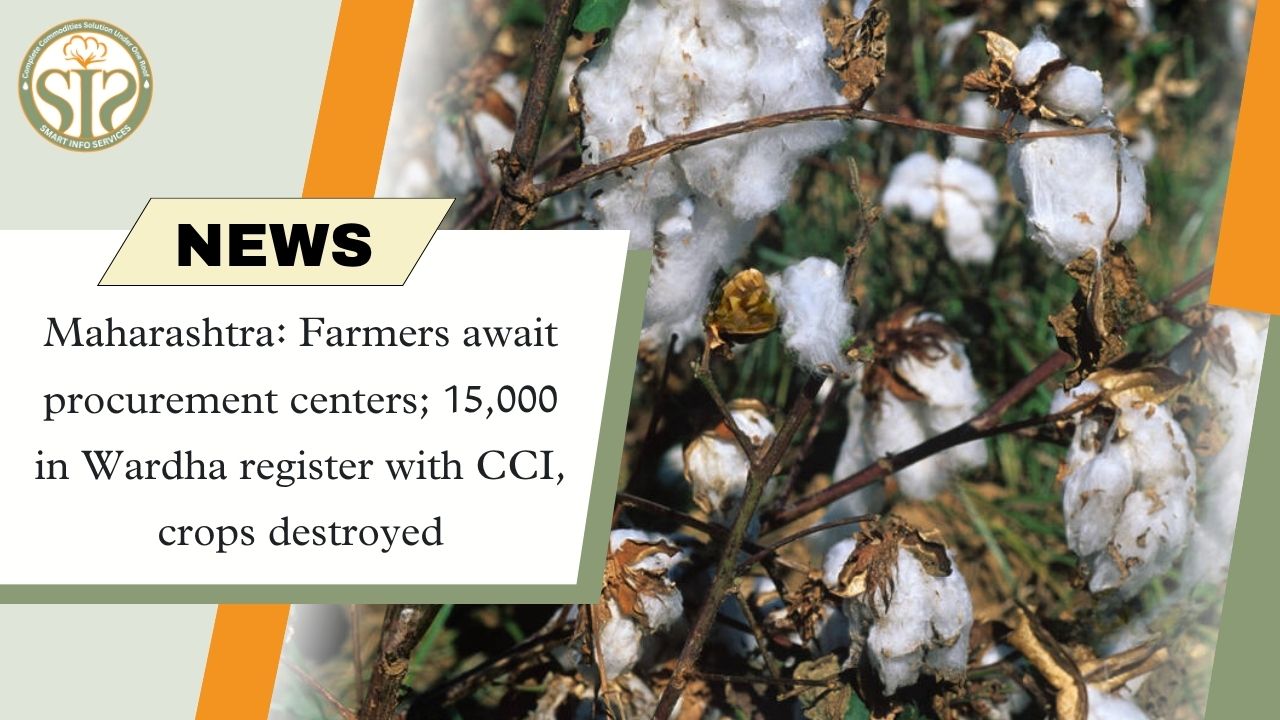
Decline in cotton production: 35 percent decline in cotton, soybean production in DevlaWardha News: This year, one lakh sixty thousand quintals of cotton was sold in the market premises of Deoli Agricultural Produce Market Committee. This inflow occurred from 3 November 2025 to 31 January 2026. Last year, during the same period, 2 lakh 29 thousand quintals of cotton were sold. In comparison, 35 percent less cotton has been imported this year.Obviously, cotton production has reduced this year due to less arrivals in the market. Due to this, cotton farmers are in financial crisis. This year, Indian Cotton Corporation purchased 46 thousand 121 quintals of cotton. Initially farmers sold their cotton to the Cotton Corporation of India because traders were offering low prices, but due to the increase in the price of cotton, the Cotton Corporation of India stopped buying cotton.Traders purchased 24 thousand 44 quintals from Jai Bajrang Ginning, 26 thousand 684 quintals from Sanjay Industries, 10 thousand 43 quintals from Jai Bhavani Ginning Shirpur, 3 thousand 459 quintals from Madhu Industry, 2 thousand 60 quintals from Ashok Industries, 9 thousand 650 quintals from Deoli Agro, 12 thousand 497 quintals from Shri Krishna Ginning. And purchased 4 thousand 284 quintals of cotton. Quintal from Mohan Trading. isWhile talking to the traders, he told that less cotton is being sold in the market as compared to last year and the quality of cotton has also decreased as compared to last year. The arrival of cotton from outside the district has also reduced. Therefore, he predicted that this year's season would end soon.Purchase of 18 thousand quintals of soybean this yearDue to decrease in soybean production, only 18 thousand quintals of soybean were sold in the market this year. Out of this, 16 thousand 660 quintals of soybean were purchased by traders, while NAFED purchased 1 thousand 347 quintals of soybean. According to the Agricultural Produce Market Committee, 27,548 quintals of soybean were sold in the entire season last year. It is being told that this year the price of cotton has decreased from Rs 8 thousand 450 to Rs 8 thousand 50. Due to reduced arrival of soybean and cotton, the crowd in rural markets seems to be reducing. Due to this, consumer demand has spread in the market.read more :- Global cotton oversupply to continue in 2025/26: ICAC

Related News

Youtube Videos

आज देशभर में रुई के ताज़ा भाव 😱 | Cotton market rate today #cotton #kapas
आज देशभर में रुई के ताज़ा भाव 😱 | Cotton market rate today...
ऐसा रहा आज कपास बाज़ार😱🔥Cotton market rate today #youtube
जानिए आज का कपास बाज़ार? 😱 Cotton Market Rate Today #kapas
Application Download
Whatsapp Contact