Recent News

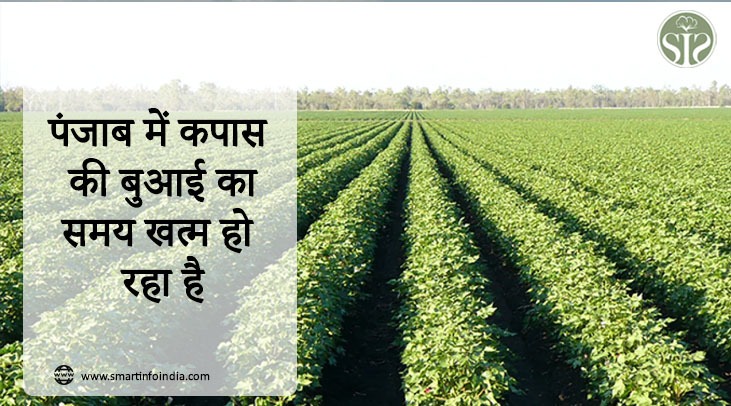
Cotton sowing time is running out in Punjab

Cotton sowing time is running out in PunjabBathinda: The mercury has started rising with the mercury rising above 40 degree Celsius making the weather hot and humid. The ideal time for cotton sowing is fast approaching but less than half of the target area has been recorded in Punjab. According to the State Agriculture Department, cotton has been sown in 1.21 lakh hectares till May 15 against the target of three lakh hectares.The crop was grown on 2.48 lakh hectares in the previous year and the state government had set a target of a 20% increase in the current season. To attract farmers to cotton by pulling them from the watershed to paddy, the state government also offered 33 per cent subsidy on Bollgard-II (BG-II) seeds. However, according to the sowing trend.The optimum time for cotton sowing is considered when the temperature hovers between 30°-35°C, which normally lasts till May 15. Under such temperature, germination and growth of plants is expected in line and it gets first irrigation after about one month. But with the rise in temperature and the conditions getting hotter and moist, the chances of germination becoming erratic or the plant getting burnt in the scorching heat are high. The number of plants, which is usually 1,80,000-2,00,000 inches at sowing stage, decreases under normal conditions and as the insects grow, the crop becomes more vulnerable to insect attack under moist conditions. Pests Due to two consecutive crop losses (if not failures). The attack and excessive rains have eroded the confidence of the farmers and they are turning to paddy for assured returns. The cotton crop in 2021 was damaged due to pink bollworm and in 2022 it was white fly and pink bollworm to some extent apart from excessive rains at the most inopportune times. The cotton crop had actually started going down after 2015 when the whitefly attack took placeFor the first time about 60% crop damage was reported. Thereafter it moved downwards and reached the lowest level of 2.48 lakh hectares in 2022 sowing season. Even though cotton touched Rs 10,000 per quintal and is stable at Rs 8,000 per quintal, which is much higher than the MSP, for much of 2020 and 2021, and yet in 2022, the damage done by the pest The producer failed to revive the trust.

Why is El Nino a concern for Indian monsoon rainfall?

Why is El Nino a concern for Indian monsoon rainfall?The India Meteorological Office has predicted normal monsoon rainfall in 2023. However, there is a 90% chance of an El Niño weather pattern developing during the June-September monsoon season, increasing the likelihood of below-normal rainfall.In the past, India has experienced below-average rainfall during most El Niño years, sometimes causing severe droughts that destroy crops and force authorities to limit exports of certain food grains.What is El Nino? How does it affect the monsoon of India?El Niño is a meteorological phenomenon that occurs when ocean temperatures in the central and eastern Pacific Ocean exceed normal. The warming causes changes in atmospheric patterns, leading to a weakening of the monsoon circulation over the Indian subcontinent. As a result, the Indian monsoon becomes weaker and less reliable during El Nino years.How close is the relationship between El Nino and monsoon rains?The relationship between El Niño and Indian monsoon rainfall is significant, despite occasional instances when India receives normal or above-normal rainfall during El Niño years. In the past seven decades, El Nino weather patterns occurred 15 times, with India receiving normal or above-normal rainfall six times. However, an opposite trend has emerged in the last four El Nino years, with India experiencing persistent drought conditions and rainfall falling below 90% of the long-term average.El Niño events are classified as weak, moderate, or strong according to the magnitude of the temperature increase above normal.In 2009, a weak El Niño led to a significant deficit in India's rainfall, which fell 78.2% below normal, the lowest recorded in 37 years. In contrast, in 1997, a strong El Niño occurred, yet India received 102% of its normal rainfall. Weather models are suggesting that the 2023 El Niño could be stronger.Why is monsoon important?The monsoon is crucial to India, providing about 70% of the annual rainfall and affecting major crops such as rice, wheat, sugarcane, soybeans and groundnuts. Agriculture accounts for about 19% of India's $3 trillion economy and employs more than half of its 1.4 billion population.The impact of the monsoon extends beyond agriculture, affecting the wider economy. Adequate rainfall boosts overall economic growth, helping to control food price inflation, which has risen recently, and increased lending rates.An increase in agricultural production could also ease export restrictions on sugar, wheat and rice. In contrast, a drought requires importing food and maintaining export restrictions. In 2009, bad rains forced India to import sugar, pushing global prices to record highs.How does monsoon affect inflation and central bank policy?Food accounts for nearly half of India's consumer price index, which the central bank closely monitors when deciding on monetary policy. India received normal or above-normal rainfall for four straight years, yet prices of cereals, dairy products and pulses have jumped in recent months and forced the Reserve Bank of India to sharply hike lending rates .

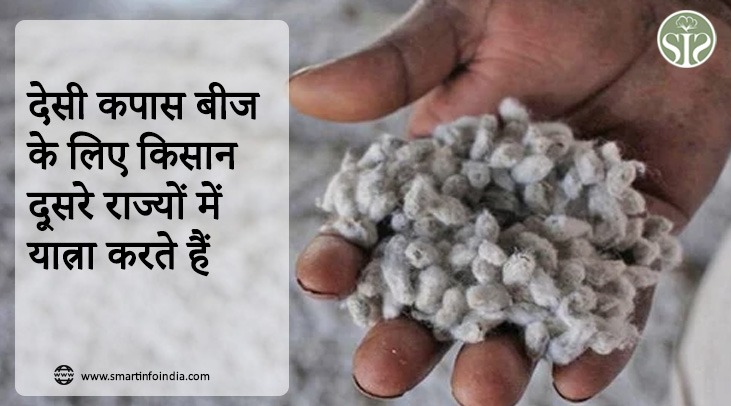
Farmers travel to other states for indigenous cotton seeds

Farmers travel to other states for indigenous cotton seedsCotton Market Update Supply of indigenously improved, indigenous hybrids in Khandesh is constrained every year. Due to this, the farmers have to go around Madhya Pradesh, Gujarat for this seed.The concerned companies send their seeds to Madhya Pradesh and Gujarat on time and in large quantities as they get good prices. This seed yields 8 to 10 quintals of cotton per acre. Farmers have experience that big harvest is also good.A company supplies its indigenous cotton seeds to Khandesh. But this supply ends at the end of June. Also, in Jalgaon district, at least one to one and a half lakh packets of this seed are needed, but only 25 to 30 thousand packets come in two phases.In that too these packets are first given to the preferred group. By then the right time for cotton cultivation is over. Due to this, the farmers of Madhya Pradesh and Gujarat are going to their familiar agricultural center managers, cotton growers, relatives to buy the seeds of this company by paying a fixed price and taking a receipt.A maximum of two to three packets are being given to a farmer in Madhya Pradesh, Gujarat. Because the seller and the administration fear that if a farmer is given as many packets as he needs, there will be shortage of the respective seeds. Due to this, the farmers of Khandesh are being given the necessary seeds for cultivation in two to three acres.Time and travel cost increasedFarmers of Muktainagar, Raver, Yawal, Chopra, Shirpur, Dhule, Taloda, Akkalkuwa, Shahada, Navapur of Nandurbar in Khandesh are buying more cotton seeds from abroad.There the respective seeds are available for 950 to 1000 rupees. In this, the farmers have to bear the trouble of commuting and visiting the agricultural centers. It costs more time and money.👇🏻👇🏻👇🏻👇🏻https://smartinfoindia.com/newsdetails/2343

Cotton Market: Cotton prices are at low levels in Khandesh

Cotton Market: Cotton prices are at low levels in KhandeshJalgaon Cotton Market Update: Cotton prices in Khandesh have come down to the lowest level ie 7300 to 7400 rupees per quintal. The income has reached 80 thousand quintals per day. The rate level has fallen due to rising inflows.This month income increased more. In April, an average of 68 thousand quintals of cotton was imported in Khandesh per day. The inflow has increased in the last three to four days of this month. Because the rainy season has cleared. Laborers have also returned to work. Cotton processing factories are working fast.Demand for cotton has increased. This has increased shopping in villages. Income is also increasing. As a result, pressure on rates has increased. Currently 13 to 14 thousand bales (one bale is 170 kg cotton) are being produced in the factories of Khandesh. This process will be faster. Because the import of cotton is getting regular.Last month, the average rate for village purchases was Rs 7,500 to Rs 7,600. But this month the rate has fallen. The minimum rate is Rs 7300 per quintal. The loss of farmers has increased due to low prices.In Khandesh this year, the maximum purchase rate of Kheda was Rs 9200 to 9300 per quintal in early November. By February, rates continued to fall. But during this period the minimum rate was Rs 8100 to 8250 per quintal.1900 loss per quintal to the farmerIn March and April the rate remained below Rs 7800 and this month the rate has come down to Rs 7400 per quintal. At present the farmer is suffering a loss of Rs 1800 to 1900 per quintal.If cotton is kept in the house for a long time, it gets spoiled. Also, where there is cotton, there is now provision for keeping fodder. Due to this many farmers are selling cotton.32 to 35 percent farmers have cotton stocksToday, about 32 to 35 percent of farmers in Khandesh have cotton stock. This stock is more in Chopda, Yaval, Jalgaon areas of Jalgaon district. In Dhule and Nandurbar, only 20 to 25 percent of farmers have cotton stock.👇🏻👇🏻👇🏻👇🏻https://smartinfoindia.com/newsdetails/2340

Related News

Youtube Videos

आज के कपास के भाव 😱 गुजरात कपास बुवाई अपडेट 🔥Cotton Rate Today 22 Sep 2026
आज के कपास के भाव 😱 गुजरात कपास बुवाई अपडेट 🔥Cotton Rate T...
जानिए आज का कपास बाज़ार 😱 Cotton market rate today #kapas #cotton
जानिए आज का कपास बाज़ार 😱 Cotton market rate today #kapas #c...
रुई के भाव में लगातार गिरावट 😱 क्या आगे भी रहेगी मंदी? | Cotton Market
रुई के भाव में लगातार गिरावट 😱 क्या आगे भी रहेगी मंदी? | Co...
Application Download
Whatsapp Contact