Recent News

Maharashtra: Cotton farmers in a new trouble, new crisis after price fall

Maharashtra: Cotton farmers in a new trouble, new crisis after price fallCotton seed issue: Worried about not getting the expected price for cotton, farmers are now facing a new problem of seed shortage.Yavatmal: With only two days remaining for the rooster constellation, the demand for sowing by the farmers has intensified. The rush to buy seeds is increasing. But the difficulty has increased due to non-availability of seeds of reputed companies. Because farmers are urged to buy low quality seeds. As complaints are increasing in this regard, farmers are demanding timely measures from the government. Farmers who have access to irrigation practice dust sowing. Dry land sowing is also done if the rainfall pattern is satisfactory. To avoid rush on time, farmers start procuring seeds and fertilizers well in advance. As soon as the monsoon starts advancing over Kerala, approx.Kharif is sown in 9 lakh 2 thousand 72 hectares in Yavatmal district. Out of this, cotton is grown in 4 lakh 55 thousand area while soyabean has 2 lakh 86 thousand 144 hectare. A demand for 22 lakh 75 thousand packets of seeds has been registered by the Agriculture Center Director. Seeds are also available in the market. But, the seed companies are not getting the seeds which the farmers were expecting. On asking for four packets, only two are being given. The other two packets are also requested to be picked up by specific companies. Earlier, due to shortage of seeds in Yavatmal district, farmers used to buy seeds from Adilabad district situated on the Telangana border. There also there are complaints from farmers that seeds of reputed companies are not available. Ramesh Buch, a wholesaler of agricultural literature, said that the government is responsible for the shortage of seeds due to drought-ravaged crop and adoption of new technology.

Madhya Pradesh: Sowing of earlier varieties of cotton begins

Madhya Pradesh: Sowing of earlier varieties of cotton beginsAs farmers have started sowing early varieties of cotton in some areas of Indore division, the agriculture department expects cotton to cover about 5.46 lakh hectares in Indore division.Indore Agriculture Department's Joint Director Alok Meena said, "The work of sowing cotton is going on in the division. The weather is looking favorable for cotton. Going by the initial trends, cotton is likely to be sown in about 5.46 lakh hectares this Kharif season. Farmers of Khandwa, Khargone and surrounding areas have started sowing of earlier varieties of cotton.According to the Agriculture Department, last year in the Kharif season of 2022, farmers had sown cotton in 5.40 lakh hectares.The per hectare productivity of cotton is also expected to increase in the kharif season, said official data."The estimated yield of cotton is seen at 1,803 kg per hectare as against last year's 1,480 kg per hectare," Meena said. The major kharif crops sown in Indore division are soyabean, cotton, maize and pulses.Kailash Agarwal, a cotton farmer and owner of ginning units in Khargone, said, “Sowing of cotton has started especially in Khargone, Barwani and Khandwa pockets. The area under cotton cultivation is increasing this kharif season as farmers got good prices for their produce last year.The average price of seed cotton in this season is around Rs 8000 per quintal, while in the last season it was Rs 6000-6200 per quintal.

Early monsoon delayed by 2-3 days - Met official

Early monsoon delayed by 2-3 days - Met officialMUMBAI, June 5 (Reuters) - The onset of India's monsoon over the southern Kerala coast has been delayed by two-three days as the formation of a cyclonic circulation in the Arabian Sea has reduced cloud cover over the Kerala coast, weather official Rajendra Jadhav said. and by Mayank Bhardwaj said on Monday.The country's monsoon, the lifeblood of the $3 trillion economy, provides about 70% of the rainfall that India needs to water farmland and recharge reservoirs and aquifers.A senior IMD official said on the condition of anonymity, "The cyclonic circulation over the southeast Arabian Sea is pulling moisture from the Kerala coast."The official said monsoon is likely to arrive in the next two-three days, with farmers eagerly awaiting the onset of the rainy season, which is crucial for summer crops.Nearly half of India's agricultural land, without any irrigation cover, depends on the annual June–September rains to grow many crops.Delayed onset of monsoon may delay sowing of rice, cotton, maize, soybean and sugarcane.Another official, on condition of anonymity, said that the monsoon should pick up pace and cover the entire country in time."Let's hope it moves faster once it settles over Kerala," he added.The India Meteorological Office has predicted below-average rainfall for June, with the monsoon expected to advance in July, August and September.However, for the entire four-month season, the IMD has predicted average rainfall despite the formation of a possible El Nino weather phenomenon.A strong El Niño, marked by sea surface warming over the Pacific Ocean, could cause severe drought in Southeast Asia, India and Australia, while other parts of the world such as the U.S. Midwest and Brazil with rain.

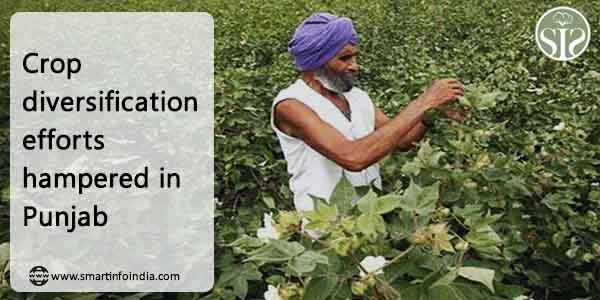
Crop diversification efforts hampered in Punjab

Crop diversification efforts hampered in PunjabOfficials said state officials had set a target of bringing 3 lakh hectares under cotton in the 2023-24 kharif cycle, but they could not even come close to last year's figure, when 2.47 lakh hectares were sown in the Malwa region. I went.The state's director of agriculture, Gurvinder Singh, said a sharp decline in cotton acreage in the semi-arid region in the state's southwest region would lead to a shift to water-intensive rice cultivation. Basmati was sown in 4.6 lakh hectares in 2022 and the area could go up to 7 lakh hectares after cotton acreage came down, as farmers look to take advantage of the handsome returns from the aromatic rice variety, he said.“Climatic conditions played spoilsport this year as wheat harvesting was delayed due to rains in April. Again unseasonal rains delayed cotton sowing in the later weeks of May. The farmers' confidence was shaken after two consecutive unsuccessful crop seasons, due to adverse climatic conditions and outbreak of pests.The director said that the department is planning to solve problems on short, medium and long term challenges in crop diversification.“Unlike in 2022, the area under summer moong decreased due to delay in wheat harvesting. Diversification of crops is the key and we are creating a viable system where farmers adopt sowing of different crops with some encouragement from the government. An upcoming state agriculture policy will address the challenges before crop diversification," he said.According to official figures, Bathinda had set a target of expanding the area under cotton to 80,000 hectares this season from 70,000 hectares in 2022-23.“But it stopped at 40,000 hectares as farmers lost faith in cotton cultivation. In the last two consecutive seasons, cotton yield was severely affected due to infestation of deadly pink bollworm and whitefly. The loss of 30,000 hectares or 75,000 acres would go towards paddy cultivation. After suffering huge financial losses during the past few years, farmers are eyeing an assured income from growing non-basmati varieties, Bathinda Chief Agriculture Officer Dilbag Singh said on Sunday.Similarly, officials expected cotton area in Mansa to increase from 47,000 hectares in 2022 to 60,000 hectares this year. But data says farmers have sown cotton only on 26,000 hectares in the district.Of the traditional cotton area, about 10,000 hectares is expected to come under basmati in Sardulgarh and Bhikhi blocks, Mansa Chief Agriculture Officer (CAO) Satpal Singh said.According to Muktsar CAO Gurpreet Singh, the department worked to increase the area under cotton from 33,000 hectares to 50,000 hectares, but farmers have shifted away from the traditional crop this season.“Contrary to expectations, Muktsar could barely touch 19,000 hectares. Despite ensuring timely canal water and distribution of subsidized seeds, farmers opted to abstain from sowing the region's traditional kharif crop. Our extension teams worked hard but the cotton growers were not convinced. We are hopeful that cotton growers will shift to Basmati crop.With 90,000 hectares under cotton, Fazilka recorded half of the total area under the crop in Punjab this season.“Farmers in the arid region of Abohar in Fazilka have little option but to sow cotton. Whereas in the rest of the area, wherever irrigation facilities were better, farmers shifted away from cotton.Moong cultivation officials said the hasty political decision to promote moong in 2022 had a direct impact on legumes and cotton this year. “Green gram is a host plant of the deadly whitefly and it was not sown in the districts of south-west Punjab as the pest attack had caused huge losses in cotton production. In 2022, the state government announced to buy moong at MSP and diversification was seen to increase by 26% as compared to the previous year. But the promotion of the bean led to a widespread outbreak of whitefly, forcing the government to push mung bean into the cotton-growing region," said an official.Another agriculture department official said that out of 4.05 lakh quintals of beans produced last year, only 14% was procured at MSP, farmers have not shown much interest in sowing moong this time. “The data shows that this time, the area under the pod was a mere 21,000 hectares which is less than half of what it was in 2022. Since most of the crop was procured below the MSP, farmers felt discouraged to sow green gram ," They said.

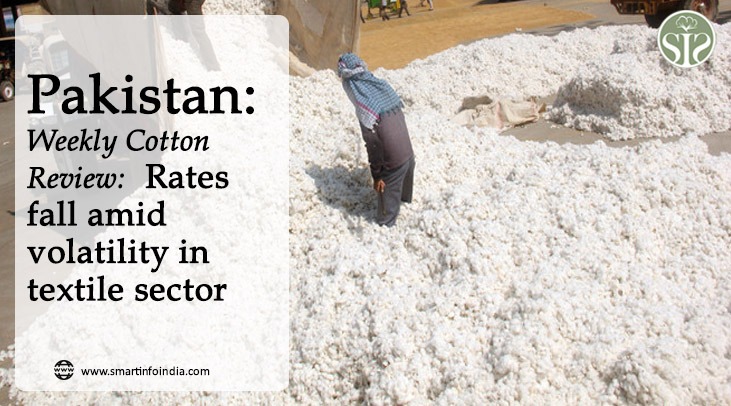
Pakistan: Weekly Cotton Review: Rates fall amid volatility in textile sector

Pakistan: Weekly Cotton Review: Rates fall amid volatility in textile sectorKarachi: There has been a decrease in the price of cotton by Rs.1000, cotton by Rs.2000, banola by Rs.1000 and oil by Rs.5000.However, textile exports have seen a decline of 20 per cent. There is a slowdown in both the local and international textile markets.However, cotton production is expected to increase if weather conditions remain favourable. Textile exporters have rejected the report of the Reforms and Revenue Collection Commission (RRMC). Apparel Forum President Javed Bilwani termed these proposals as the last nail in the coffin of the textile industry.All Pakistan Textile Mills Association (APTMA) has congratulated the Chief Minister Punjab on the successful cotton campaign. The KCA in its budget proposals stressed the need to protect the interests of all stakeholders in the cotton trade.The trading of new crop cotton has started in the local cotton market in the last week of May. Presently around 15 ginning factories have partially started business in Sindh and Punjab. The arrival of futti is also increasing day by day.It has rained in most of the cotton growing areas of Sindh and Punjab in the last few days. Hail also occurred at many places, but at present there is no news of damage to the cotton crop. The rain is said to be beneficial for the crop. If there is excess rainfall, re-cultivation of cotton may be required in some places.Ginners have a stock of about one lakh bales of old cotton which are being sold from time to time. At present, it is too early to say anything about the cotton crop. At present, 70 to 80 percent of the crop has been cultivated in many areas. Related government departments are active. State of the textile sector; However, not good. The industry is facing issues of sales tax refunds, gas, energy, interest rates and non-issuance of refunds. Apart from this, the textile sector has also been badly affected due to huge financial crisis in the market and recession in the international markets and fluctuations in the value of the dollar. The textile sector is constantly pleading with the government to solve their problems immediately, but the government is constantly adopting delay tactics.The price of new cotton crop opened at Rs 21 thousand per head but after decreasing by Rs 1 thousand per head closed at Rs 20 thousand per head. The price of fruit opened at Rs 11,000 per 40 kg and then closed at Rs 9,000 with a fall of Rs 2,000. Banola, after opening at Rs 4,500, closed at Rs 3,500, down by Rs 1,000. Oil prices closed at Rs 13,000, down by Rs 5,000 after opening at Rs 18,000.The spot rate committee of the Karachi Cotton Association fixed the rate at Rs 20,000 per head.Naseem Usman, president of the Karachi Cotton Brokers Forum, said that fluctuations were seen in the futures trading rate of cotton in the international markets. According to the weekly export and sales report for 2022-23, two lakh sixty nine thousand eight hundred bales were sold. China topped by purchasing two lakh twenty one thousand seven hundred bales. Turkey bought 20,800 bales and came in second. Vietnam bought 13,700 bales and ranked third.Seventy lakh sixty bales were sold for the year 2023-24. Türkiye topped the list by buying 43,500 bales. El Salvador came second with 20,900 bales. China bought 8,800 bales and stood third.Exporters in Pakistan have raised objections about the proposed tax on late recovery amount by the Reforms and Revenue Mobilization Commission (RRMC) for the financial year 2023-24. The proposal suggests imposition of income tax on exporters who fail to bring in foreign exchange within a specified time period, thereby profiting on foreign exchange.The RRMC's recommendations to change the existing final tax regime to minimum tax regime for exporters and levy additional tax on foreign exchange earnings have been criticized by Muhammad Javed Bilwani, chief coordinator of the Value Added Textiles Association Forum. Bilwani underlined that these recommendations were made without consulting exporters and other relevant stakeholders. They argued that imposing general tax regulations on exporters would discourage exports and prove futile in achieving the objective of addressing the trade balance.According to statistics, exports of textile products declined by 15% to $15 billion in the eleven months of this fiscal year; Whereas in the same period of the last financial year, exports were $ 17.61 billion.The success of Punjab's cotton campaign will greatly affect the textile sector of Pakistan and the entire country. APTMA acknowledges the Punjab Government's firm commitment to improve cotton production and secure Pakistan's position as a leading player in the global textile market. This not only ensures our self-sufficiency but also reduces Pakistan's dependence on cotton imports - saving $1.5 billion in import bills and boosting the country's economy.In its budget proposals sent to the finance ministry, the KCA urged the government to instruct commercial banks to expeditiously open necessary letters of credit (L/C) at the request of importers of raw cotton, i.e. local textile mills, to sell imported raw cotton. Able to meet your requirement in time.
Related News

Youtube Videos

जानिए आज का कपास बाज़ार 😱 Cotton market rate today #kapas #cotton
जानिए आज का कपास बाज़ार 😱 Cotton market rate today #kapas #c...
रुई के भाव में लगातार गिरावट 😱 क्या आगे भी रहेगी मंदी? | Cotton Market
रुई के भाव में लगातार गिरावट 😱 क्या आगे भी रहेगी मंदी? | Co...
रुई बाज़ार में गिरावट का सिलसिला जारी 😱🔥Cotton market rate today #youtube
रुई बाज़ार में गिरावट का सिलसिला जारी 😱🔥Cotton market rate...
Application Download
Whatsapp Contact