Filter

Recent News

Cotton sowing started in Muktsar, fearing loss, most of the farmers turn towards paddy

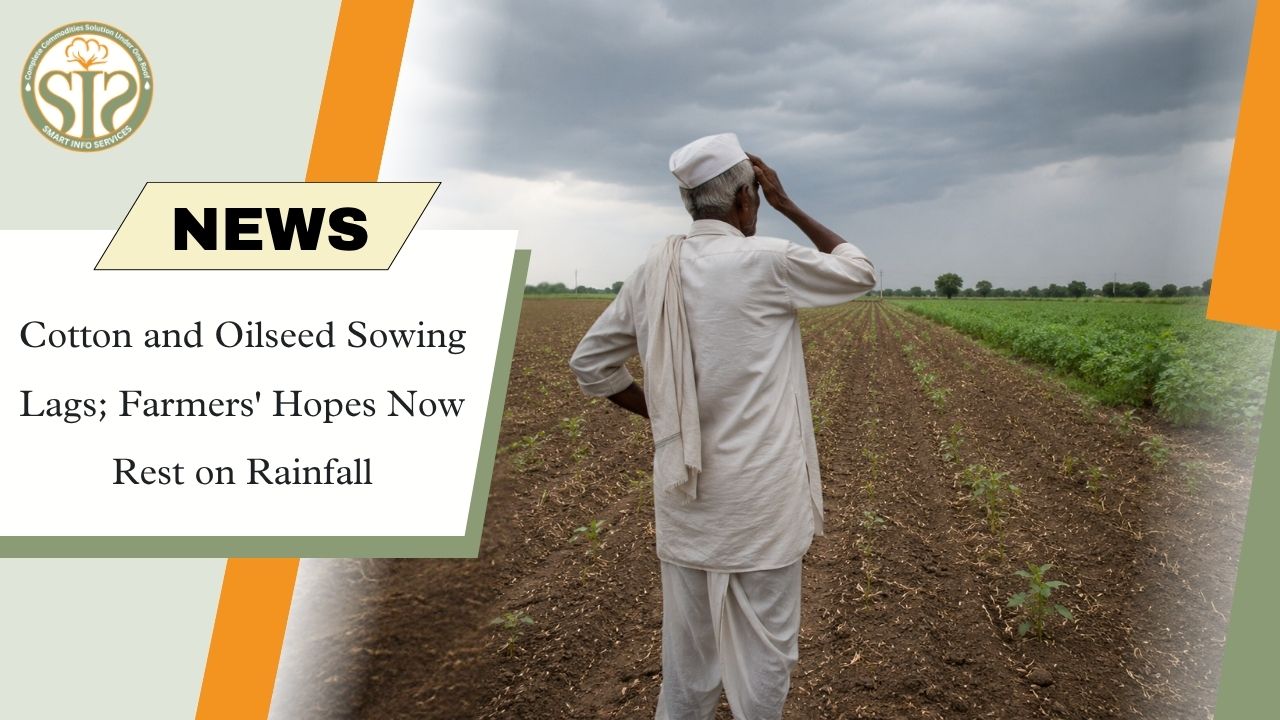
Cotton sowing started in Muktsar, fearing loss, most of the farmers turn towards paddyRain-affected farmers in Muktsar may abandon cotton for paddy as the cost of the cash crop is high, paddy is safe.The inclement weather has worried the cotton growers of the district, who are looking to dump this cash crop in favor of paddy. According to them, cotton sowing is more labor intensive and costs more and in case of its failure, they will suffer huge losses. Cotton sowing has started in the region and will continue till mid-May. Since wheat harvesting has been delayed due to recent rains, farmers who have harvested mustard are now sowing cotton.Farmer Jagjit Singh, who visited the district administrative complex to know the status of Girdawari of his damaged wheat crop, said the weather remained unpredictable this time. โ€œWe have already suffered losses due to the failure of the wheat crop. If the weather remains uncertain, we will have to turn to paddy again."Meanwhile, it rained again in some parts of the district today. Muktsar Chief Agriculture Officer Gurpreet Singh said that cotton sowing has started. Last year, against the target of 45,000 hectares, the crop was sown in 33,000 hectares in the district. This year we will try to increase the area under this crop while some farmers want to stick to paddy. But the soil is suitable for cotton and farmers will definitely opt for it.โ€๐Ÿ‘‡๐Ÿป๐Ÿ‘‡๐Ÿป๐Ÿ‘‡๐Ÿป๐Ÿ‘‡๐Ÿปhttps://smartinfoindia.com/hi/news-details-hindi/Hiked-pakistan-spot-rate-cotton-head-kca-closed-committee-market

Demand of Pakistan textile industry, zero rated energy should be restored

Demand of Pakistan textile industry, zero rated energy should be restoredPakistan textile industry is on the verge of collapse and has demanded that zero rated energy should be restored and pending refunds should be released immediately. All Pakistan Textile Mills Association (AMPTA) has already written a letter to the Prime Minister of Pakistan in this regard.Industry sources say that the Trading Corporation of Pakistan (TCP) is likely to intervene if the price of footy remains below the intervention price. However, Pakistan Readymade Garments Manufacturers and Exporters say that pending refunds should be paid instead of sending audit notices. Separately, Pakistan Kisan Ittehad has appealed to the government to immediately impose agricultural emergency in the country. On the other hand, Pakistan yarn traders have rejected the huge hike in electricity and gas rates.People associated with the textile sector have been continuously complaining that the biggest foreign exchange earner and the biggest employment provider sector is on the verge of collapsing due to the lack of attention of the government. More than 50 per cent mills and other sectors have already closed. It seems that the revival of this sector is difficult in the coming days as the crisis is getting deeper. According to the Textile Value Added Sector, he was supposed to meet the Prime Minister four times, but unfortunately he could not meet the Prime Minister.Central leader of Value Added and Hosiery Association Javed Balwani said in the meeting of other representatives of the sector that it seems that the government and the Prime Minister do not care about them and they are shying away from meeting them despite being invited. It seems that they want the exporters to leave the country and invest in some other country. โ€œNow we will contact the Prime Minister or the establishment etc. on Zoom.โ€ He also said that if the government is unable to solve our problems then we will look to Almighty Allah to solve our problems in the holy month of Ramzan. According to some reports, some industrialists are ready to shift their business abroad.Meanwhile, Asif Inam, president of the All Pakistan Textile Mills Association, said in an interview that the country's textile sector is on the verge of bankruptcy due to the negligence of the government. In this difficult situation it has become impossible to run any industry including textile industry when interest rate is at all time high, increase in gas rate by Rs 45 per unit will only create difficulty in importing cotton.He said that the target of textile exports this year was estimated to be around $26 billion, but due to lack of interest and inappropriate steps taken by the government, textile exports would remain less than $19 billion. He also said that the entire industrial set up is in serious trouble due to the lack of interest shown by the government.It is being feared that the country's total exports will decrease by $ 10 billion. The textile sector is running at 50% capacity. Some mills are running partially. If the situation remains like this, there is a possibility of closure of other mills as well. Already unemployment has risen in the country and exports have been at an all-time low. The industry demands that the government should take note of the situation and immediately focus on industry and agriculture so that the poverty level in the country can be reduced.๐Ÿ‘‡๐Ÿป๐Ÿ‘‡๐Ÿป๐Ÿ‘‡๐Ÿป๐Ÿ‘‡๐Ÿปhttps://smartinfoindia.com/hi/news-details-hindi/Review-pakistan-cotton-weekly-punjab-volume-trading

India and Malaysia announce trade in Indian Rupee

India and Malaysia announce trade in Indian RupeeThe Ministry of External Affairs announced on April 1, 2023 that India and Malaysia have agreed to settle trade in the Indian Rupee. The announcement comes against the backdrop of ongoing official efforts to protect Indian business from the impact of the Ukraine crisis. The move away from the US dollar, which has so far been the major reserve currency for international trade, assumes significance as it indicates that India is ready to take concrete steps towards dollarization of its international trade."Trade between India and Malaysia can now be settled in Indian Rupee (INR) in addition to the existing modes of settlement in other currencies. This is in line with the decision of the Reserve Bank of India to allow settlement of international trade in Indian Rupee (INR) in July 2022. This initiative of RBI is aimed at facilitating the growth of global trade and supporting the interests of the global business community in the Indian Rupee,โ€ announced the Ministry of External Affairs.Trading in the US dollar has been difficult since the Russian economy was sanctioned by Western powers after President Putin launched a so-called "special military operation" against Ukraine on February 24, 2022. As a result of the sanctionsโ€”and the warโ€”it became increasingly difficult to make payments to Russia in US dollars which in turn triggered a worldwide search for solutions for national currencies and de-dollarization."The Kuala Lumpur-based India International Bank of Malaysia (IIBM) has operationalized this mechanism by opening a special Rupee Vostro Account through its correspondent bank in India, ie, Union Bank of India," said the official announcement.

USDA Potential Planting: 11.3 million cotton acres in 2023

USDA Potential Planting: 11.3 million cotton acres in 2023The USDA's potential plantings report for the 2023 crop year shows a total cotton planted area of 11.3 million acres for the year -- 18% less than 2022 planting projections.The report was released on March 31 by the USDA's National Agricultural Statistics Service (NASS).Upland cotton area is projected at 11.1 million acres for 2023, down 18% from 2022. The US Pima area is estimated to be 154,000 acres โ€“ a 16% decrease from the previous year.The estimated cotton acreage is estimated to decrease in all the states except the three cotton producing states. Arizona shows an estimated 13% increase in total cotton acreage for the year, with increases in both upland (up 14%) and Pima (up 7%) acres. Cotton acres in Missouri and Tennessee are unchanged from 2022.Regionally, the USDA estimates total Southeast cotton acreage at 2.37 million acres in the Mid-South states and 1.71 million acres. The Southwest region is estimated at 6.88 million acres, with 299,000 total cotton acres attributed to the western states.Among other crops, the USDA reports a 4% increase in planted area for corn for 2023, a 9% increase for wheat, a 6% decline for sorghum, a 7% increase for peanuts and a 7% increase for rice. Showed an increase of 16%. Total projected soybean acres are expected to remain relatively unchanged through 2022.The Prospective Planting Report provides the first official, survey-based estimate of US farmers' 2023 planting intentions. The NASS acreage estimate is based on surveys conducted on a sample of about 73,000 farm operators across the country during the first two weeks of March. Data was collected from operators by mail, internet or telephone to obtain information on crop area intentions for the 2023 crop year.๐Ÿ‘‡๐Ÿป๐Ÿ‘‡๐Ÿป๐Ÿ‘‡๐Ÿป๐Ÿ‘‡๐Ÿปhttps://smartinfoindia.com/hi/news-details-hindi/Reduced-cotton-sowing-cai-president-atulganatrajis-stock

Cotton sowing will be reduced by 15 percent: CAI President

Cotton sowing will be reduced by 15 percent: CAI President   Important excerpts from Atul Ganatraji's interview given to a channel  The cotton arrival pattern has completely changed this year. Earlier, 75 percent arrival was taking place till the month of February, but till February this year only 50 percent arrival has taken place.According to CAI the crop size is 313 lakh bales. The next meeting of the committee will be held in the second week of April and the members of the committee will decide whether to increase or decrease the crop size,- In terms of price, from Rs 1,10,000 we are now at Rs 60-61,000 so almost 45-50 per cent rate has already come down.At this rate the spinning mills are making some profit so it is a good time for Indian mills to buy cotton.- Cotton rate has come down from 15000 to 7500 rupees, so next year cotton sowing in India will reduce by 10-15 percent.- News is being received from USA that USA cotton sowing will also be less by 15-20 percent.- With news of 25-30% increase in MSP of cotton, big farmers may not sell their cotton stock this season- We can see for the first time in India 10 percent of the Indian crop will be carried over to the next season.๐Ÿ‘‡๐Ÿป๐Ÿ‘‡๐Ÿป๐Ÿ‘‡๐Ÿป๐Ÿ‘‡๐Ÿปhttps://smartinfoindia.com/hi/news-details-hindi/Indonesia-almost-unlikely-anti-dumping-duty-dgtr-imports-government-textile-manufacturers-viscose

Anti-dumping duty on viscose from Indonesia almost unlikely

Anti-dumping duty on viscose from Indonesia almost unlikelyThe Union finance ministry may not impose anti-dumping duty (ADD) on viscose staple fiber (VSF) from Indonesia, as it could lead to shortage of a key raw material for India's textile industry.The commerce ministry's Directorate General of Trade Remedies (DGTR) had in December recommended a duty of $0.512/kg on these imports, as part of a government initiative to enhance the quality of textiles. However, about a dozen members of Parliament, including those from the ruling party, recently wrote to Finance Minister Nirmala Sitharaman to raise the import price of viscose fiber by up to โ‚น40 per kg.โ€œThe DGTR had recommended anti-dumping duty only on VSF imports from Indonesia. We import from two-three countries including Indonesia, Austria, and China. Anti-dumping duty was recommended only in the case of Indonesia as the investigation revealed injury to the domestic industry."Dropping the move to impose duty would provide relief to domestic garment manufacturers, who were facing the prospect of business disruption, reduced competition and economic losses. โ€œThe Finance Ministry takes into account the recommendation of the DGTR and also the public interest. The finance ministry has not announced the fee, and the period in which a decision was expected to come is now over. Therefore, there is no possibility of anti-dumping duty on VSF. Duty was limited to Indonesia as there was a huge surge."The MPs wrote to Sitharaman that viscose-blended cotton is the future and forms an important raw material for the spinning and weaving industry, apparel, accessories and technical textile production. He also pointed to problems with VSF availability. โ€œIn this financial year, the domestic VSF demand was 700,000 tonnes, and the availability was only 540,000 tonnes. This move (proposition of ADD on VSF) may increase the import price of viscose fiber by up to Rs 40 per kg.The government is focusing on quality, but that does not mean it is not considering maintaining availability. He said, 'I am not refusing imports, but substandard imports should not be encouraged. But at the same time, assured availability of raw materials also needs to be guaranteed."The imposition of a fee on VSF was recommended amid quality improvement efforts and is no longer expected. โ€œThe industry understands that there is a need for quality, but the government must realize that our buyers cannot be affected. There is stiff competition from Bangladesh and Vietnam, and if buyers get a better deal, they will not buy from India. This cannot be achieved by force. The government should take an interim step where there can be a voluntary approach for a year," he said.๐Ÿ‘‡๐Ÿป๐Ÿ‘‡๐Ÿป๐Ÿ‘‡๐Ÿป๐Ÿ‘‡๐Ÿปhttps://smartinfoindia.com/hi/news-details-hindi/Today-policy-trad-announced-foreign-msme-goverments-exports

Copyright© 2023 | Smart Info Service
Application Download