Recent News

Maharashtra Cotton Farmers Struggle as Prices Decline, Facing Dilemma Amid Looming Loan Deadlines"

Maharashtra Cotton Farmers Struggle as Prices Decline, Facing Dilemma Amid Looming Loan Deadlines"Farmers from Babhulgaon in Yavatmal, Maharashtra, are grappling with the challenge of selling their cotton produce, citing a significant drop in prices over the past year. The looming deadline for loan repayment has left them in a quandary, forcing a difficult decision on whether to sell their crops at a loss or continue holding onto them.Price Decline Impact The farmers attribute the inability to sell their cotton to a sharp decline in prices, which they connect to irregular rainfall affecting cotton production this year.Financial Dilemma With the deadline for loan repayment approaching, farmers face a financial dilemma, contemplating whether to sell their produce at a loss or endure the risk of holding onto it in hopes of better prices.Farmer's Perspective Prakash Madhukar Gawande, a cotton farmer from Naygaon village in Babhulgaon, outlined his investment of over Rs 30,000 per acre in cotton farming. Despite harvesting around 70 quintals of cotton, selling it at the current rate would result in a loss, posing financial challenges.Market Dynamics The price disparity is further highlighted, with long yarn cotton fetching Rs 7,000 per quintal and shorter yarn selling for Rs 6,000. Farmers express discontent, emphasizing the need for prices to be at least Rs 10,000 to cover their expenses.Government Inadequacy Farmers argue that government schemes are insufficient to mitigate their losses, and they are left in a precarious position as they safeguard their stored yield from rain and wind, hoping for better prices.Cotton Scenario in Yavatmal Yavatmal, known as the cotton district of Maharashtra, witnesses extensive cotton cultivation. Last year, cotton was cultivated on approximately 4.71 lakh acres in the district. The region also faces the unfortunate distinction of having the highest number of farmer suicides in the state.Call for Government Intervention Amol Kapse, the director of the Agricultural Produce Market Committee (APMC) in Babhulgaon, stresses the absence of a Cotton Corporation of India (CCI) center in the taluk, leading farmers to sell to private players at lower rates. Government intervention is deemed crucial to prevent further farmer suicides.Read more....👇🏻👇🏻👇🏻👇🏻Bangladesh Cotton Cultivation Surges Amidst Price Woes: Farmers Strive to Meet Demand Amid Discrepancies

Bangladesh Cotton Cultivation Surges Amidst Price Woes: Farmers Strive to Meet Demand Amid Discrepancies

Bangladesh Cotton Cultivation Surges Amidst Price Woes: Farmers Strive to Meet Demand Amid DiscrepanciesThe growing trend of cotton cultivation in Bangladesh as farmers aim to meet local demand and reduce reliance on imports. However, their satisfaction is dampened by the disappointing prices in the domestic market. Despite increased cultivation costs, such as seeds, fertilizers, diesel, pesticides, and labor, farmers are receiving prices below their expectations.Currently, local production covers less than 2 percent of the annual cotton requirement, leading to significant imports costing over $3 billion annually. This year, cotton cultivation has expanded by nearly 2 percent, covering 46,000 hectares, with the government targeting a production of 2.28 lakh bales, up from 2.10 lakh bales the previous season.The Cotton Development Board (CDB) has observed a growing interest in cotton cultivation, particularly with a shift towards hybrid varieties. Efforts are being made to disseminate improved farming methods and promote companion cropping with various vegetables. Fakhre Alam Ibne Tabib, the executive director of CDB, acknowledged the farmers' concerns about market prices and assured discussions to address their demands. The CDB has also initiated measures to support cotton cultivation, including land identification and financial incentives, with an allocation of Taka 10 crore designated to support 12,375 trained farmers this year.Looking ahead, the CDB envisions substantial growth in cotton production, aiming for 15.80 lakh bales from two lakh hectares of land by 2040. This reflects the recognition of cotton's pivotal role in sustaining the textile industry, a vital sector for Bangladesh's economy.Read More....👇🏻👇🏻👇🏻👇🏻Telangana: CCI procures 12.31 lakh tonnes of cotton

"India Braces for Above-Normal Heat Waves and El Nino Impact: IMD Forecasts for March-May"

"India Braces for Above-Normal Heat Waves and El Nino Impact: IMD Forecasts for March-May"The India Meteorological Department (IMD) has issued forecasts for the upcoming months, anticipating higher-than-usual heat wave days across most parts of India from March to May. The El Nino climate pattern is expected to worsen heat wave conditions during this period. However, northeast India, the western Himalayan region, and the southwest peninsula may see fewer heat wave days.In March, the IMD predicts an elevated number of heat wave days in peninsular India, many parts of Maharashtra, and some areas of Odisha and adjoining regions. Additionally, above-normal minimum temperatures are expected nationwide during March to May. The onset of hot weather is projected to begin in southern states in March, signaling the commencement of summer in India.Contrastingly, normal to below-normal maximum temperatures are anticipated over large parts of east and east-central India, along with portions of the northwestern regions in March. Furthermore, the IMD expects rainfall to be above normal at 117% of the long period average over India in March.Last month, India experienced 13% below normal rainfall, with the southern peninsula receiving rainfall at 91% below normal. The IMD notes that this was the fourth lowest recorded rainfall in February since 2001 in southern parts of the country.Looking ahead, El Nino conditions are expected to gradually weaken in the coming months, reaching neutral conditions over India by the beginning of the monsoon season (Jun-Sep). Neutral conditions bode well for the country, as El Nino is associated with deficient precipitation in India.While India received normal rainfall last year, two homogenous regions out of four reported below-normal precipitation, affecting the sowing of key kharif crops such as rice and pulses in 2023-24. The IMD suggests that La Nina conditions may prevail in the latter half of the upcoming monsoon season, potentially leading to improved rainfall compared to the previous year. La Nina represents the cool phase of the El Nino Southern Oscillation cycle and is associated with favorable conditions for rainfall in India.Read More...👇🏻👇🏻👇🏻👇🏻Indian textile industry welcomes removal of import duty on ELS cotton

Textile Demand Holds the Key to Cotton Price course, Says International Cotton Advisory Committee"

Textile Demand Holds the Key to Cotton Price course, Says International Cotton Advisory Committee"The recent surge in global cotton prices, attributed primarily to speculative buying on the futures market, has left the cotton industry anxiously awaiting the trajectory of textile demand. Despite subdued demand from textile mills, domestic cotton prices have seen a significant increase in the last two weeks.Nishanth Asher, Secretary of the Indian Cotton Federation, revealed that over 60% of the cotton produced this season has entered the market. However, with rising prices, daily arrivals have dropped from 1.8 lakh bales to nearly one lakh bales. Asher pointed out that spinners are now risk-averse due to the low global demand for textiles.The uncertainty surrounding future prices is evident, with world cotton prices experiencing a 15% surge in the last two weeks and a subsequent 3% correction on Friday. Asher stated that the price trajectory will largely depend on the demand for main textile products. If demand remains subdued, prices are expected to cool down.The International Cotton Advisory Committee, on March 1, noted that the recent surge in global cotton prices can be attributed to speculative buying on the futures market. The committee expects the real situation to unfold in the coming months as plantings intensify. If the planted area remains lower than the previous season and consumer sentiment improves, prices may increase.Atul Ganatra, Chairman of the Cotton Association of India, highlighted that the Intercontinental Exchange (ICE) futures market rose from 80 cents to 103 cents per pound in recent days and slightly reduced on March 1. He emphasized that, at current prices, Indian cotton is more affordable than international prices, predicting that cotton exports are likely to exceed 20 lakh bales this season.Read More...👇🏻👇🏻👇🏻👇🏻Cotton Payments: Dues of cotton growers are pending with CCI

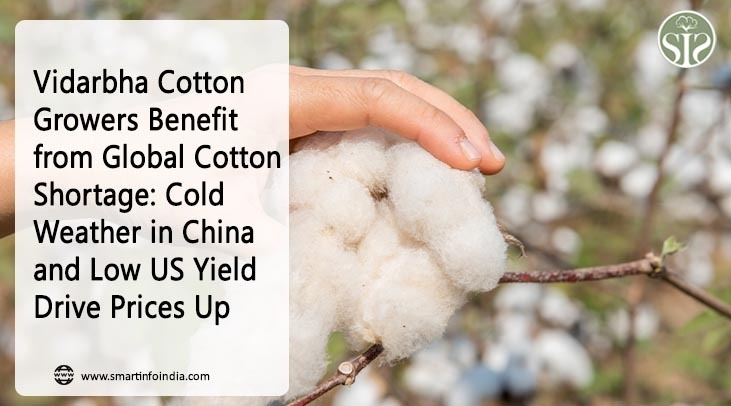
Vidarbha Cotton Growers Benefit from Global Cotton Shortage: Cold Weather in China and Low US Yield Drive Prices Up

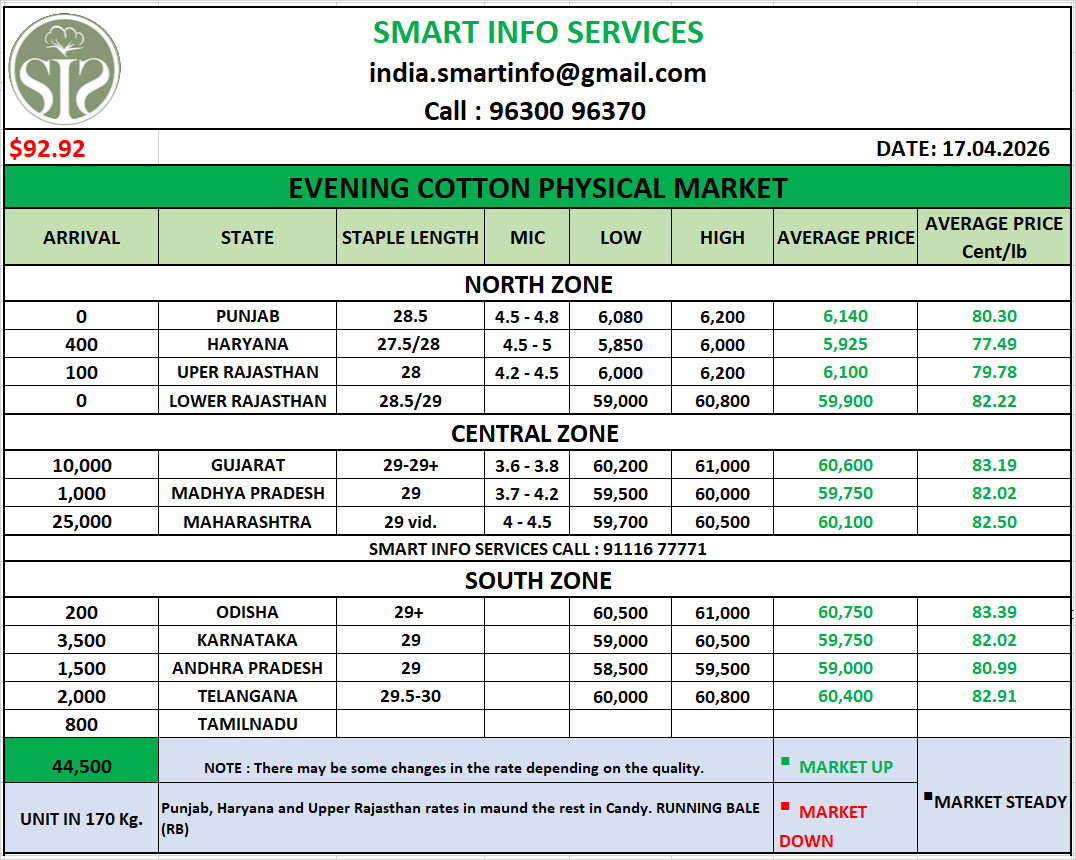
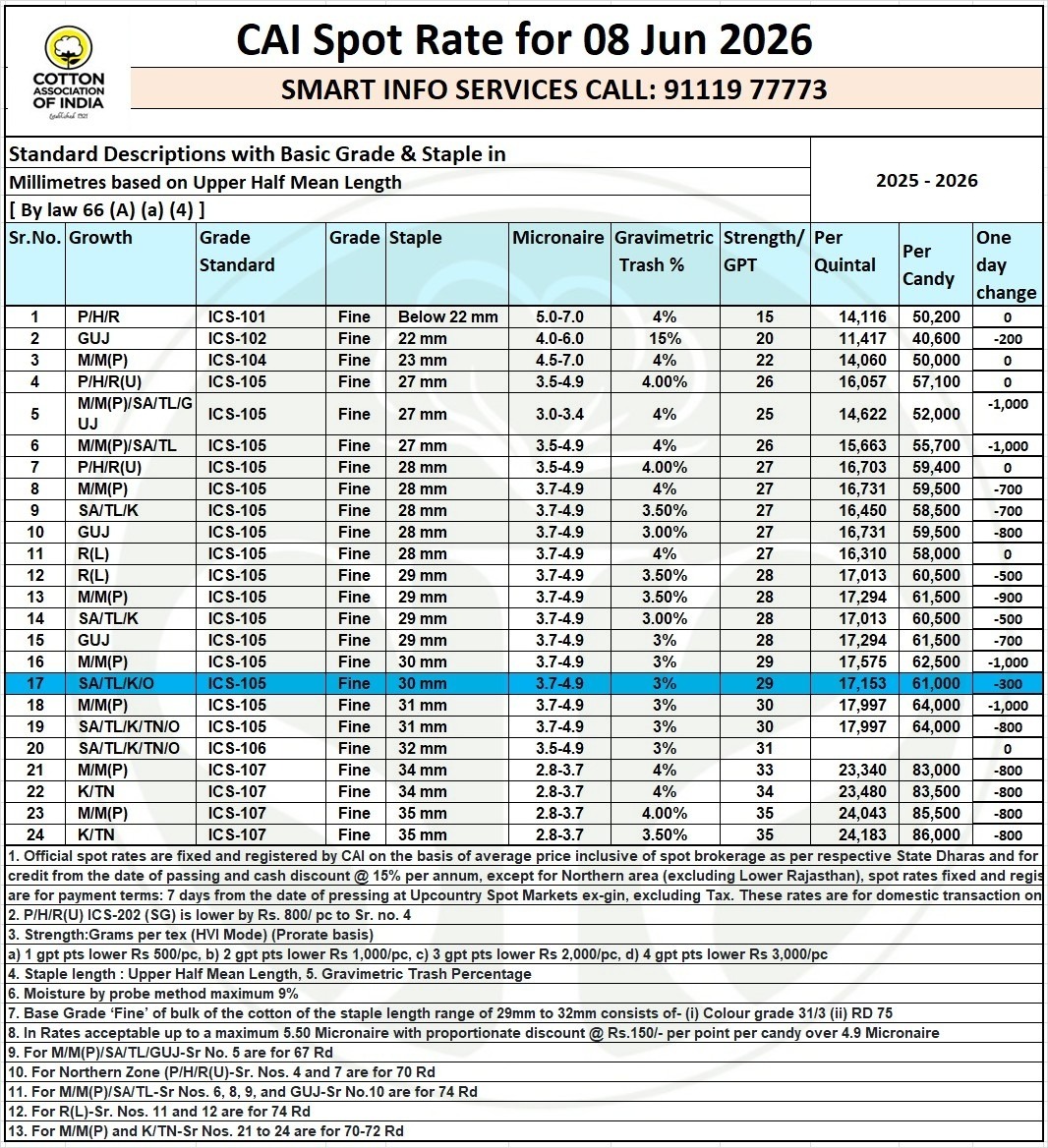
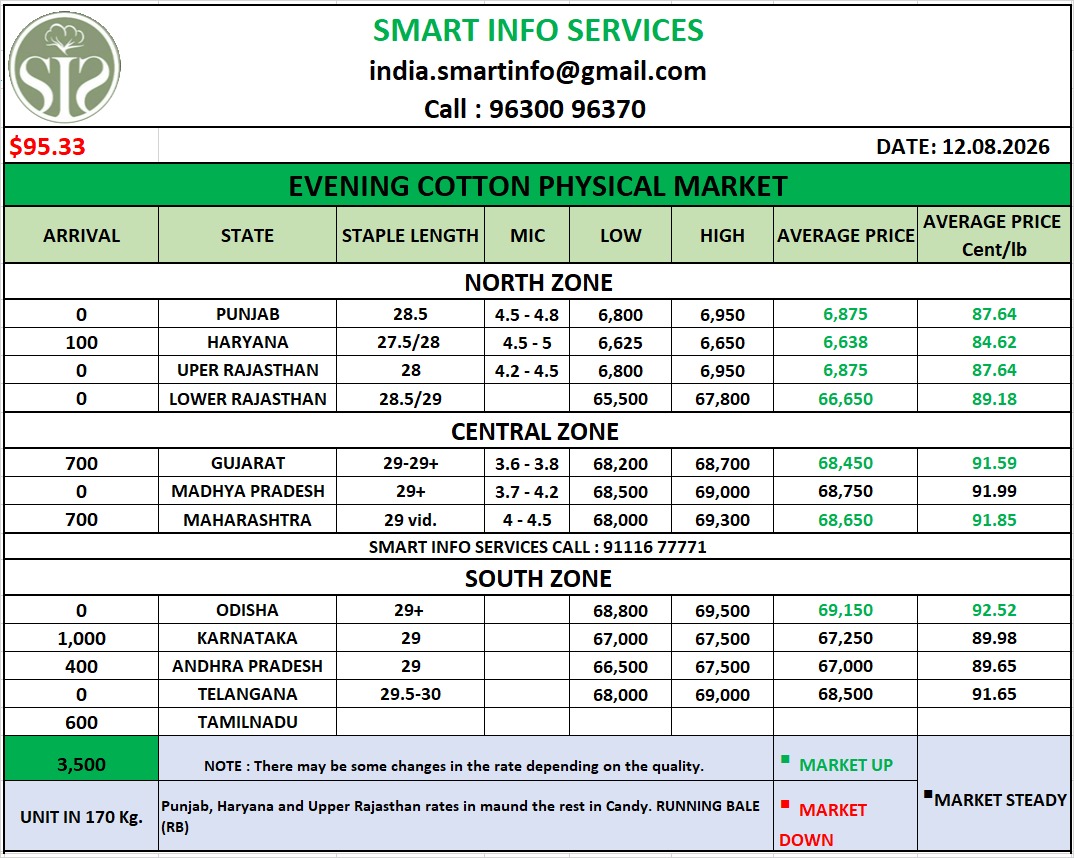
Vidarbha Cotton Growers Benefit from Global Cotton Shortage: Cold Weather in China and Low US Yield Drive Prices UpSevere cold weather disrupting crop cycles in China and a decline in yields from the US have unexpectedly benefited cotton growers in Vidarbha. Presently, they are fetching prices slightly above the minimum support price (MSP) of Rs 7,020 per quintal. However, this positive turn may come too late for most farmers who already sold their cotton at prices below MSP earlier in the season.Sources report that the extreme cold in China and reduced acreage in the US have contributed to a global shortage of cotton, leading to prices exceeding MSP in Vidarbha. Despite the current increase, it falls short in comparison to the Rs 13,000 per quintal achieved in the 2022 season.The harvest season in Vidarbha began in October with low yields and poor rates due to unseasonal rains damaging the crop. Farmers had to settle for lower prices in the open market. However, within a month, market rates have risen by ₹1,000, reaching ₹7,400 per quintal in Yavatmal on average and over ₹8,000 in Akot tehsil of Akola district. Reports of low global stocks have further fueled these rates.Manish Jadhav of Swabhimani Shetkari Sanghatana noted that over half of the farmers have already sold their stocks, and in some marketplaces, rates are only marginally above the MSP.Traders caution that although rates are currently higher, they may not sustain their peak levels for long. International prices, which touched $1.05 for a pound of lint, have now settled at 97 cents, still keeping prices above MSP for Vidarbha farmers.Prashant Mohta, the managing director of Gimatex Limited, cited extreme cold weather affecting output in China and a fall in US yields as factors influencing the market. The bullish demand for garments in China has driven processed cotton prices from ₹58,000-₹59,000 to ₹62,000 per candy, subsequently making raw cotton sold by farmers more expensive.Farm activist Vijay Jawandhia suggests that the government should incentivize cotton exports to further boost rates. He emphasizes that the current increase is primarily due to international factors, while the prices of cotton seeds remain on the lower side domestically.Read more...👇🏻👇🏻👇🏻👇🏻Rising Cotton Prices in India Hit ₹58,000, Posing Challenges for Exports and Spinning Units

Related News
Youtube Videos

रुई के भाव में लगातार गिरावट 😱 क्या आगे भी रहेगी मंदी? | Cotton Market
रुई के भाव में लगातार गिरावट 😱 क्या आगे भी रहेगी मंदी? | Co...
रुई बाज़ार में गिरावट का सिलसिला जारी 😱🔥Cotton market rate today #youtube
रुई बाज़ार में गिरावट का सिलसिला जारी 😱🔥Cotton market rate...
रुई बाज़ार में गिरावट का रुख 😱 Cotton market rate today #youtube
रुई बाज़ार में गिरावट का रुख 😱 Cotton market rate today #you...
Application Download
Whatsapp Contact