Recent News

Promoting Prompt Payments in Alignment with the Income Tax Act for MSMEs

Embracing Timely Payments in Accordance with I-T Act for MSMEsWith the dawn of the new financial year, Surat's textile sector witnesses a gradual return to normalcy as fresh orders trickle in. Traders exhibit renewed confidence, spurred by the imperative of adhering to payment deadlines mandated by the Income Tax (I-T) Act for MSMEs.In line with statutory requirements, the Federation of Gujarat Weavers’ Welfare Association (FOGWWA) reinforces the importance of honoring a 30-day payment time limit among textile weavers.Under the I-T Act, payments to small and micro industries must be disbursed within 15 days or, with a written agreement, within 45 days. Delays in payment not only pose concerns for traders but also escalate their tax liabilities.Acknowledging this, traders have now embraced the 45-day timeframe, seeking to prevent its normalization. FOGWWA issues a circular, underscoring the necessity for weavers to adhere strictly to the 30-day payment rule.Ashok Jirawala, president of FOGWWA, reaffirms this commitment, emphasizing the cultivation of sound business practices to facilitate seamless transactions for both parties.While acknowledging the customary practice of mutual agreement on payment terms between weavers and traders, Kailash Hakim, president of the Federation of Surat Trade and Textile Associations (FOSTTA), echoes the sentiment that a timely payment framework serves the best interests of the textile industry.Read more :- How 5G, AI and a cotton revolution helped China beat US Xinjiang sanctions

How 5G, AI and a cotton revolution helped China beat US Xinjiang sanctions

How China overcame US Xinjiang sanctions using 5G, AI, and a cotton revolutionChinese researchers detail how technology has transformed the region’s textile industry and led to record surge in exportsA “revolutionary shift” in the technology used in Xinjiang’s textile mills has seen a record surge in exports, in defiance of US sanctions that have barred most Western fashion labels from selling any product woven with a strand of the region’s cotton.Customs records show Xinjiang’s textile exports last year reached 108 billion yuan (US$14.8 billion), with a 74 per cent jump for yarn and other raw materials, and a rise of 30 per cent for clothing.The 2023 results followed Washington’s sanctions imposed in June the previous year, which largely banned Xinjiang textiles over human rights concerns over the alleged treatment of the region’s largely Muslim Uygur population.In the same period, Indian and Vietnamese textile exports dipped by 6 per cent and 10 per cent, respectively.The scientists found that malfunctions, downtime and other vital data and events were recorded manually, while quality assurance also relied on random manual checks because of the high output volumes.Because of 5G’s swifter speeds compared to conventional wireless technology, it supports more connections and drastically cuts data transmission delays – paving the way for AI to oversee the factory’s entire operation.The researchers said that in a typical Xinjiang textile factory today, AI was monitoring every spindle rotation to alert operators or maintenance staff to inspect potential problems identified by vast data gathering from sensors.In cotrast to other countries – where 5G technology is rarely used in factories – mainly because of its high cost, China’s extensive construction of 5G base stations and rapid technological advances have significantly reduced the expense.The transformation of Xinjiang’s textile industry represents just part of the broader upgrade taking place across the region’s entire industrial landscape.Automated planting and harvesting have been adopted in nearly all of the region’s cotton fields, while drones are further improving crop quality through pest monitoring and pesticide application, local media has reported.Despite a gradual decrease in the total area of its cotton fields over the years, Xinjiang’s output has increased as a result of these technological advancements, according to the reports.Xinjiang, the largest provincial-level administrative region in China, produces more than 90 per cent of China’s cotton, and a quarter more than the entire output of the United States.The US government alleges that Xinjiang cotton products may involve forced labour and lawmakers are considering a new round of sanctions on popular Chinese fast fashion retailers.Also in April, the Chinese government initiated the latest round in its nationwide effort to modernise manufacturing.According to the Ministry of Industry and Information Technology, projections indicate that by the end of next year, 70 per cent of China’s textile factories will have achieved digital connectivity and completed the AI transformation.Read More :> Smart Growth: High-Quality Cotton Achieved Through Uniform Varieties

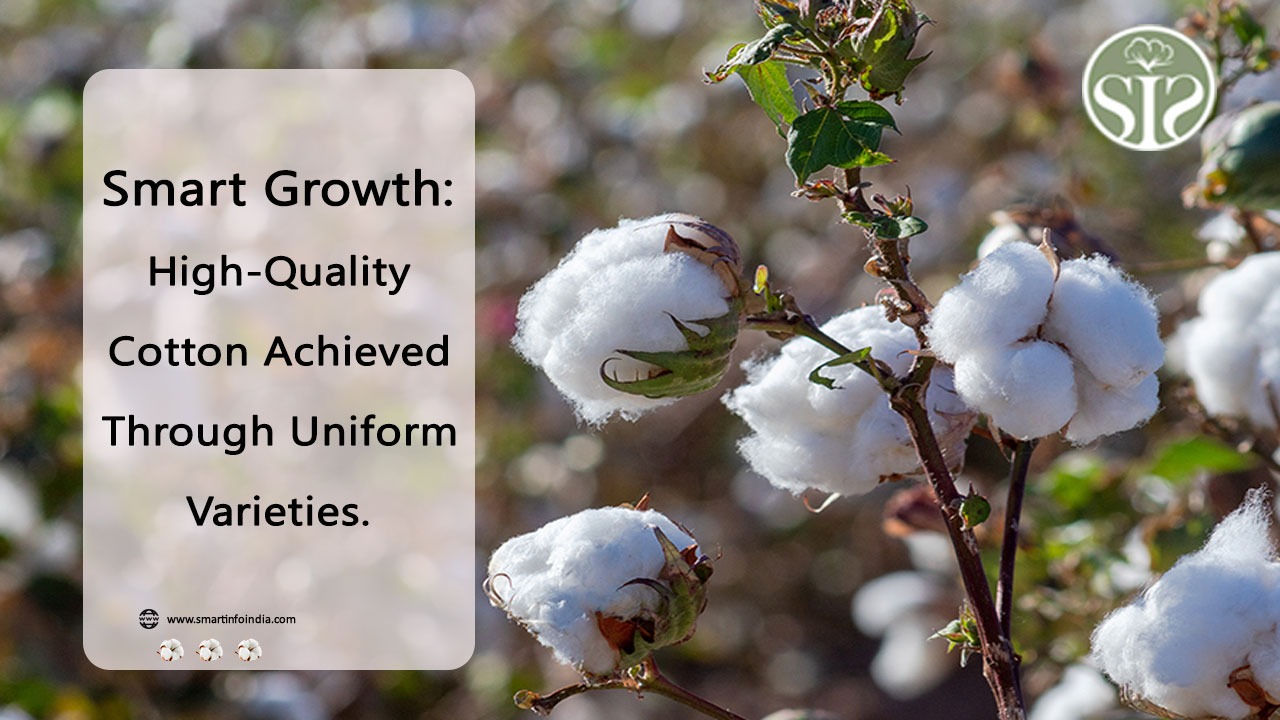
Smart Growth: High-Quality Cotton Achieved Through Uniform Varieties

Intelligent Development: Consistent Varieties Lead to Superior Cotton QualityIn the Nagpur district, under the Maharashtra government's Smart Cotton Project, a group of farmers has successfully cultivated high-quality cotton using a uniform variety, which boasts a higher lint percentage and cleaner bolls. This achievement involved about 1,000 farmers from five different groups across the state, emphasizing the shift from traditional practices where varying cotton varieties led to inconsistent product characteristics.Arvind Uprikar, Deputy Commissioner of Agriculture and nodal officer for the district, highlighted the exceptional quality of the cotton produced. "The cotton bales from all five groups are of a super grade variety with a staple length of 30-31 MM. This makes them highly desirable to spinners and bale buyers due to their high lint percentage and cleanliness," Uprikar stated.Now in its second year, the project has expanded to include 95 new farmers from the talukas of Katol, Narkhed, Nagpur, Saoner, and Hingna. Initially, 1,800 farmers across 60 villages were provided with seeds for long-staple, high-lint cotton on a pilot basis, accompanied by the distribution of 3,600 cotton picking bags.A comprehensive three-day training was conducted by CIRCOT Nagpur for the farmers, focusing on efficient pre-picking techniques to minimize trash and ensuring clean cotton boll collection, with a designated ginning unit to process the bales.Jayesh Mahajan, the state's nodal officer for post-harvest under the Smart Cotton Project, remarked on the project's growth from 2,900 to 5,500 bales, with participation increasing from 500 to 900 farmers. "We've also engaged with over 100,000 farmers statewide," he added. Mahajan emphasized the project's goal to enhance lint percentage and variety uniformity for mass production under similar ecological conditions. "Improving the farmers’ storage practices is crucial as poor habits have previously marred the reputation of Indian cotton. Our focus is on maintaining quality throughout processing to ensure farmers receive a fair price," he explained.The project operates on a push and pull mechanism, with the government certifying quality to attract buyers, while the introduction of e-auctioning helps in fair price discovery and protection against exploitation.Mahajan also noted the economic strategy behind timely processing, "Converting lint into bales promptly after seed sales maximizes profits, especially as cotton's value decreases over time."This initiative not only promises improved cotton quality but also supports sustainable agricultural practices and economic growth for farmers in Maharashtra.Read More :> Cotton Acreage: Stability and Challenges Across Regions

Cotton Acreage: Stability and Challenges Across Regions

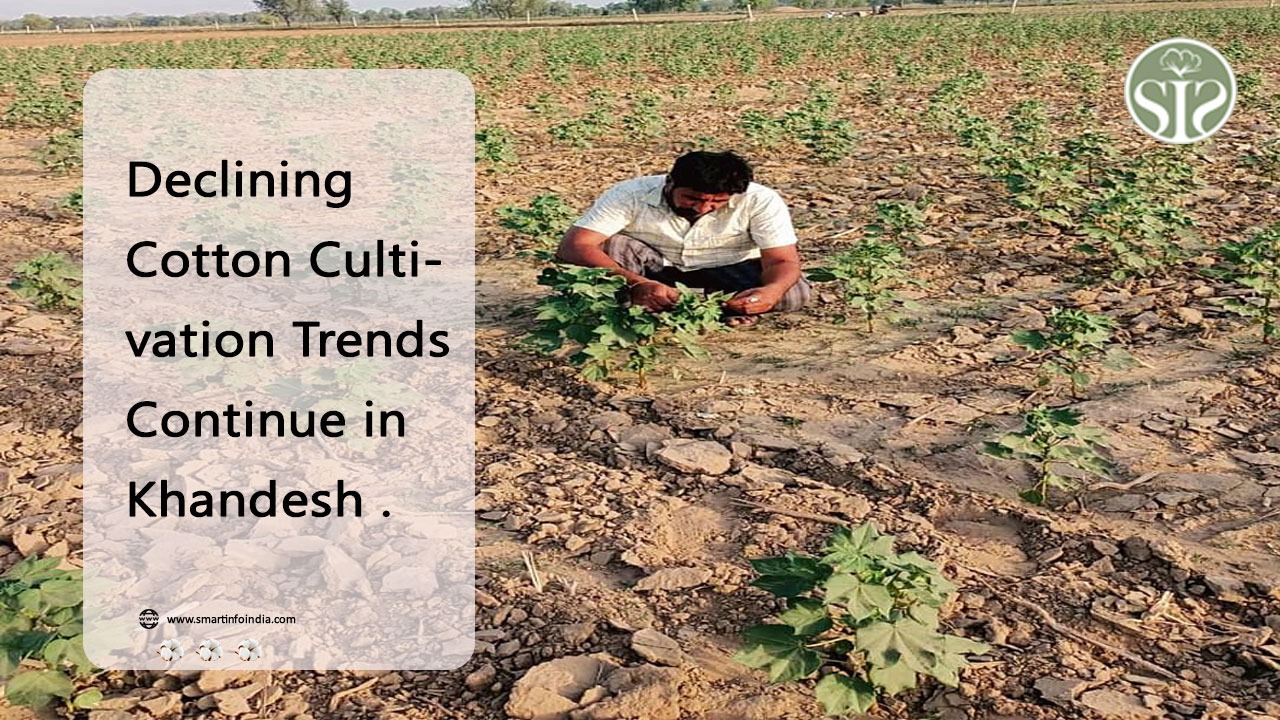
Cotton Acreages: Stability and Challenges Across ZonesIn India, the forthcoming kharif season of 2023-24 presents varied prospects for cotton acreages across different regions. Here's an surveyCentral and South Zones:Stable Acreages these regions, known as the top cotton-producing areas in India, are expected to maintain their cotton acreages, largely due to forecasts of a normal monsoon.Challenges despite stable acreages, there's a looming shortage of premium cotton hybrid seeds, which could impact cropping trends in these zones.North Zone:Declining Acreages the North zone is anticipated to witness a significant decline of 20-30% in cotton acreages. This decline is attributed to rising pest infestations and weakening sentiment towards cotton cultivation.Seed Production Challenges:Drought Impact seed production, particularly in Karnataka, faced challenges due to drought conditions last year. The adverse effects of drought on seed output have cast uncertainty over seed availability for the upcoming season.Market Dynamics and Demand:Shortage Concerns while North India may not experience a seed shortage, the South and Central regions could face a scarcity of popular seed brands, potentially by 15 to 20%.Hybrid Seed Demand the industry anticipates a demand for 4.5-5 crore packets of cotton hybrid seeds, with a significant portion being premium varieties sought for their high yield potential.Industry Insights and Expectations:Outlook despite challenges, the overall cotton acreages are projected to increase by about 5% this year, driven by forecasts of normal monsoon conditions and favorable pricing.Factors Influencing Acreages various factors such as pest damages, disease issues like boll rot, and the attractiveness of alternative crops like corn, groundnut, and paddy are influencing cotton acreage decisions across different zones.Conclusion:The upcoming cotton sowing season presents a mixed outlook across India's cotton-growing regions. While stability is anticipated in the Central and South zones, challenges in seed availability and pest issues are influencing cotton acreages in the North zone. The industry remains cautiously optimistic, emphasizing the importance of monitoring weather conditions and market dynamics for effective decision-making in cotton cultivation.Read more :- Declining Cotton Cultivation Trends Continue in Khandesh



Related News

Youtube Videos

रुई के भाव में लगातार गिरावट 😱 क्या आगे भी रहेगी मंदी? | Cotton Market
रुई के भाव में लगातार गिरावट 😱 क्या आगे भी रहेगी मंदी? | Co...
रुई बाज़ार में गिरावट का सिलसिला जारी 😱🔥Cotton market rate today #youtube
रुई बाज़ार में गिरावट का सिलसिला जारी 😱🔥Cotton market rate...
रुई बाज़ार में गिरावट का रुख 😱 Cotton market rate today #youtube
रुई बाज़ार में गिरावट का रुख 😱 Cotton market rate today #you...
Application Download
Whatsapp Contact