Recent News

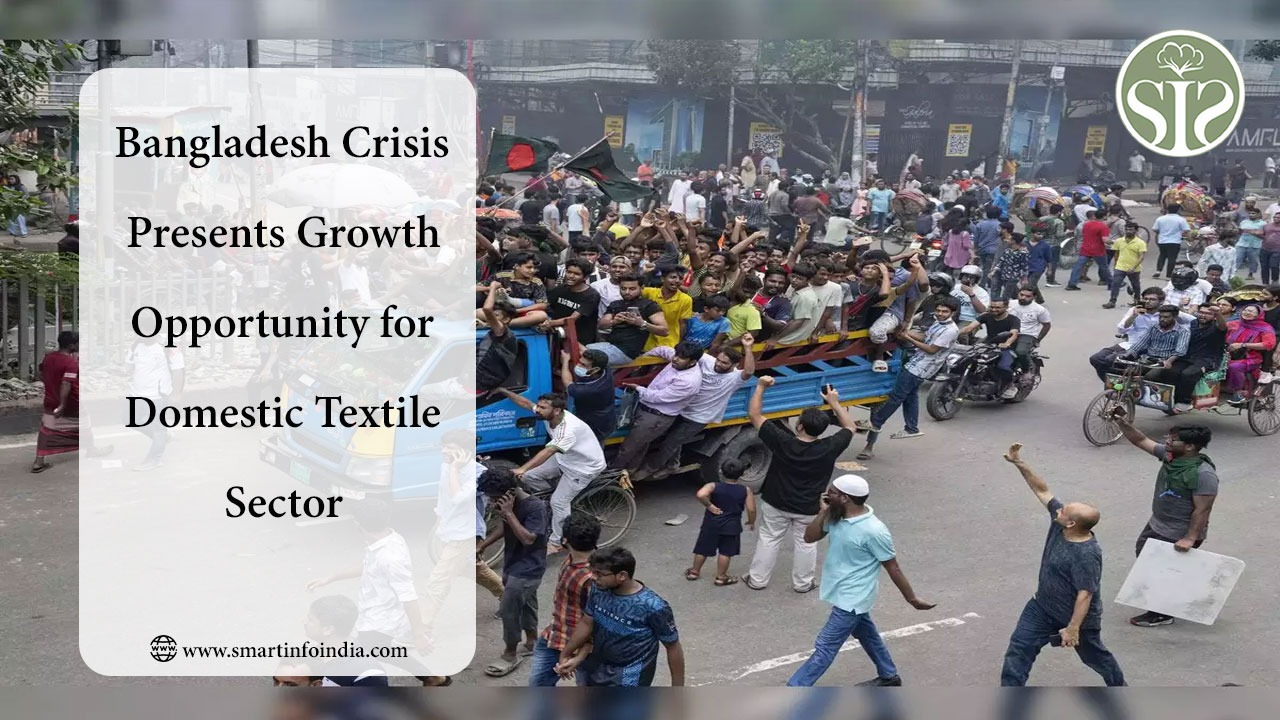
Bangladesh Crisis Presents Growth Opportunity for Domestic Textile Sector

Bangladesh's Crisis Offers the Domestic Textile Industry a Chance to GrowLudhiana: The ongoing political turmoil in Bangladesh has raised concerns within the global textile industry, but it also presents a significant growth opportunity for the domestic textile sector.Industry insiders believe that disruptions in supply chains, delivery delays, and production difficulties in Bangladesh could lead international buyers to explore alternative markets, providing a chance for domestic manufacturers to increase their market share.Ludhiana-based textile manufacturers are already receiving inquiries about potential exports. However, they caution that this growth may be temporary, with buyers likely to return to Bangladesh once the situation stabilizes.As the second-largest textile exporter after China, Bangladesh has been a key player in the global market, attracting many large companies due to its competitive labor costs and strong production capacity. The current instability has raised concerns about its ability to sustain these advantages.Experts warn that the potential benefits for the domestic textile sector depend on the crisis's duration. If the situation in Bangladesh resolves quickly, buyers and manufacturers may choose to maintain their existing relationships rather than risk the costs associated with relocating production.Badish Jindal, president of the All Industries and Trade Forums, commented, "The crisis in Bangladesh has caused uncertainty among buyers, manufacturers, and investors, prompting them to consider alternatives. This presents a significant opportunity for the domestic textile sector."However, Jindal noted that this opportunity would only be substantial if the crisis persists. Short-term disruptions are unlikely to shift long-term purchasing patterns. The timing of the unrest is critical, coinciding with the lead-up to the Christmas shopping season, a crucial period for the textile and apparel industries. Significant disruptions during this time could force buyers to seek other suppliers to avoid potential losses.Jindal added, "This urgency might drive buyers to explore the domestic market as a viable alternative. Additionally, new investments in Bangladesh may be on hold due to the political situation, creating further opportunities for India."Vinod Thapar, president of the Knitwear Club, acknowledged, "We are already seeing export queries. However, this is likely to be a temporary gain, as buyers will return to their original suppliers once the situation normalizes."Read More :>  Agricultural productivity: Cotton, soybean productivity to increase

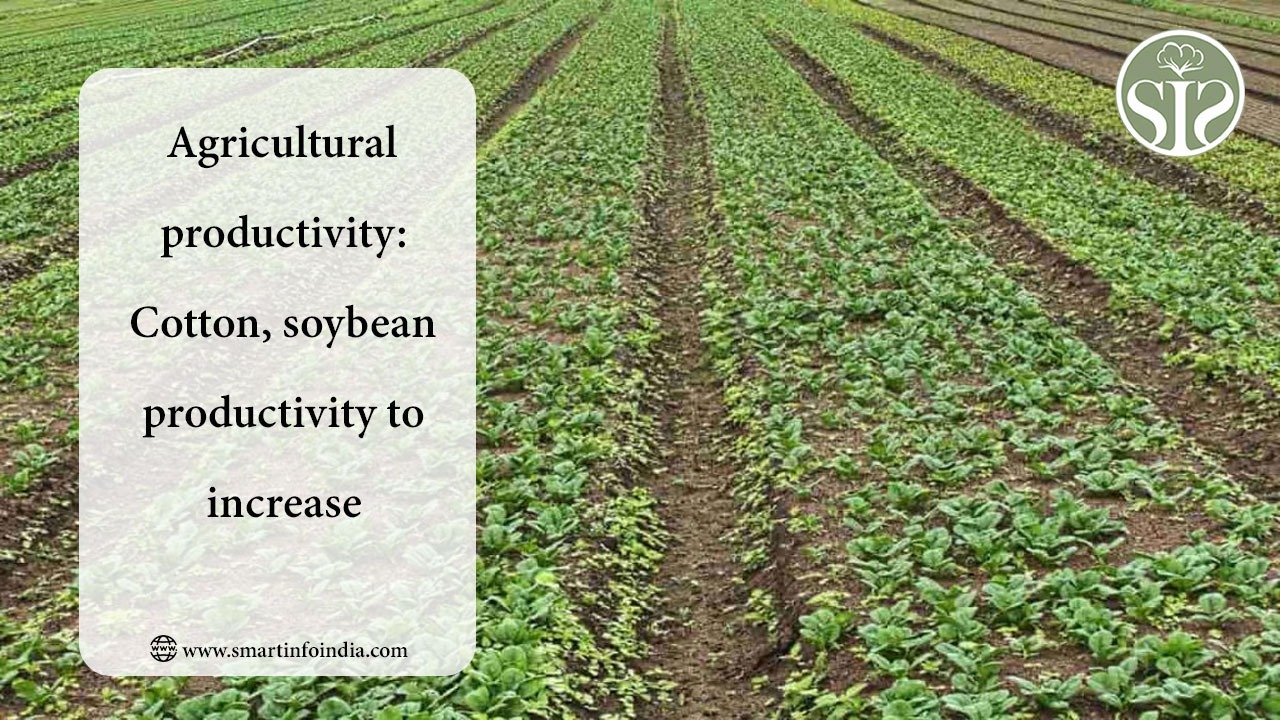
Agricultural productivity: Cotton, soybean productivity to increase

Productivity in agriculture: productivity for cotton and soybeans will riseMaharashtra News: Cotton and soybean are expected to produce good yields, leading the state's Kharif season this year. Agriculture department sources said that the productivity of both crops is likely to increase this year. Meanwhile, due to heavy rains in some parts of the state, water has accumulated in the fields of low-lying areas and the crops have started turning yellow and getting spoiled.If we look at sowing of soybean in the state since 2017, the average area has been 41 lakh hectares. However, this year farmers have increased the sowing area by 10 lakh hectares to 50 lakh hectares.The state's five-year average cotton area had become 42 lakh hectares. But in some areas, farmers switched from cotton to soybean. Due to this, cotton cultivation decreased to about 40 lakh hectares in the last season. It was estimated that the area would decrease further this year. But now it is clear that due to good rains, the area of cotton will not increase much this year, but it will not decrease either.Soybean crop has now reached the budding, branching to flowering stage. So cotton is now in the germination and sprouting stage in Vidarbha, Marathwada. According to the agriculture department, though cotton is in good condition, farmers and ginners should be cautious of pink bollworm. Keeping the ginning area clean and removing the previous fungus can help prevent bollworm infestation.Soybean and cotton are now facing two threats: excessive rainfall or rain at the time of harvesting. Last season, farmers had grown 66 lakh tonnes of soybean. Soybean productivity may increase from 1299 kg to 1413 kg per hectare compared to last year. If this happens, the total soybean production in the state is likely to exceed 72 lakh tonnes this year, believes the agriculture department.This year cotton production is also expected to increase from 88 lakh bales to 92 lakh bales (170 kg per bale). Last season, farmers got an average cotton productivity of 355 kg per hectare. If the weather remains favorable till harvesting, the productivity of cotton will increase by 40 to 50 kg this year. It is estimated that this year farmers can get about 400 kg of cotton per hectare.Read More :Bt Cotton Boosts Yield by 3-4 Quintals per Acre: Government Reports in Lok Sabha



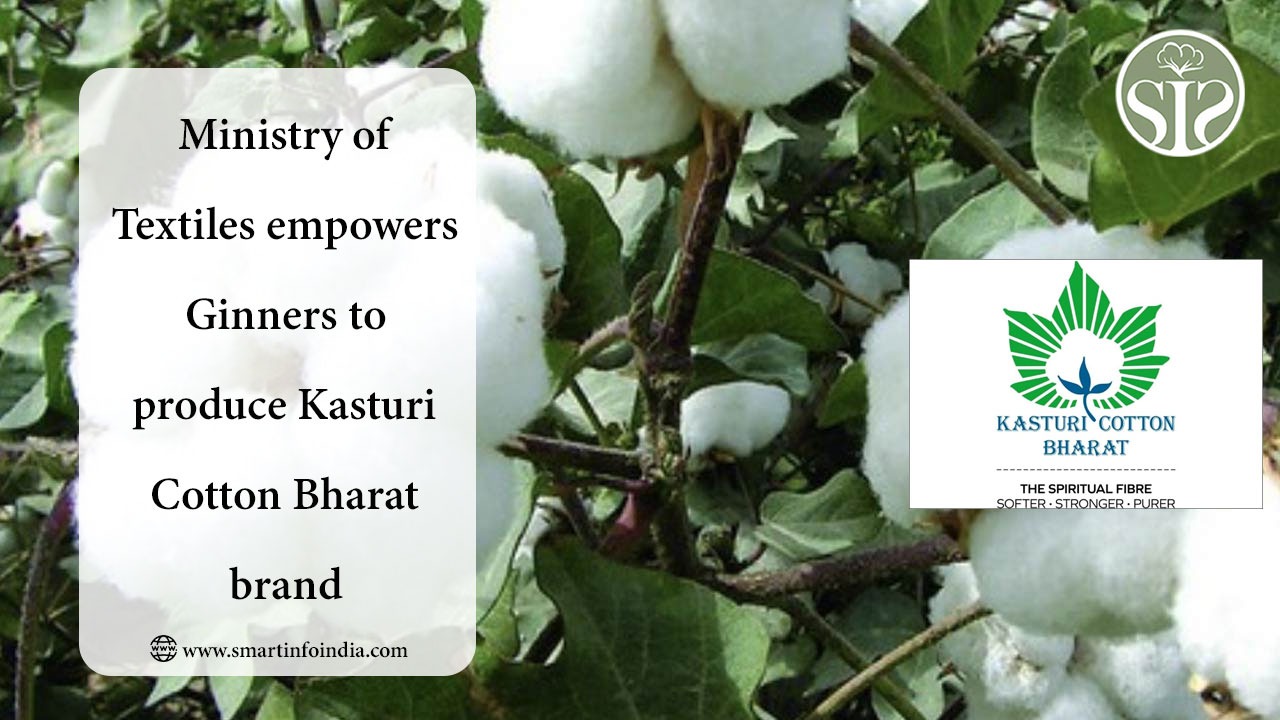
Ministry of Textiles empowers Ginners to produce Kasturi Cotton Bharat brand

Ginners are authorized by the Ministry of Textiles to create the Kasturi Cotton Bharat trademark.Kasturi Cotton Bharat programme of Ministry of Textiles is a pioneering effort in traceability, certification and branding of Indian cotton. The details of Kasturi Cotton Bharat program and implementation of block chain technology for traceability.Kasturi Bharat initiative, a collaboration between the Government of India, trade bodies, and industry, was formalized with a budgetary support of Rs 30 crore including Rs15 crore from Trade & Industry Bodies through a MoU signed on15.12.2022 between Cotton Corporation of India on behalf of Government of India, Ministry of Textiles and The Cotton Textiles Export Promotion Council.To provide complete traceability of Kasturi Cotton Bharat tagged bales across the supply chain, QR based certification technology are being used at each stage of the processing and a Block-chain based software platform will provide end to end traceability and transaction certificate. In this regard, Microsite with QR code verification and Block Chain technology has been developed.The Kasturi Cotton Bharat programme is operational at the national level and its promotion is being made at national and international platform. Hence, the allocation of funds is not at state level.The implementation of Block chain Technology under the Kasturi Cotton Bharat program is designed for stakeholders across the entire Indian cotton value chain including Andhra Pradesh.All the ginners in the country including Andhra Pradesh have been empowered to produce Kasturi Cotton Bharat brand as per stipulated protocol and about 343 modernised ginning and pressing units including 15 ginning and pressing units of Andhra Pradesh have been registered so far for participating Kasturi Cotton initiative and about 100 bales of Andhra Pradesh have been certified under Kasturi Cotton Bharat brand.This information was given by the Union Minister of State for Textiles, Pabitra Margherita in a written reply today in the Lok Sabha.Read More :> Bt Cotton Boosts Yield by 3-4 Quintals per Acre: Government Reports in Lok Sabha

Related News

Youtube Videos

रुई बाज़ार में गिरावट का रुख 😱 Cotton market rate today #youtube
रुई बाज़ार में गिरावट का रुख 😱 Cotton market rate today #you...
जानिए आज का कपास बाज़ार 😱 Cotton market rate today #youtube
Ganesh Chaturthi Celebration at Our Office 🙏✨ | Ganpati Bappa Morya! #shorts
Ganesh Chaturthi Celebration at Our Office 🙏✨ | Ganpati Ba...
Application Download
Whatsapp Contact