Recent News

Tamil Nadu Textile Mills Struggling Amid Multiple Challenges

Textile Mills in Tamil Nadu Are Struggling Despite Several ObstaclesTextile factories in Tamil Nadu are grappling with severe challenges, including declining demand, high electricity costs, and elevated raw material prices, which have persisted for nearly two years. To prevent losing market share to competitors from other states, the industry is urging both Central and State Governments to intervene and address these issues.Tamil Nadu, home to 24 million spindles across 2,100 textile mills, has seen a significant decline in production. Over the past two years, more than 500 mills have shut down, and 1,000 others are operating at reduced capacity.Ravi Sam, a former president of the Southern India Mills’ Association (SIMA), highlighted that yarn from states like Madhya Pradesh, Gujarat, Maharashtra, and Odisha is priced Rs. 20 to Rs. 25 per kilogram lower than Tamil Nadu's yarn, making it difficult for the state's mills to compete.A. Sakthivel, honorary chairman of the Tiruppur Exporters’ Association, noted that Tiruppur's knitwear units have started sourcing yarn from mills in other states due to more competitive pricing.S.K. Sundararaman, SIMA's current chairman, explained that Tamil Nadu mills produce various types and quality levels of yarn. However, the hosiery yarn market, crucial to Tiruppur's knitwear industry, is being lost to mills in other states. He suggested that Tamil Nadu’s mills need to shift to producing higher count yarn, invest in integrated plants, add value, or secure nominations from garment buyers.Additionally, states like Gujarat, Madhya Pradesh, and Odisha offer attractive packages, significantly impacting Tamil Nadu’s mills. As Tamil Nadu cannot produce enough cotton, mills are forced to import from other states, adding Rs. 8 to Rs. 10 per kilogram to the cost. This, coupled with subsidies in other states for power, capital investment, and talent development, has further eroded the competitiveness of Tamil Nadu’s mills.Industry experts recommend that Tamil Nadu focus on increasing the production of extra long staple cotton and consider providing some form of electricity subsidy to its mills. They also suggest that the Central Government should lower import duties on cotton and relax Quality Control Orders to help MSME textile mills remain competitive.Read More :> Abohar Flooded After Continuous Rain, Cotton Farmers Fear Crop Damage

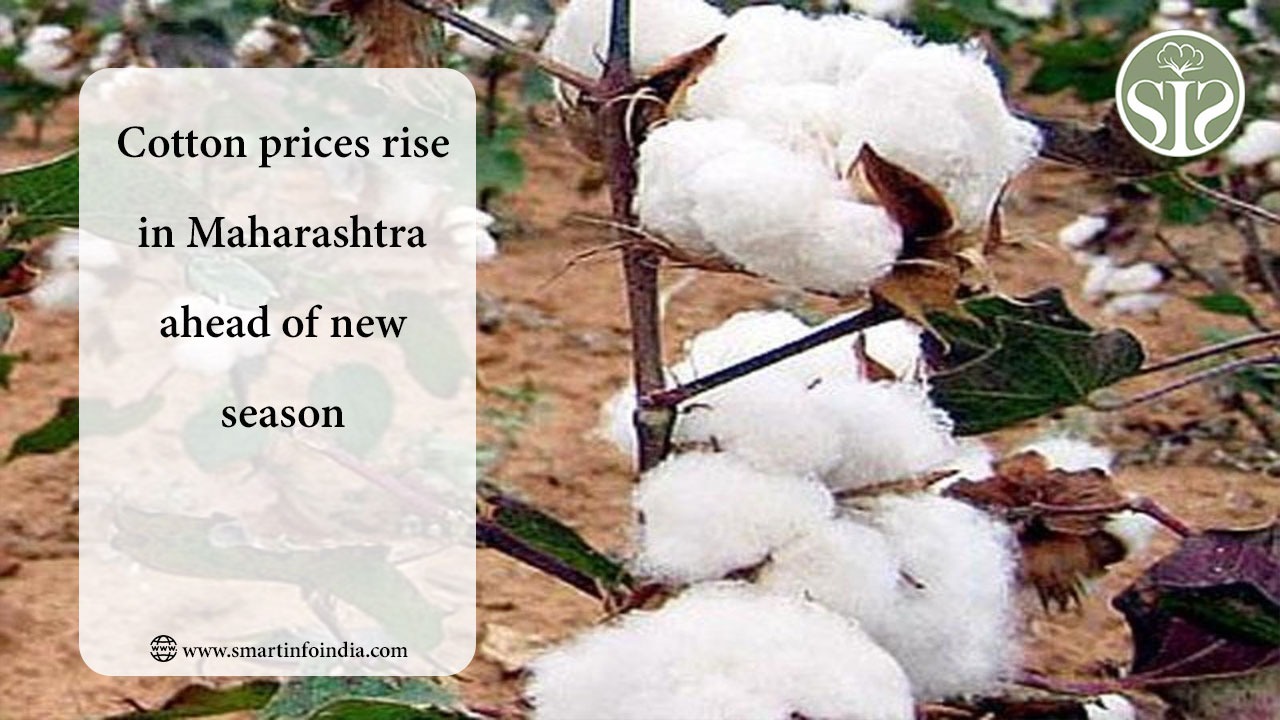
Cotton prices rise in Maharashtra ahead of new season

Prior to the new season, cotton prices in Maharashtra increaseAhead of the start of the new cotton season, cotton prices have risen by about 3 per cent in the last 15 days. Currently, the available stock of cotton in the country has decreased, and cotton cultivation has also decreased by about 10 per cent. Along with this, crops have been damaged by rain in Gujarat and Maharashtra, due to which the market is seeing improvement.The new cotton season in India starts in October, while the arrival of cotton in the northern states starts from September itself, as cotton cultivation starts earlier there. Usually before the new season, cotton prices remain high during the off-season, but prices start softening before the new goods come to the market, as the supply increases.This year, however, the market witnessed a decline during the off-season due to several reasons. Cotton prices in the international market reached the lowest level in the last four years, which also put pressure on the domestic market. But, cotton prices in India remained stable compared to the international market, which ranged between Rs 6,800 and Rs 7,300. The main reason for this was the low supply in the country, which kept the prices stable.There was constant pressure in the cotton market for the last three months, raising concerns about the new season. Usually, prices rise in the off-season, but this year prices fell, creating uncertainty in the market. However, cotton prices have improved in the last two weeks due to three major reasons, giving a positive start to the season.Low cotton stockThe country currently has low cotton stock. Production was low last season, while consumption by domestic industries increased and exports are also estimated to be around 28 lakh bales. It is estimated that only 20 lakh bales of cotton will remain in the new season this year. If the arrival of new cotton is delayed due to rain, the shortage of cotton may increase furtherReduction in cultivationCotton cultivation has decreased by about 10 percent compared to last year. There has been a significant reduction in cultivation in northern states like Punjab, Haryana and Rajasthan. Apart from this, cotton acreage has also decreased in Gujarat and Maharashtra. Last season, cotton was cultivated in 122 lakh hectares in the country, which has come down to 111 lakh hectares this year. The decline in cultivation will reduce production, which has supported the prices.Heavy rainsIn recent days, many important cotton producing areas of Gujarat and Maharashtra have received heavy rains, causing damage to the crop. The same situation is in some parts of Madhya Pradesh. The market has already been affected due to low sowing and crop damage. Apart from this, good rains are also expected in September, which may affect the cotton crop. Due to all these reasons, prices are seeing improvement in the market.Read More : - Abohar Flooded After Continuous Rain, Cotton Farmers Fear Crop Damage

Severe Weather Threatens Gujarat's Cotton and Peanut Crops Ahead of Harvest
Gujarat's Cotton and Peanut Crops Face Danger From Severe Weather Before HarvestGujarat, India's leading cotton and peanut-producing state, is facing a severe threat from ongoing heavy rains and impending strong winds, just as the harvest season approaches. These adverse weather conditions could lead to flooding, endangering key crops in the region.The India Meteorological Department (IMD) has predicted significant rainfall for the Saurashtra and Kachchh regions of Gujarat, continuing for three days through Saturday. The situation is further aggravated by a deep depression near the coast, which is expected to intensify into a cyclone by Friday. Wind speeds could escalate to as high as 85 kilometers (53 miles) per hour, according to a Thursday bulletin.If the cotton crops suffer severe damage, India may be forced to increase its cotton imports, which could provide a boost to global cotton prices that have dropped nearly 15% this year. Meanwhile, a potential decline in peanut production could tighten supplies in the domestic market, impacting a nation that already imports approximately 60% of its vegetable oil needs.Earlier this week, parts of Gujarat experienced flash floods due to heavy rainfall, with one town recording up to 300 millimeters of rain in just 24 hours by Thursday morning, the IMD reported.The National Disaster Response Force (NDRF) has been dispatched to the affected regions, successfully rescuing over 500 individuals from waterlogged areas across several districts of Gujarat, the agency shared on social media.The IMD has issued warnings to oil exploration companies and port operators along the Gujarat and Maharashtra coasts, advising them to monitor the developing weather closely and take appropriate measures until Friday. Fishermen have also been cautioned to avoid the Arabian Sea due to the dangerous conditions.Read More :> Indian Textile Industry Urges Extension of MIP on All Knitted Fabrics to Curb Imports

India's Monsoon Prolonged, Threatening Ripe Crops

Long-lasting Monsoon in India Endangers Ripe CropsIndia's monsoon season is expected to extend into late September this year due to the formation of a low-pressure system mid-month, according to two weather department.The extended monsoon and above-normal rainfall could jeopardize summer-sown crops such as rice, cotton, soybean, corn, and pulses, which are usually harvested around mid-September. This could lead to increased food inflation. However, the extended rains might also improve soil moisture, potentially benefiting the planting of winter crops like wheat, rapeseed, and chickpea.A senior official from the India Meteorological Department, who requested anonymity, mentioned that there is a heightened chance of a low-pressure system emerging in the third week of September, which might delay the monsoon's retreat.India, a major producer of wheat, sugar, and rice, has already implemented various export restrictions on these commodities. Any additional losses from excessive rainfall could lead the Indian government to extend these restrictions.Typically, the monsoon season starts in June and begins to retreat from northwestern India by September 17, ending across the country by mid-October. The monsoon is crucial for India's $3.5-trillion economy, as it provides nearly 70% of the rainfall needed for agriculture and replenishes water sources. About half of India's farmland relies on this seasonal rain, which normally lasts from June to September.September and October's rainfall could be influenced by developing La Nina conditions, which might cause a delayed monsoon withdrawal, according to another IMD official. Historical patterns suggest that La Nina during the latter part of the monsoon season can result in a prolonged monsoon period.read more :- Indian Textile Industry Urges Extension of MIP on All Knitted Fabrics to Curb Imports

Related News

Youtube Videos

जानिए आज का कपास बाज़ार 😱 Cotton market rate today #youtube
Ganesh Chaturthi Celebration at Our Office 🙏✨ | Ganpati Bappa Morya! #shorts
Ganesh Chaturthi Celebration at Our Office 🙏✨ | Ganpati Ba...
कपास बाज़ार साप्ताहिक रिपोर्ट 🔥 | तेजी या मंदी? | CCI Update | Cotton Market  Update
कपास बाज़ार साप्ताहिक रिपोर्ट 🔥 | तेजी या मंदी? | CCI Updat...
Application Download
Whatsapp Contact