Recent News

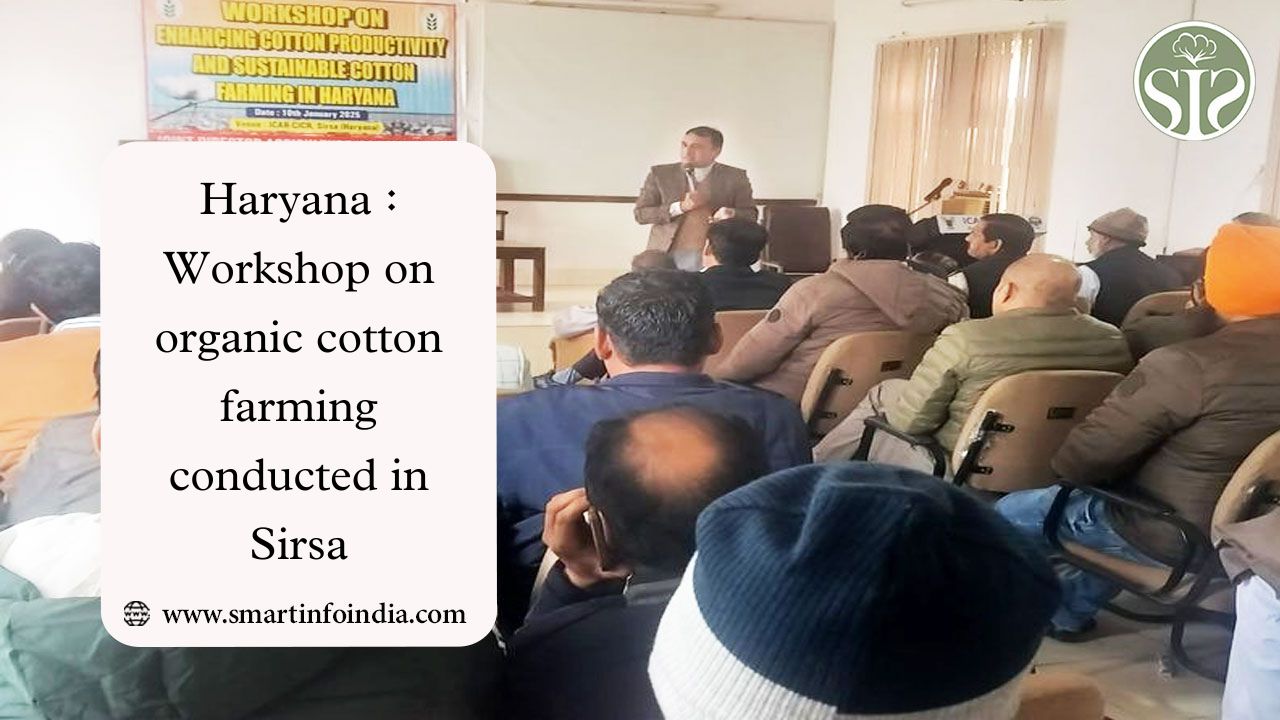
Haryana : Workshop on organic cotton farming conducted in Sirsa

Haryana: Sirsa hosted an organic cotton farming workshopSirsa : A one-day workshop was held at the Central Cotton Research Institute, Regional Station, Sirsa, on Saturday to promote organic cotton farming. The workshop was chaired by Ram Pratap Sihag, Joint Director (Cotton). Various officials, including the Deputy Director of Agriculture, experts, scientists from the institute, representatives from BT seed companies, input dealers and Cotton Corporation officers attended the event.Sihag said that organic cotton farming could not only increase cotton production but also help farmers improve their income. He shared how farmers could grow indigenous cotton and produce their own organic cotton seeds. The goal of the workshop was to encourage more farmers to adopt organic cotton farming methods.Representatives from the "Kheti Virasat Mission Trust" in Punjab, including its director, Roopasi Garg, and progressive farmers like Raja Ram and Manveer shared their experiences and thoughts on organic cotton farming.Rishi Kumar, the head of the Central Cotton Research Institute, discussed cotton farming in northern India, protection of crops from pests and benefits of organic farming practices for improving cotton production.SK Verma, a senior scientist, provided important information on scientific methods to promote organic cotton farming. Other experts SK Sain and Amarpreet Singh spoke on management of cotton diseases and improvement of production through natural farming techniques.Sukhdev, Deputy Director of Agriculture, suggested that promoting organic cotton farming through farmer producer organisations and farmer clubs could lead to more success in this initiative. Subhash Chandra, another scientist, spoke about improved cotton varieties and thanked all participants for attending the workshop.read  more :- Rupee slumps 27 paise to hit record low of 86.31 against US dollar in early trade

Hemp fibre will transform agriculture scenario and textile industry: Dr Khajuria

Hemp fiber will revolutionize the textile and agricultural industries: Dr. KhajuriaNew Delhi: Jan 10: Hemp fibre has the potential to transform agriculture scenario and textile industry. This was stated by Dr Romesh Khajuria, Chairman, WWEPC, Ministry of Textiles, Government of India, during his inaugural address at the 188th Administrative Committee (COA) here on Thursday. Dr Khajuria led a delegation to meet Union Textiles Minister Giriraj Singh to brief him about the progress made in hemp fibre. The delegation comprised representatives of Roop Rashi, Textile Commissioner, Government of India, Avega Green Technology, Coursed India Foundation, India Hemp Networking, hemp fibre industry, organisations working on hemp fibre cultivation and other stakeholders. They held important discussions on identification of hemp fibre.Dr Khajuria, who is also the Chairman of Jammu Kashmir Wool Development and Marketing Association (JKWDMA), said that hemp fibre has certain special properties and blending of wheat with wool becomes the best quality of sustainable natural fibre and the world is rapidly moving towards the use of more and more sustainable fibres to avoid global warming which is harmful to the earth.He urged for early recognition of hemp fibre as “allied fibre”, creating necessary strategic planning and policy framework and R&D initiatives for adoption of hemp fibre and possible collaborations to increase the use of hemp fibre in various industries.Dr Khajuria said, “Hemp has the potential to transform our agriculture landscape and textile industry. By officially recognizing it as an ‘allied fibre’, we are not only advancing sustainability but also creating economic opportunities for farmers across India.”Dr Khajuria also said that India's domestic market for hemp-based products, including textiles, is estimated to reach Rs 3,000 crore by 2027.Avega Green Technologies' proposal: A key moment of the meeting was the presentation given by Karan R. Sarsar, Founder and CEO of Avega Green Technologies, who presented a comprehensive plan to integrate hemp fibres into India's textile industry.The COA members present included R C Khanna, Vice Chairman, D K Jain, Harmeet Singh Bhalla, Kawaljit Singh, Bilal Bhatt, Rajesh Khanna, Harish Dua, Executive Director, Suresh Thakur and others.read more :- Weekly Summary Report: Cotton Bales Sold by the Cotton Corporation of India (CCI)

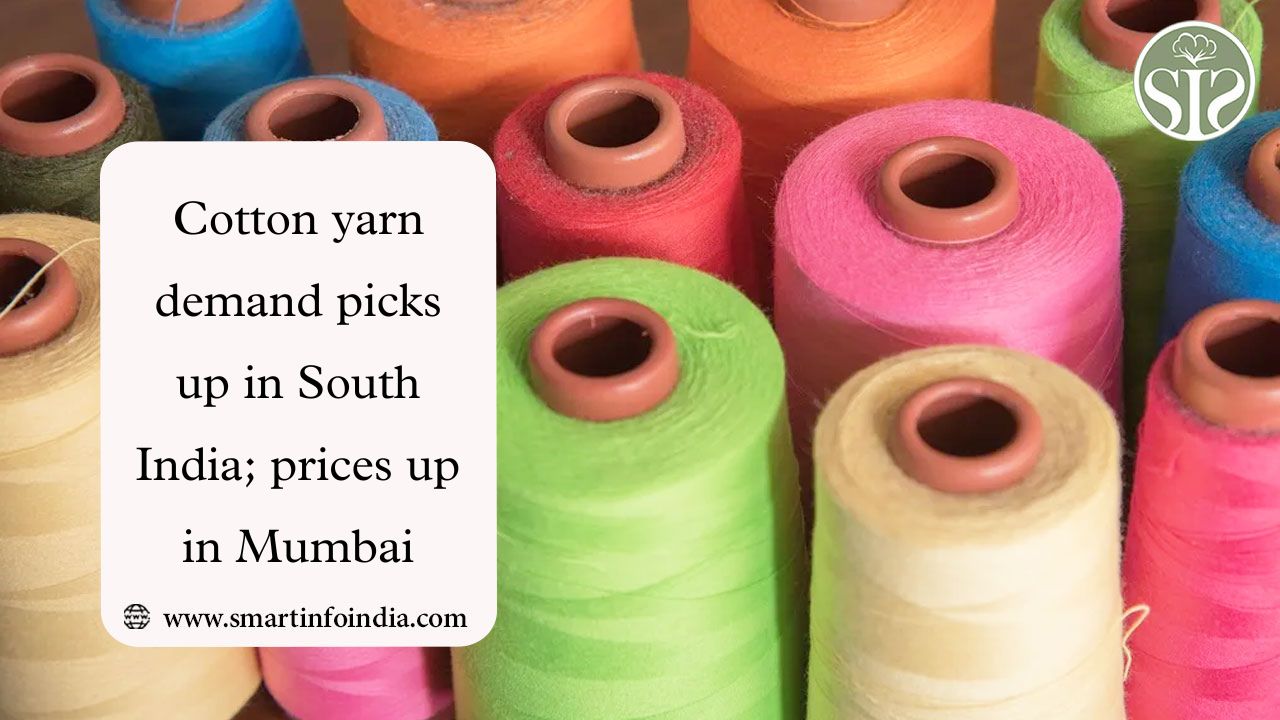
Cotton yarn demand picks up in South India prices up in Mumbai

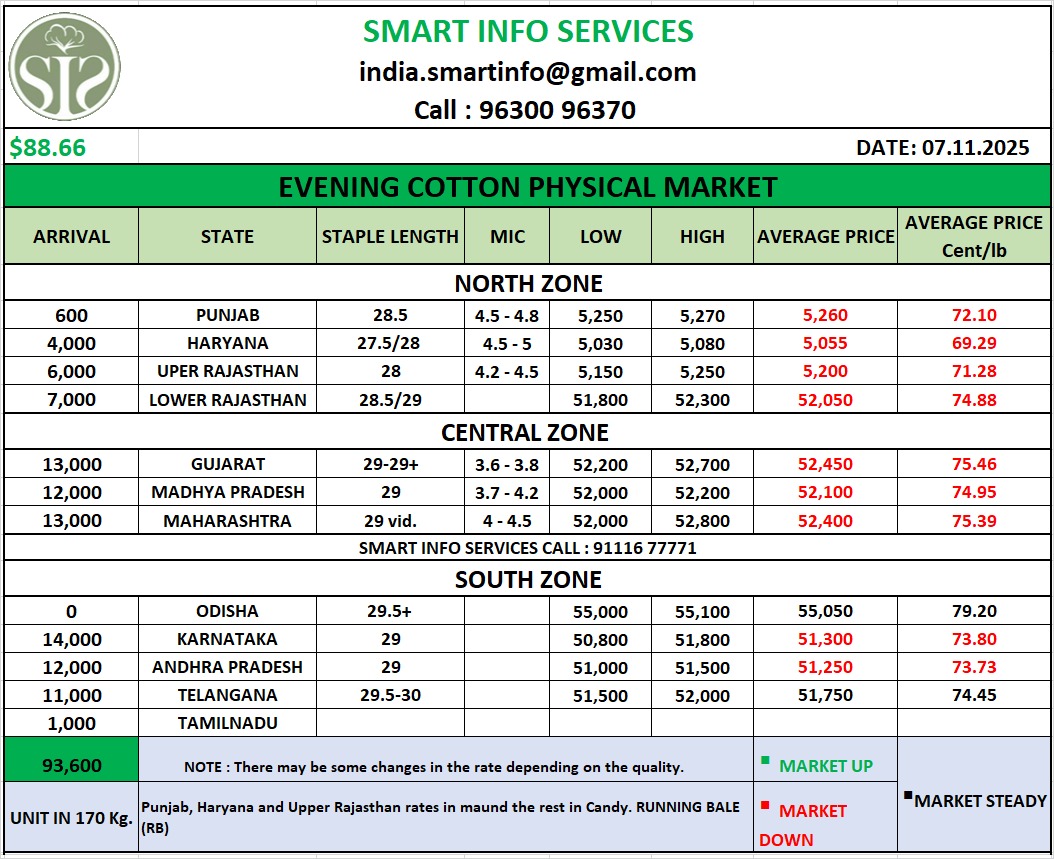
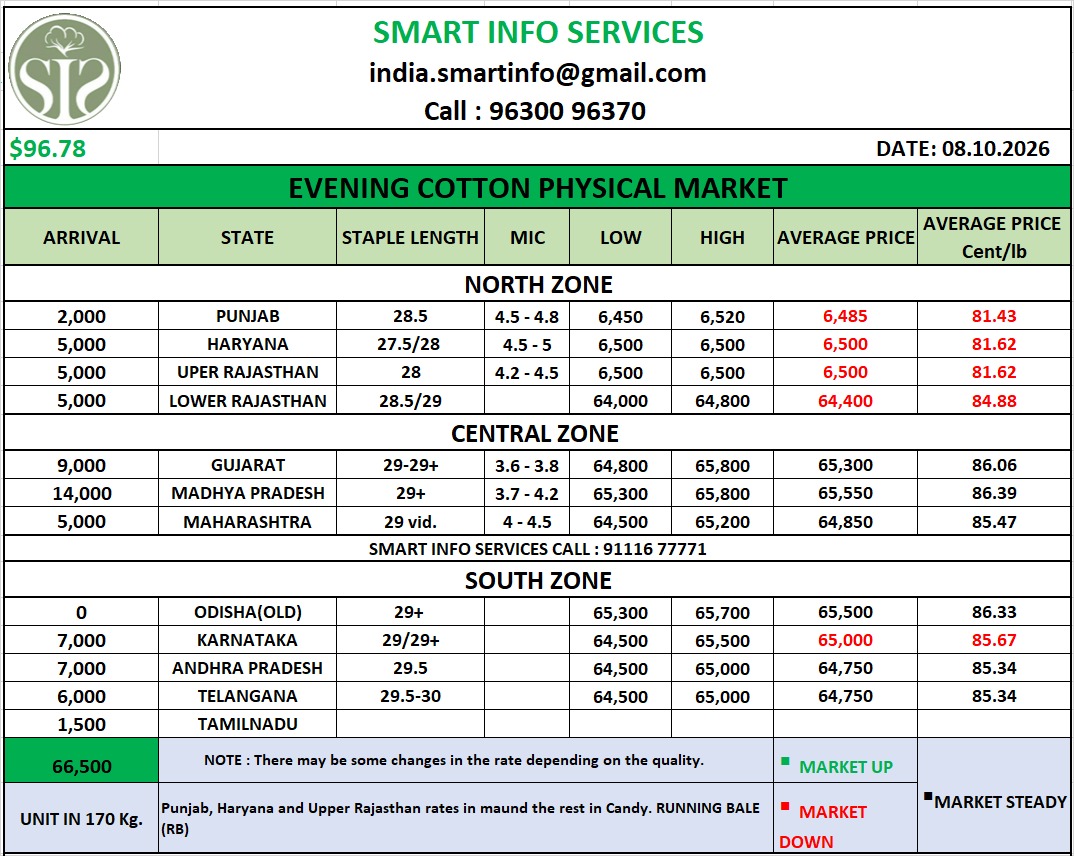
Demand for cotton yarn is increasing in South India, but Mumbai prices are rising.The South India cotton yarn market witnessed higher demand for summer garments. Consequently, cotton yarn prices increased in the Mumbai market. The Tiruppur market saw stability in prices. Mills are reducing discounts due to higher demand, as they are not under pressure to find potential buyers. Market experts stated that cotton yarn demand is gradually picking up as summer garment production increases. They also noted that cotton garment demand rises in North Indian states during the summer season due to hot and humid weather. Rising cotton prices are further encouraging buyers, and spinning mills are increasing yarn prices in response to higher cotton prices.The Mumbai market saw a rise of ₹2-3 per kg in cotton yarn prices due to higher demand from the consumer industry. Mills are trying to pass on the recent increase in cotton prices. A trader from the Mumbai market told Fibre2Fashion, “Mills are buying expensive cotton to produce yarn so they can meet the increasing demand from the consumer industry. The present strong demand does not deter mills from increasing yarn prices. The entire textile value chain is active now ahead of the summer season.”In Mumbai, 60-carded yarn of warp and weft varieties was traded at ₹1,440-1,480 (approximately $16.67-$17.23) and ₹1,390-1,440 per 5 kg (approximately $16.19-$16.77) (excluding GST), respectively. Other prices included 60 combed warp at ₹338-344 (approximately $3.94-$4.01) per kg, 80-carded weft at ₹1,420-1,480 (approximately $16.54-$17.23) per 4.5 kg, 44/46-carded warp at ₹262-272 (approximately $3.05-$3.17) per kg, 40/41-carded warp at ₹256-266 (approximately $2.98-$3.10) per kg, and 40/41 combed warp at ₹288-294 (approximately $3.35-$3.42) per kg, according to trade sources.The Tiruppur market also witnessed higher demand for cotton yarn. Better buying activity relieved mills from selling pressure, and they are not considering reducing the discounts previously offered to attract buyers. However, cotton yarn prices remained steady in the South Indian market. According to market sources, a few deals were reported at higher prices, but in general, cotton yarn prices remained stable with some exceptions. Mills may officially increase cotton yarn prices after Pongal next week.In Tiruppur, knitting cotton yarn prices were recorded as follows: 30-count combed cotton yarn at ₹255-263 (approximately $2.97-$3.06) per kg (excluding GST), 34-count combed cotton yarn at ₹264-271 (approximately $3.07-$3.16) per kg, 40-count combed cotton yarn at ₹276-288 (approximately $3.21-$3.35) per kg, 30-count carded cotton yarn at ₹235-240 (approximately $2.74-$2.79) per kg, 34-count carded cotton yarn at ₹240-245 (approximately $2.79-$2.85) per kg, and 40-count carded cotton yarn at ₹248-253 (approximately $2.89-$2.95) per kg.In Gujarat, cotton prices increased by ₹200-300 per candy over the last couple of days. Ginning mills are offering higher prices for seed cotton to attract buyers, which has increased their cost of production in recent times. Traders stated that farmers are selling their produce to private traders if they receive prices higher than the Minimum Support Price (MSP). Consequently, the market price of seed cotton has risen above the MSP.Cotton arrivals were estimated at 32,000-35,000 bales of 170 kg in Gujarat and 220,000-230,000 bales across the country. Trade sources indicated that the Cotton Corporation of India (CCI) continues to purchase more seed cotton from southern states compared to central and northern states.The benchmark Shankar-6 cotton was quoted at ₹54,000-54,500 (approximately $628.82-$634.64) per candy of 356 kg, while southern mills were seeking to buy cotton at ₹55,000-55,500 (approximately $640.46-$646.29) per candy. Seed cotton (Kapas) was traded at ₹7,500-7,625 (approximately $87.34-$88.79) per quintalread more :- Indian rupee ended at fresh record low at 85.97 per dollar on Friday versus Thursday's close of 85.85.

Related News

Youtube Videos

आज कपास बाज़ार में क्या हुआ? 😱 Cotton Market Rate Today 3 Nov 2026
आज कपास बाज़ार में क्या हुआ? 😱 Cotton Market Rate Today 3 N...
CCI खरीद करेगी या नहीं? 😱 मार्च तक चलेगा कपास सीजन? | Cotton Podcast 2 Nov 2026
CCI खरीद करेगी या नहीं? 😱 मार्च तक चलेगा कपास सीजन? | Cotto...
कपास बाजार में साप्ताहिक नरमी 😱 Import Duty पर सरकार का अपडेट | Weekly Cotton Market 31 Oct 2026
कपास बाजार में साप्ताहिक नरमी 😱 Import Duty पर सरकार का अपड...
Application Download
Whatsapp Contact