Filter

Recent News

Fourth ESG Task Force Meeting Charts Sustainable Roadmap for Textile Sector

ESG Task Force Sets Textile Sustainability GoalsThe Ministry of Textiles convened the 4th ESG Task Force meeting under the chairpersonship of Secretary Smt. Neelam Shami Rao to co-develop a visionary roadmap for a sustainable, circular, and resource-efficient Indian textile industry.In her keynote address, Smt. Rao emphasized that sustainability is already a lived reality in textile hubs like Tiruppur, Surat, and Panipat—where initiatives such as wastewater recycling, renewable energy use, and waste management are taking root. She called for these local successes to be scaled nationally through collective action, stressing that sustainability is no longer optional but essential for the industry's future.Additional Secretary Shri Rohit Kansal echoed these sentiments, highlighting India’s cultural roots in sustainability and the sector’s growing global responsibilities. He underscored the need for cluster-level engagement, deep integration of sustainability across the value chain, and a shift from compliance to competitive advantage. He reaffirmed the Prime Minister’s call to position India as a global leader in “Fashion for Environment and Empowerment.”The meeting brought together senior officials, including Dr. M. Beena, Textile Commissioner; Smt. Padmini Singla, Joint Secretary (Fibre); Ms. Renu Lata, Economic Advisor, Ministry of Commerce & Industry; Shri Ashok Kumar, DDG, Bureau of Energy Efficiency; along with industry leaders, associations, global agencies, and experts—ensuring representation from the entire textile value chain.The Ministry presented a draft Roadmap 2047, inviting inputs to shape a unified vision for the sector. Discussions focused on key pillars: awareness-building across stakeholders (industry, MSMEs, consumers, and students), capacity building, innovation, and harmonised sustainability standards. Participants stressed the need for simplified compliance, a balance of voluntary and regulatory mechanisms, and alignment with global ESG norms, green finance, and responsible consumption trends.The meeting concluded with a strong, collective commitment from all stakeholders to contribute actively to the evolving ESG framework, with widespread appreciation for the Ministry’s inclusive and forward-looking approach.read more :- Projected cotton sowing on 9L hactares in districts of north maharashtra

Projected cotton sowing on 9L hactares in districts of north maharashtra

Cotton Sowing on 9L Ha in N. MaharashtraNashik: Cotton sowing has begun in north Maharashtra districts, with local farmers reporting that 10-15% of cotton sowing was done in Jalgaon, Dhule, Nandurbar, and Nashik districts.Cotton is one of the major kharif crops in North Maharashtra, contributing to 45% of the total kharif sowing acreage.Around 18 lakh farmers are involved in cotton farming in the north Maharashtra districts. Jalgaon, Dhule, and Nandurbar are the major cotton-producing districts in this region.The state agriculture department projected kharif sowing acreage on 20.64 lakh hectares in north Maharashtra for the kharif season this year, with sowing of cotton crop projected on as much as 9 lakh hectares.Jalgaon district is projected to have 5.25 lakh hectares for cotton sowing acreage out of the 9 lakh hectares projected for cotton sowing in north Maharashtra districts. This is followed by Dhule district (2.14 lakh hectares) and Nandurbar district (1.21 lakh hectares) .In Nashik district, cotton is cultivated only in the Malegaon and Yeola talukas, covering 45,000 hectares.Sanjay Patil, a cotton grower, said, "I completed cotton sowing on five acres in Jalgaon district.Farmers who have a water source have completed cotton sowing. But farmers who don't have a source of water will start sowing cotton only after they get adequate rain."State agriculture department officials said farmers who have a source of water usually start sowing in the second half of May."So far, around 25% of the sowing was completed in Jalgaon district alone, while in Dhule and Jalgaon district, around 2-3% of cotton sowing has been completed so far. Overall sowing in north Maharashtra district is around 10 to 15%," said an office.Apart from cotton, other crops like maize, soybean, moong, tur, bajra, urid, and paddy are the other major kharif crops in the region. Meanwhile, the agriculture department advised the farmers not to start sowing until there is adequate rainfall in their areas.In June last year, the state agriculture department had projected that the cotton sowing acreage will be on 5.01 lakh hectares in Jalgaon district and 2.03 lakh hectares in Dhule district.read more :- Rupee falls 6 paise at open to 85.85 against US dollar



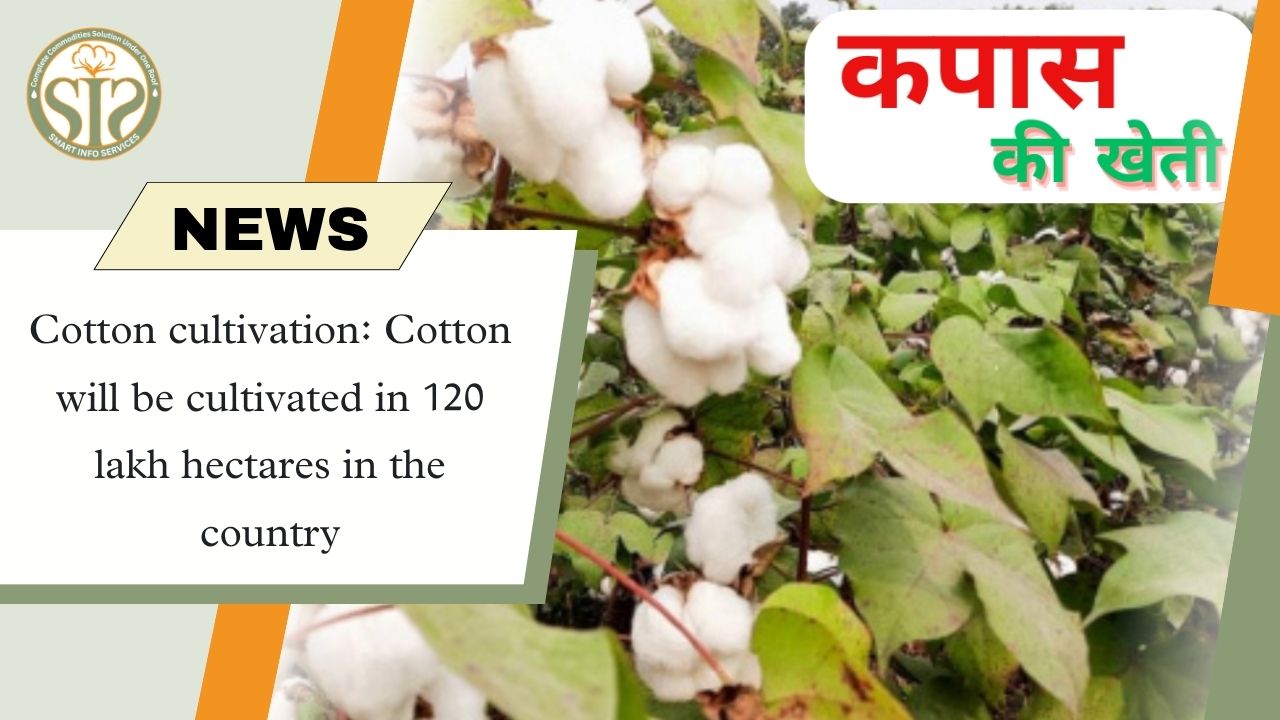
Cotton cultivation: Cotton will be cultivated in 120 lakh hectares in the country

Cotton Sowing Area Pegged at 120 Lakh HectaresNagpur : Last season, cotton was cultivated in 113 lakh hectares in the country. It is being said that this season cotton cultivation will be done within the limit of 100 lakh hectares. However, Dr. Vijay Waghmare, Director, Central Cotton Research Institute, has expressed confidence that the area under cotton cultivation will remain at 120 lakh hectares this Kharif season.There is unrest in the cotton sector due to many reasons including pink bollworm infestation, price fluctuations. It is seen that the cotton acreage is continuously decreasing. India's total cotton cultivation area is 130 lakh hectares and on an average 120 to 130 lakh hectares are cultivated every year. However, in the year 2024-25, the area under cotton cultivation was affected to a great extent and came down to 113 lakh hectares.If the situation remains the same, it is estimated that cotton cultivation will be limited to 100 lakh hectares in the Kharif season of 2025-26. However, Dr. Waghmare dismissed this possibility and claimed that cotton will be sown up to 120 lakh hectares. Cotton cultivation is already taking place in the southern states as compared to Maharashtra.So far, 95 percent of the area in this region has been cultivated. Since Maharashtra has more dry land areas, the agricultural season depends on monsoon rains. Therefore, most of the cultivation is done after June, Dr. Waghmare said.Although there is a problem of pink bollworm, awareness about it has increased among farmers. Therefore, farmers are already alert and are making efforts to control this insect. As a result, it is wrong to say that the area under cultivation has reduced or is decreasing due to pink bollworm. This year, cotton will be cultivated in 120 lakh hectares in the country, while in Maharashtra it will be cultivated in about 40 lakh hectares.read more :- INR Opens Stronger by 4 Paise at 85.86
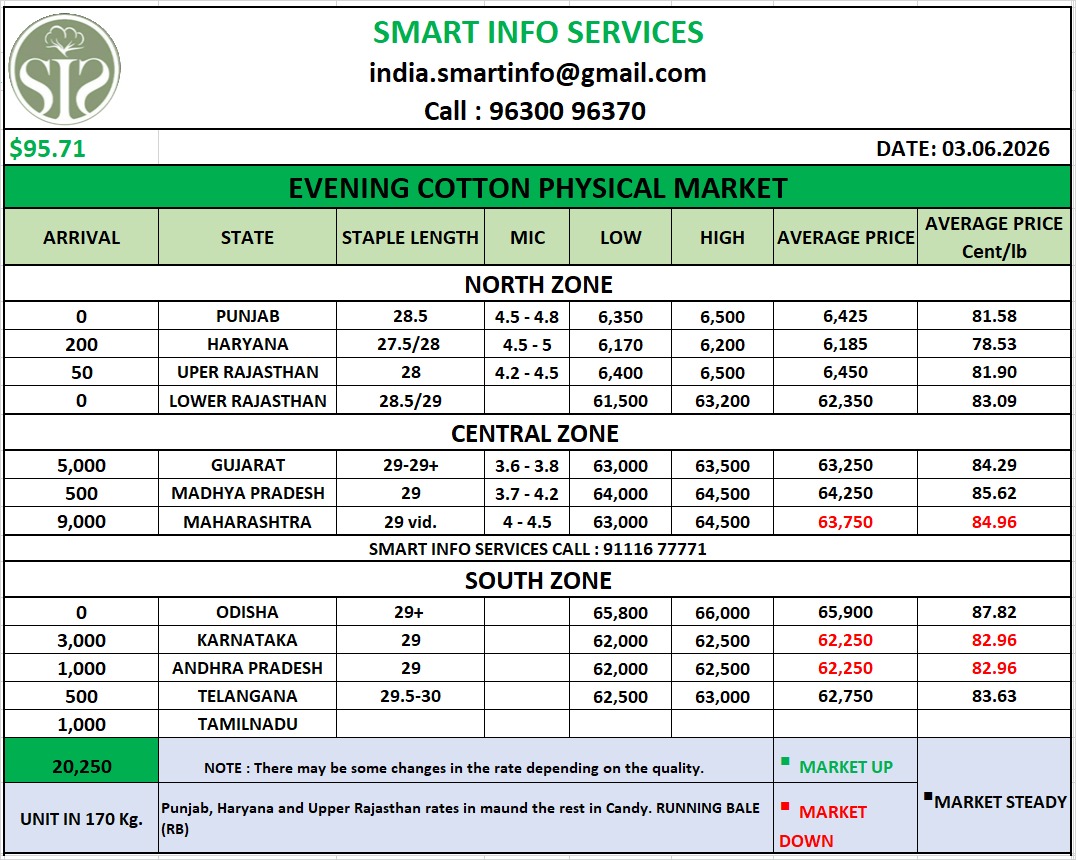
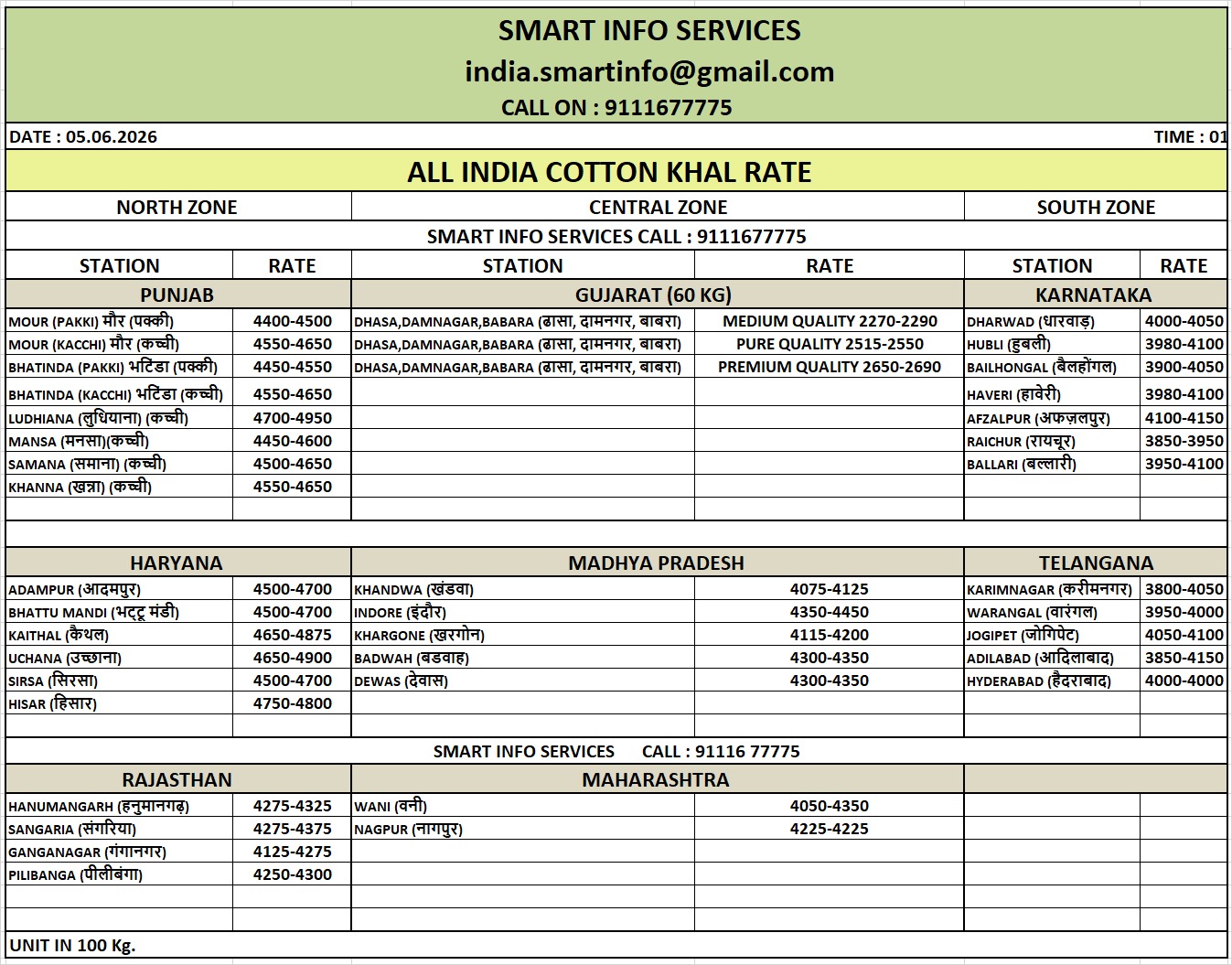
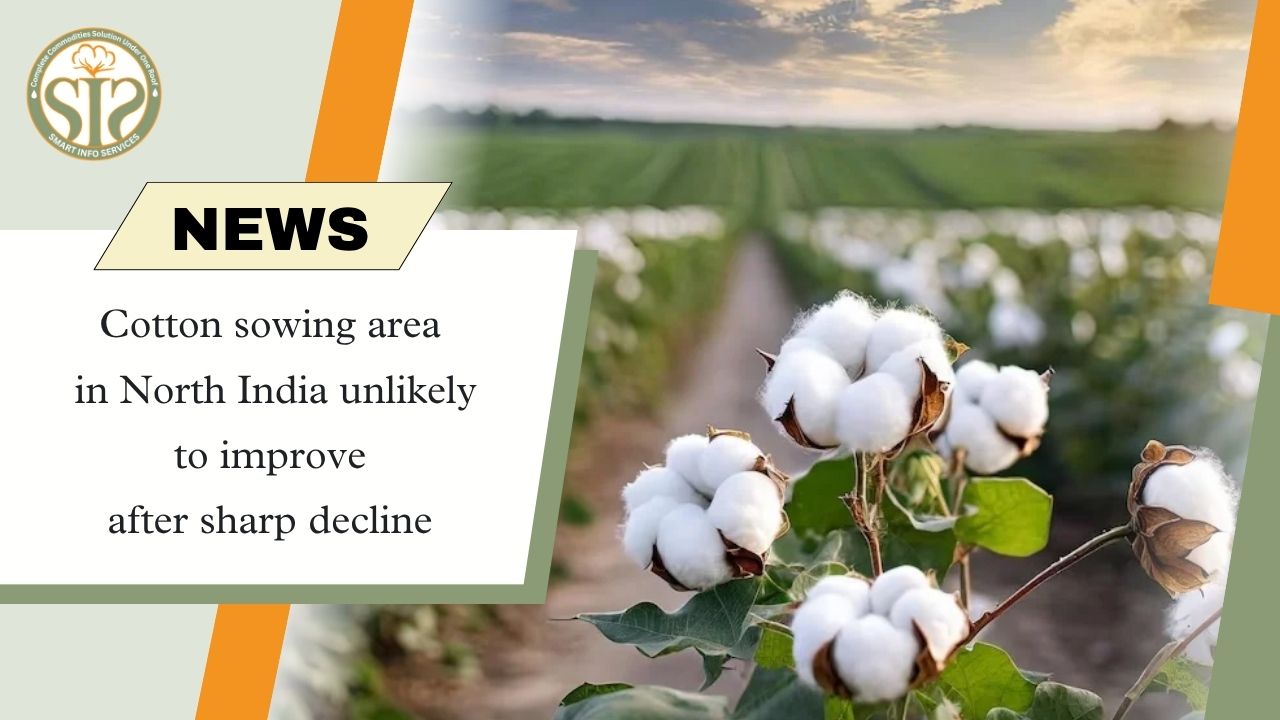
Cotton sowing area in North India unlikely to improve after sharp decline

Cotton Sowing Sees No Rebound in North IndiaDespite a sharp decline in sowing area last year, cotton sowing area in North India is unlikely to improve in the new season. Trade sources said cotton acreage in Punjab may increase by about 25-30 per cent, but cotton acreage in Haryana and Rajasthan may decline further due to lack of water for irrigation. Market experts said the assured returns from wheat and paddy due to government procurement have discouraged cotton cultivation in North Indian states.According to market sources, about 60-70 per cent of cotton sowing had been completed in North India by the end of May. Sowing is expected to be completed in the next one to two weeks. There are indications that farmers in Haryana and Rajasthan are facing a severe water crisis for irrigation. Cotton sowing in North India mostly depends on canal water, but both states are not getting adequate supply to meet the growing demand.Sources said the area under cotton cultivation in Punjab could rise by about 30 per cent to 1.25 lakh hectares in the 2025-26 season. However, sowing could fall by 20-25 per cent in Haryana and 25-30 per cent in Rajasthan. According to official data, all three states witnessed a sharp decline in cotton acreage last year, falling to 10.955 lakh hectares.There are indications that the total cotton sowing area in north India could fall further to below 10 lakh hectares in the new season. Sources said farmers in these states are opting for the safer option of paddy cultivation during the kharif season, as the government is committed to buying paddy and wheat (during the rabi season) at the minimum support price. The current procurement policy has disillusioned farmers from growing cotton.Historical data on cotton sowing also supports this trend. According to the Ministry of Agriculture, the cotton sowing area of North India was 15.620 lakh hectares in 2023-24. It decreased to 10.955 lakh hectares in 2024-25. The cotton area of Punjab decreased from 2.140 lakh hectares to 1 lakh hectares in 2023-24. The area in Haryana decreased from 6.650 lakh hectares and 6.830 lakh hectares in Rajasthan to 4.760 lakh hectares and 5.195 lakh hectares in Rajasthan.The Cotton Association of India (CAI) recently said that the cotton production of North India declined to 27.50 lakh bales (each 170 kg) in the current season from 45.62 lakh bales in the last season. The production estimates for the current season are as follows: Punjab – 1.50 lakh bales, Haryana – 7.80 lakh bales, Upper Rajasthan – 9.60 lakh bales and Lower Rajasthan – 8.60 lakh bales. In comparison, the production of last season was as follows: Punjab – 3.65 lakh bales, Haryana – 13.30 lakh bales, Upper Rajasthan – 15.47 lakh bales, and Lower Rajasthan – 13.20 lakh bales.read more:- Khandesh Begins Pre-Season Cotton Cultivation

Khandesh Begins Pre-Season Cotton Cultivation

Maharashtra: Cotton Cultivation in Khandesh: Pre-season cotton cultivation begins in KhandeshJalgaon: Pre-season or horticultural cotton cultivation has begun in Khandesh at the end of May. Cotton has sprouted in some areas. However, the agriculture department has also appealed to avoid dry land cotton cultivation until there is good rain.There is less response to pre-season or horticultural cotton cultivation in Khandesh this year. Cotton crop is proving to be loss-making and less profitable. Cotton crop is bearing the brunt of the shortage of labourers. Because cotton has to be sprayed three to four times and weed control has to be done three to four times. On the other hand, cotton harvesting starts during the festivals of Dussehra and Diwali.Cotton season begins in the fields during the festival season and workers have to bear the brunt of the shortage. Wage rates increase. Due to all these reasons, the area under cotton has reduced significantly in Khandesh in the last two years. In Jalgaon district alone, cultivation of 50 thousand hectares has reduced in the last season.The situation is the same this year as well. Many cotton growers have planned to sow soybean, maize in black soil and later grow gram and other Rabi crops in it. But cotton cultivation is going on in light, medium soil. The concerned farmers are cultivating cotton on drip irrigation and later plan to grow maize and other crops in it.More cultivation along SatpuraPre-season cotton cultivation is being seen along the Aner river along with the Tapi river in Khandesh. This cultivation has been done in the last three-four days. Pre-season cultivation has also been done in Raver, Yaval, Chopra of Jalgaon district as well as Jamner, Amalner, Parola, Shirpur, Dhule, Taloda and Shahada of Nandurbar. This cultivation is also going on. Cultivation will gain momentum this week. Cultivation will be done before the onset of monsoon rains. It is said that the expected plantation will be done in many areas by June 10.read more :- INR Drops 15 Paise, Closes at 85.90 per Dollar

Related News

Youtube Videos

कपास बाज़ार की आज की तस्वीर || Aaj ka kapas bazar bhav || All India Cotton Market Update #kapas #cci
कपास बाज़ार की आज की तस्वीर || Aaj ka kapas bazar bhav || All...
आज के कपास बाज़ार के ताज़ा भाव🤔। cotton market rate today🤔 #Kapas #smartinfo #bulletin #cotton
आज के कपास बाज़ार के ताज़ा भाव🤔। cotton market rate today🤔 #...
कपास बाज़ार की साप्ताहिक रिपोर्ट || Aaj ka kapas bazar || Weekly Cotton Market Update #smartinfo
कपास बाज़ार की साप्ताहिक रिपोर्ट || Aaj ka kapas bazar || Wee...
Copyright© 2023 | Smart Info Service
Application Download