


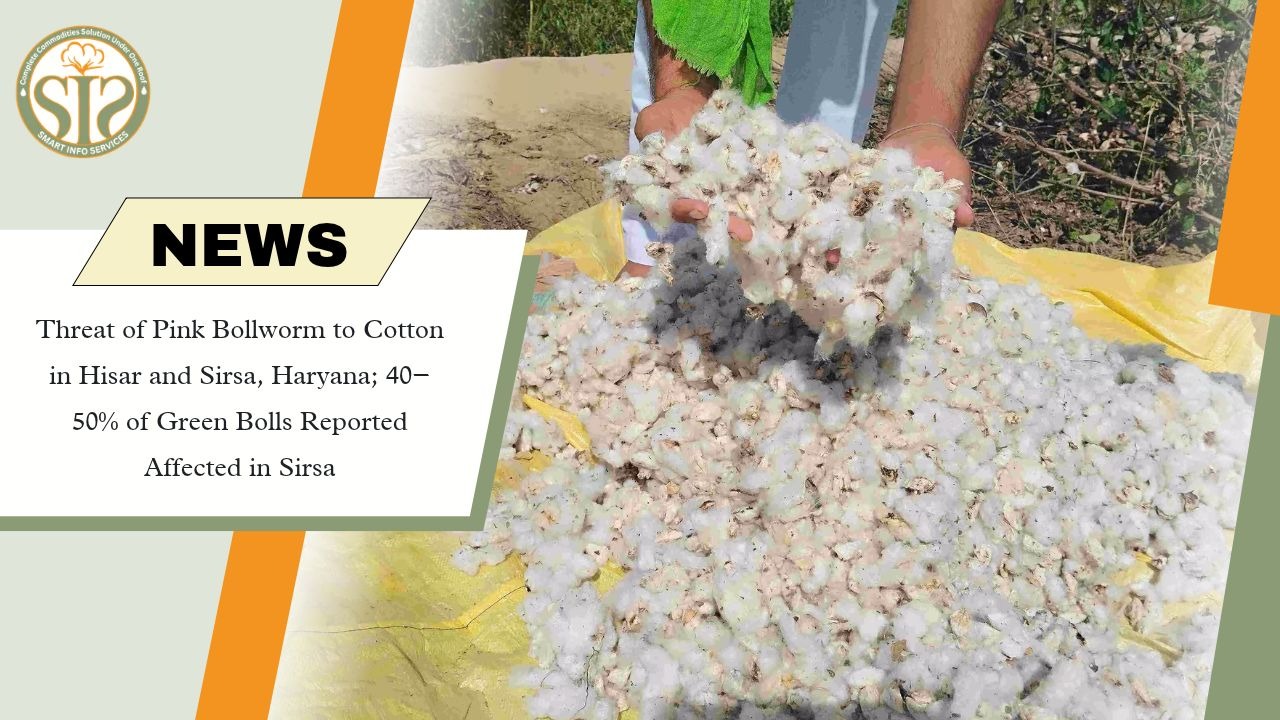
Threat of Pink Bollworm to Cotton in Hisar and Sirsa, Haryana; 40–50% of Green Bolls Reported Affected in Sirsa
Sirsa, Haryana, October 27, 2026: Concerns have been raised regarding the infestation of pink bollworm and other pests in cotton crops across the Hisar and Sirsa districts of Haryana. According to a report published on October 27, the weekly advisory (covering the period from October 15 to 21) issued by the Central Institute for Cotton Research (CICR), Nagpur, indicates that approximately 40–50% of green cotton bolls in Sirsa have been affected. However, this figure could not be independently verified against the original official advisory.
The pink bollworm penetrates the cotton bolls, damaging the seeds and fibers, which can negatively impact both crop yield and quality. As per the guidelines provided by ICAR-CICR, farmers should conduct regular inspections by collecting 20 green bolls from various plants during the boll-formation stage. Decisions regarding pest control measures should be based on official advisories, the specific growth stage of the crop, and the level of infestation observed in the field.
*Monitoring in Rajasthan and Madhya Pradesh*
The report also mentions pest monitoring in the Sri Ganganagar-Hanumangarh and Banswara regions of Rajasthan. In Banswara, issues with sap-sucking pests—such as whiteflies, jassids, and thrips—have been noted. Conversely, the report states that no pink bollworm infestation was detected during monitoring in the Khandwa region of Madhya Pradesh. These regional details should be cross-verified with the original advisory.
*Essential Precautions for Farmers*
Farmers are advised to conduct regular field inspections and utilize pheromone traps to monitor for the presence of the pink bollworm. Examining green bolls can facilitate the timely detection of an infestation. It is crucial to consult with a local agricultural expert before implementing any pest control measures. Use pesticides only in accordance with the label instructions for products approved for cotton and the specific pest in question. Do not apply chemical treatments without first verifying the correct dosage, the required interval between repeat applications, and the mandatory waiting period before harvest. Removing old cotton stalks and fallen, infested bolls—along with seeking guidance from the local Department of Agriculture or a Krishi Vigyan Kendra (Agricultural Science Centre)—can also be beneficial.
Timely monitoring and scientific management can help limit crop damage.
read more:- India Faces Cotton Shortage Risk as FTA Deals Boost Export Demand