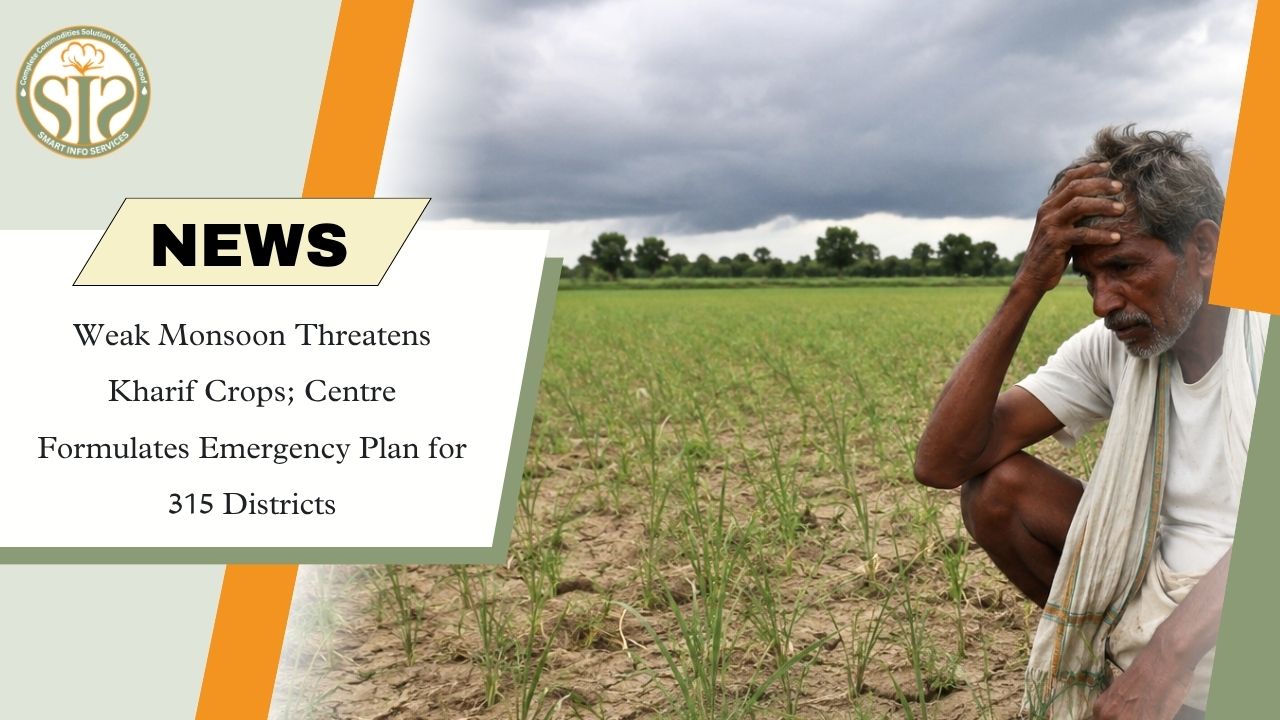
Weak Monsoon Threatens Kharif Crops; Centre Formulates Emergency Plan for 315 Districts
The prospect of a weak monsoon this year has raised concerns regarding Kharif crops. Union Agriculture Minister Shivraj Singh Chouhan stated on Tuesday that the Ministry of Agriculture has prepared emergency plans for districts likely to be affected by deficient rainfall. The government has identified approximately 315 districts where agricultural activities could be impacted by below-normal rainfall.
During a review meeting held via video conferencing with state agriculture ministers, senior officials, and district collectors, Chouhan stated that the situation in these districts is being closely monitored. Of these, 111 districts have been placed in the 'high priority' category because irrigation coverage there is 25 percent or less; deficient rainfall in these areas is likely to have a direct impact on crop production.
Additionally, 76 districts fall under the 'medium priority' category, with irrigation coverage ranging from 25 to 50 percent. Meanwhile, 128 districts are classified as 'low priority,' as irrigation conditions there are relatively better due to the presence of dams and other water sources. The affected districts span several states, including Madhya Pradesh, Maharashtra, Gujarat, Uttar Pradesh, Rajasthan, Karnataka, Bihar, Jharkhand, Telangana, Andhra Pradesh, Odisha, and Tamil Nadu.
The Agriculture Minister noted that the El Niño effect is considered a contributing factor to the weak monsoon conditions. So far, the country has recorded rainfall that is approximately 43 percent below normal. The India Meteorological Department (IMD) has projected rainfall at about 90 percent of the Long Period Average (LPA) for this monsoon season. If this forecast holds true, it could be classified as a 'weak monsoon year' in the long-term context.
The sluggish pace of the monsoon could also impact Kharif crop sowing. In light of this, an "El Niño Monitoring Cell" and a "Crop Weather Watch Group" have been established in Delhi to review rainfall, sowing progress, crop conditions, market signals, and the availability of essential commodities. The government has directed states to set up control rooms and appoint nodal officers to ensure better coordination with the Centre. Meanwhile, ICAR and ICAR-CRIDA have prepared agricultural contingency plans for the districts, incorporating measures such as alternative crops, crop diversification, water conservation, and strategies to mitigate risks for farmers.