Tamil Nadu OE Mills Warn of 50% Production Cut Amid Cotton Waste Price Surge
By jayesh chouhan 2026-06-17 13:20:46
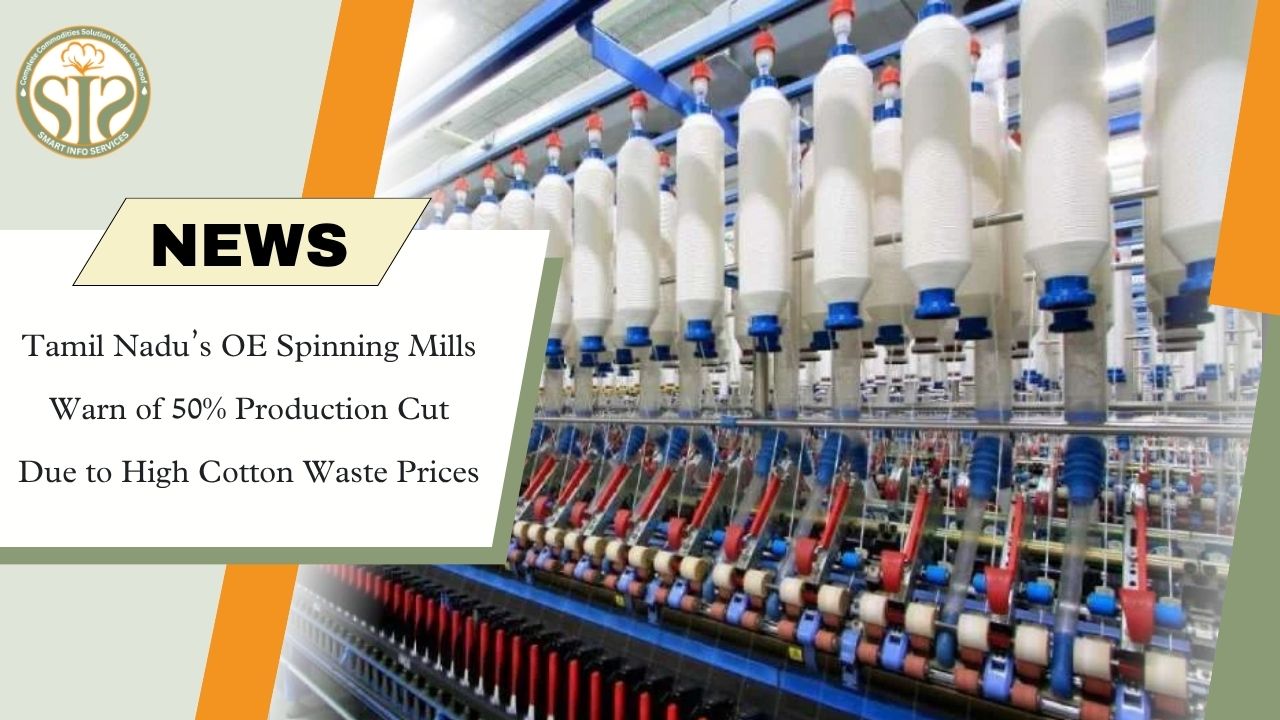
Tamil Nadu’s OE Spinning Mills Warn of 50% Production Cut Due to High Cotton Waste Prices
More than 250 Open-End (OE) spinning mills in Tamil Nadu have warned that they will be forced to cut production by up to 50 percent starting next week unless there is a prompt and substantial reduction in cotton waste prices. This announcement was made by the Open-End Spinning Mills Association (OSMA). The industry states that rising raw material costs have severely impacted the financial health of the mills, making it increasingly difficult to sustain production under current conditions.
According to OSMA President G. Arulmozhi, there has been an unusual surge in the prices of cotton waste—specifically 'comber noil'—over the past few months. Comber noil is the primary raw material used by OE spinning mills. Open-end spinning technology produces yarn without spindles and relies heavily on cotton waste. While the continuous rise in prices has driven up production costs, the prices of the finished yarn have not increased proportionately.
The association noted that cotton prices dropped significantly after the Central Government removed the 11 percent import duty on cotton on May 31. Cotton prices fell from approximately ₹195 per kilogram to ₹172 per kilogram—a reduction of about ₹23 per kilogram. Despite this, the price of comber noil has dropped by only ₹10 to ₹15 per kilogram. The industry believes this reduction is insufficient and argues that cotton waste prices should decrease in line with cotton prices.
OSMA stated that if prices are not reduced further within this week, all grey yarn OE mills in Tamil Nadu will collectively halve their production starting next week. This decision will impact not only 250 grey yarn mills but also approximately 350 other OE (Open-End) mills that utilize pre-consumer garment waste and recycled PET fiber.
The grey yarn produced in these mills is used in major textile hubs such as Karur, Somanur, Palladam, Avinashi, and Erode to manufacture products like towels, lungis, jeans, T-shirts, socks, bedspreads, and other affordable textile items. The association has urged both the state and central governments to intervene and find a permanent solution to the volatility in cotton waste prices.