Pre-Season Cotton Crop Thrives in Khandesh, Rainfall Deficit Raises Concerns
By jayesh chouhan 2026-07-23 13:55:17
Pre-season cotton crop thriving in Khandesh; rainfall deficit raises concerns
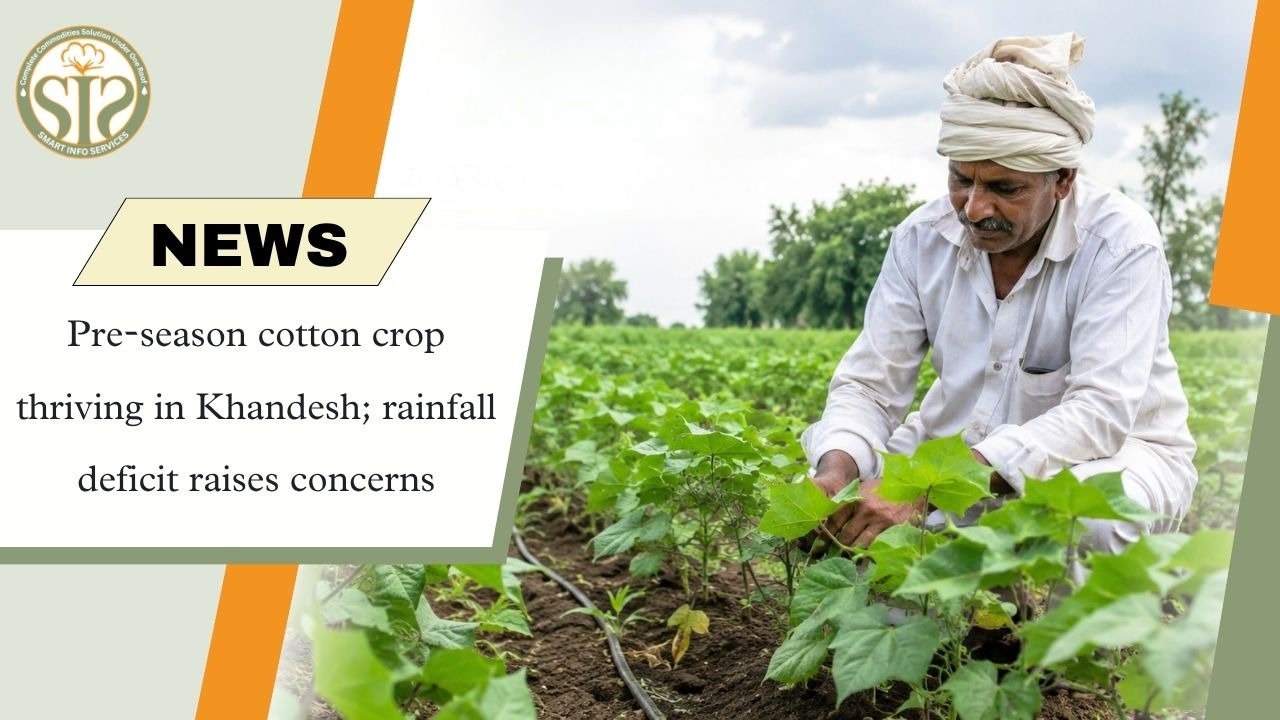
The pre-season (early-sown) cotton crop in Maharashtra's Khandesh region, planted during the last week of May and early June, is growing rapidly. Farmers have timely completed initial agricultural tasks such as weed control, intercropping, and fertilizer management. However, the lack of rainfall is affecting the cotton crop in rain-fed (dryland) areas.
While the total area under cotton cultivation in Khandesh has decreased this year compared to previous years, many farmers have continued to cultivate the crop as per tradition. Farmers have observed that under low-rainfall conditions, irrigated cotton crops perform better in the fertile black soil found along rivers like the Tapi, Girna, Aner, and Panjra.
The absence of heavy downpours and the lack of continuous light rain during June and July gave farmers ample time for crop management. Tasks such as intercropping, herbicide spraying, and fertilizer application were completed on schedule. Consequently, the cotton crop is showing good growth in many areas; in some places, the plants have already reached a height of about two feet. Even in areas with light to medium soil, the condition of the irrigated cotton crop remains satisfactory. Many farmers have also completed two rounds of spraying to prevent pest infestations.
Focus on intercropping and fertilizer management
Many farmers have completed two rounds of intercropping in their cotton fields. These agricultural activities were accelerated in anticipation of potential rainfall. Additionally, the first dose of chemical fertilizers has been applied to the fields. In some black-soil areas, the cotton plants are likely to flower early, while soil moisture levels remain adequate.
Increased use of herbicides for weed control
There is a continued demand for farm labor for weed control in many villages across Jalgaon district, with daily wages reaching around ₹200 in some areas. However, the weed problem has diminished in several regions due to the reduced cotton acreage this year and the increased use of herbicides. The growth of fresh grass and vegetation in the fields has also been limited due to the lack of rainfall.
Rise in Urea Demand
The demand for urea has surged as the application of fertilizers to the crops has commenced. Urea requirements remain high in irrigated areas due to the robust growth of the cotton crop, yet its availability is limited in many places. Consequently, farmers are planning to apply the second basal dose after approximately 60 days. Farmers believe that if weather conditions remain favorable, the cotton crop could continue to thrive.