The Challenge of Shielding Karnataka's Agriculture from Monsoon Uncertainty
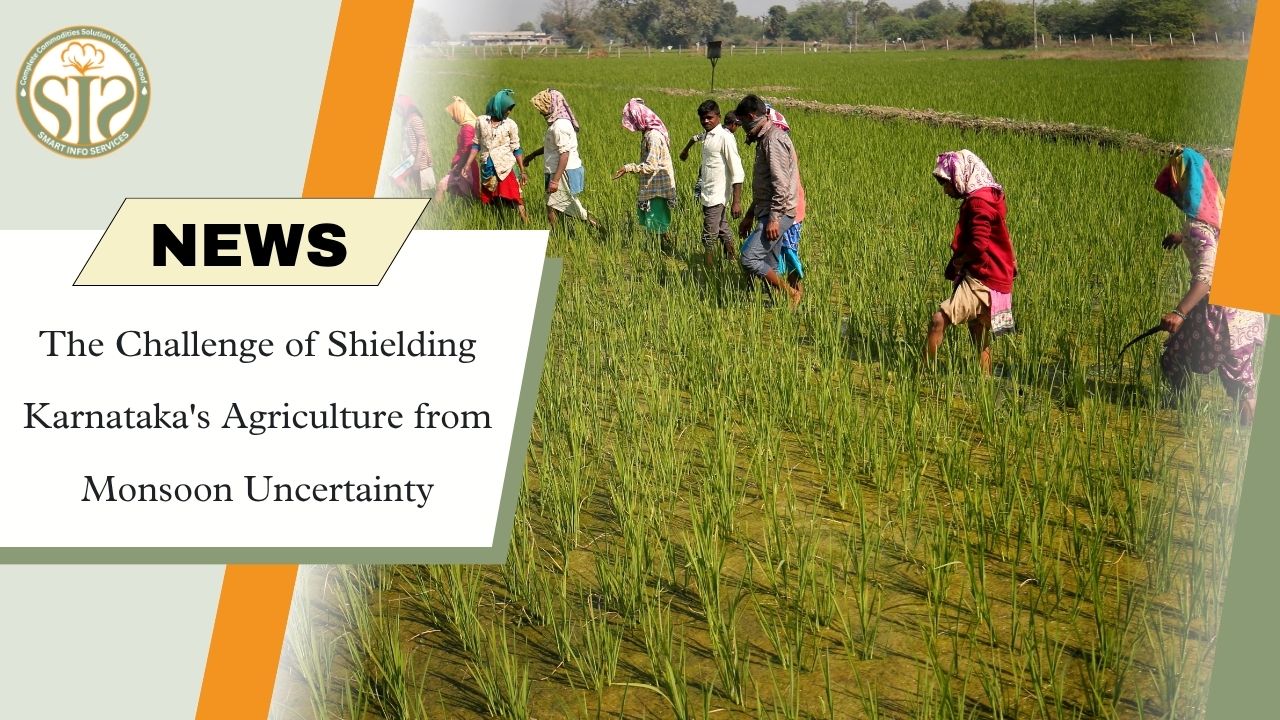
A severe monsoon deficit has created a crisis for farmers in Karnataka, the impact of which could be felt at the national level. By the first week of July, the sowing of Kharif crops had reached only one third of the targeted area. During this agricultural season spanning June to October farmers typically cultivate cereals like paddy, maize, ragi, jowar, and bajra; pulses such as tur (pigeon pea); oilseeds like groundnut, sunflower, soybean, and niger seed; and cash crops such as cotton, sugarcane, tobacco, and red chili.
Production of these crops relies heavily on the monsoon. After Rajasthan, Karnataka has the country's largest dryland farming area, with approximately 8.479 million hectares of agricultural land dependent on rainfall. Consequently, any shortfall in rain directly impacts agricultural output. This year, a significant rainfall deficit has been recorded due to the El Niño effect. Rainfall deficits of 34 percent, 30 percent, 24 percent, and 18 percent have been recorded in the Malnad region, coastal Karnataka, North Interior Karnataka, and South Interior Karnataka, respectively.
The impact of this crisis will not be limited to Karnataka alone. The state is a major producer of coarse cereals and accounts for the largest area under tur pulse cultivation in the country. Therefore, a sharp decline in Karnataka's agricultural output could affect food grain supplies and prices nationwide.
Alongside this natural crisis, a humanitarian challenge is also mounting. The livelihoods of approximately 13.7 million people in Karnataka roughly one in every five residents depend on agriculture. Amidst these circumstances, Chief Minister D.K. Shivakumar has urged Prime Minister Narendra Modi to assess the situation and dispatch a central team to facilitate relief measures.
While assistance from the central government is essential, Karnataka must also draw a long term lesson from this crisis. The state's agriculture has long remained vulnerable to the vagaries of the monsoon. It is now imperative for the government to prioritize water security in the agricultural sector rather than focusing solely on urban development projects, particularly those in major cities.
This requires expanding irrigation facilities, strengthening water conservation measures, promoting drought resistant crops, extending canal networks, improving groundwater recharge, and making widespread use of modern micro irrigation techniques. The goal should not merely be to address the current crisis but to establish an agricultural system that offers farmers long term protection against the uncertainties of the monsoon.
Shielding agriculture from the vagaries of nature is not just a necessity for Karnataka; it is essential for the food security and rural economy of the entire nation.