


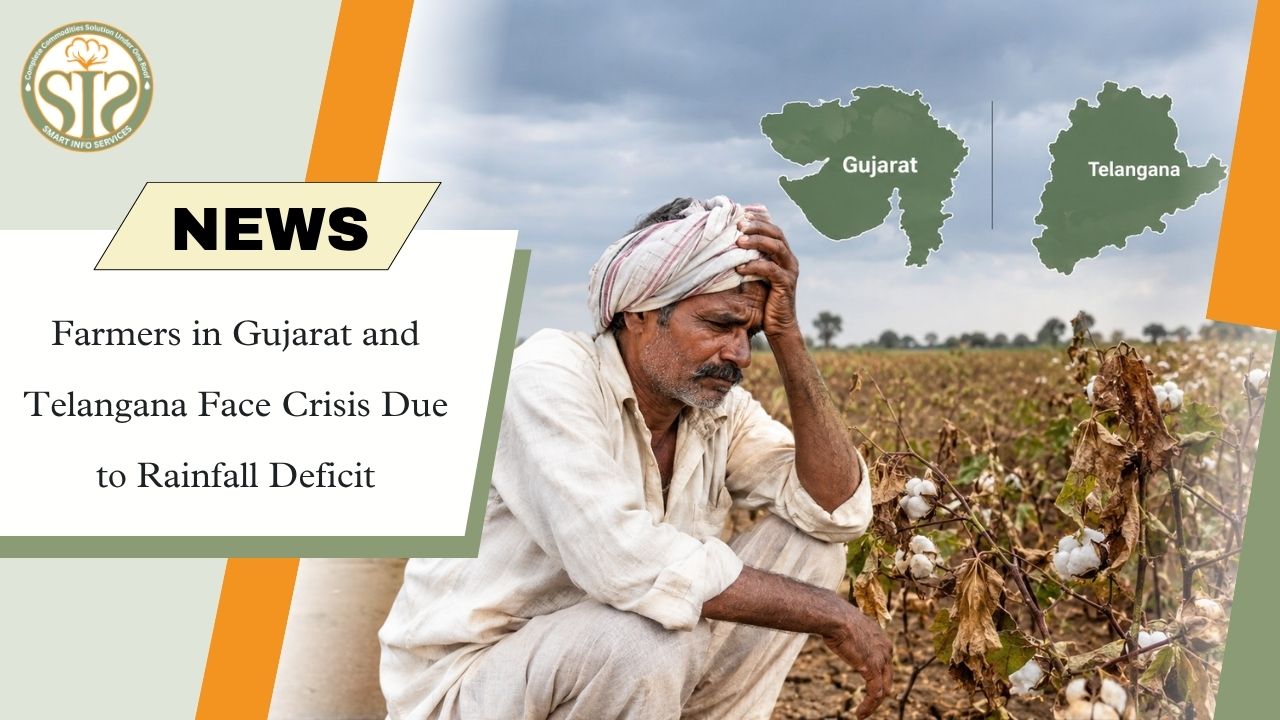
Farmers in Gujarat and Telangana Face Crisis Due to Rainfall Deficit
A lack of rainfall—stretching from Amreli in Gujarat to various parts of Telangana—has compounded the difficulties faced by farmers. A weak monsoon has deepened the crisis for Kharif crops, forcing farmers to incur financial losses.
In the Savarkundla region of Amreli district, there has been no rainfall for nearly a month and a half, causing cotton crops to wither. After losing hope for a harvest from crops raised with expensive seeds, fertilizers, and hard labor, many farmers have been compelled to let their cattle graze in the fields. One farmer reported that despite spending over ₹1 lakh on cultivating cotton across 15 *bighas*, the entire crop was ruined due to the lack of rain. Kharif crops have also suffered damage in other parts of Saurashtra and Kutch due to scanty rainfall.
The situation is equally concerning in Telangana. Between June 1 and September 1, a rainfall deficit of 73% below normal was recorded in the Vaddepalle *mandal* of Jogulamba Gadwal district, while the Kethepalle *mandal* in Nalgonda district saw a deficit of 71%. Many other *mandals* also experienced a rainfall shortfall of 60% or more; Kethepalle received only 124.9 mm of rain against a normal of 431.5 mm.
In Vaddepalle, the lack of rain caused seeds to dry up, forcing farmers to resow cotton and chili crops. Repeated sowing, along with expenses for seeds and drip irrigation, has pushed their costs up to between ₹30,000 and ₹50,000 per acre. The financial burden is even heavier for tenant farmers.
Farmers are now pinning their hopes on September rainfall. According to experts, factors such as El Niño, local weather systems, and the uneven distribution of rainfall have exacerbated the situation. If adequate rainfall does not occur soon, the crisis facing farmers regarding their crops and income could deepen further.
read more :- The rupee opened at 94.51 against the dollar, down by 2 paise.