


Gujarat’s Monsoon Divide Puts Kharif Cotton Crops at Risk
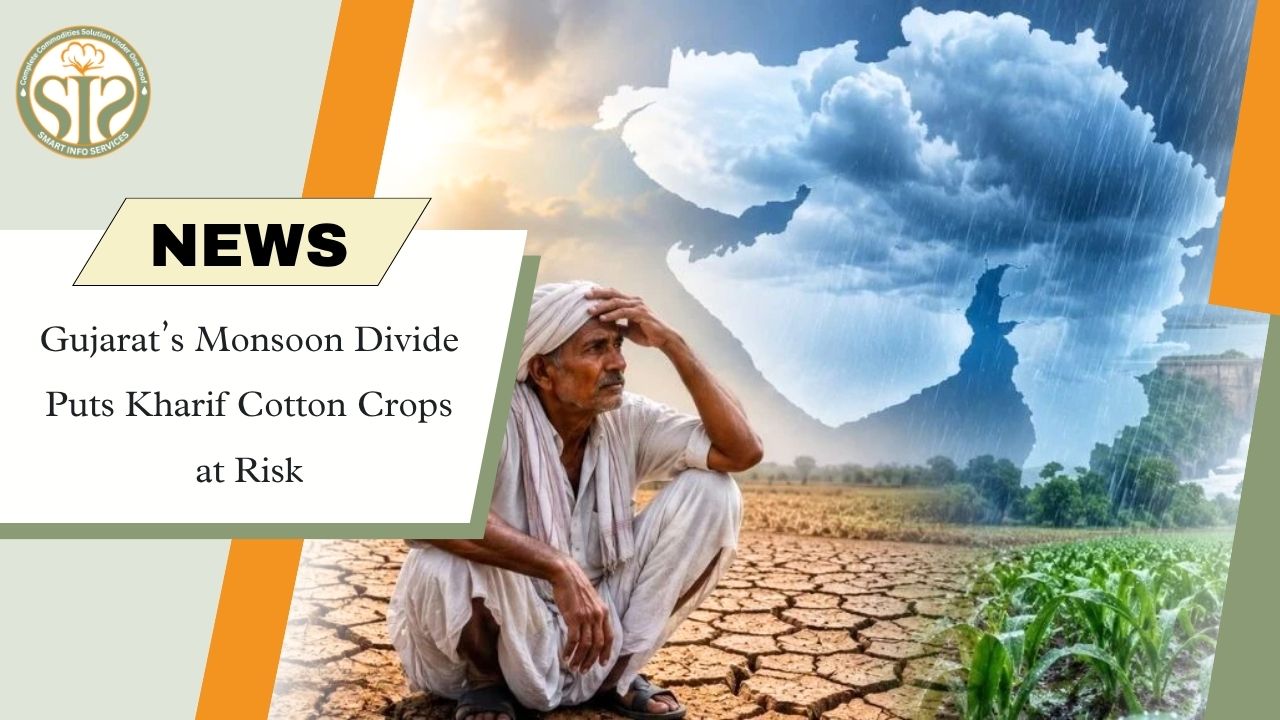
Gujarat’s uneven monsoon is emerging as a serious threat to kharif crops, with a sharp regional rainfall divide being masked by the state’s overall average. Data from the State Emergency Operation Centre shows that Gujarat has received 684.43 mm of rainfall, or 75.31% of its normal seasonal rainfall of 909 mm.
However, heavy rains in South Gujarat are significantly lifting the state average. The region has received 1,597 mm, or 103.56% of its normal rainfall, while large parts of Saurashtra, Kutch and North Gujarat continue to face severe deficits.
The extent of the shortfall is reflected in the national rainfall-deficit rankings, with 12 Gujarat districts featuring among India’s 25 most rain-deficient districts.
Devbhumi Dwarka has recorded the country’s highest rainfall deficit at 93.59%, receiving just 6.41% of its normal rainfall. Porbandar ranks second with an 81.88% deficit, having received 18.12% of normal rainfall, while Jamnagar ranks third with a 71.12% deficit and 28.88% of normal rainfall.
Kachchh ranks fourth nationally, with a 70.57% deficit and only 29.43% of normal rainfall. Other Gujarat districts in the top 25 include Aravalli, ranked 11th with a 53.77% deficit; Gir Somnath and Sabarkantha, both with deficits of 53.38%; and Rajkot, with a 52.89% deficit.
Chhota Udepur has recorded a 49.26% deficit, Banaskantha 48.75%, Dahod 47.67% and Junagadh 44.36%.
The prolonged moisture shortage is raising concerns over crop yields across the affected regions. Groundnut, a major kharif crop, is particularly vulnerable as it enters the pod-filling stage in Rajkot, Jamnagar, Junagadh and Gir Somnath. Cotton crops are at risk of flower and boll shedding, while castor and sesame are facing poor establishment and moisture stress in Kutch and North Gujarat.
With more than 92% of kharif sowing already completed, the coming rainfall spell will be crucial. Timely and adequate rains could help ease moisture stress and protect crop yields, while a continued dry spell could further intensify the risk of production losses.
read more :- The Rupee opened at 94.89 against the dollar, gaining 6 paise.